Limerick mayor wants to receive report on Aughinish Alumina 'confidentially'
Vivienne Clarke
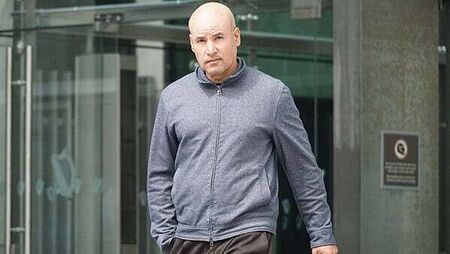
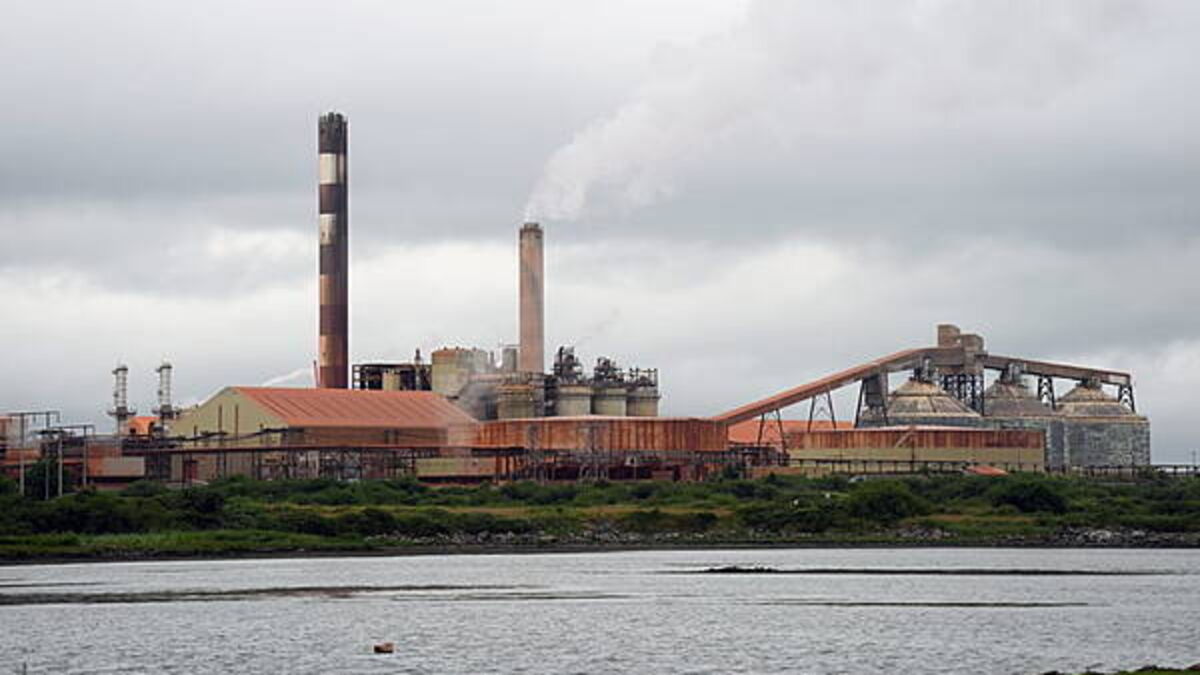
The mayor of Limerick, John Moran, has called for a report into possible links between Aughinish Alumina and Russian military attacks in Ukraine to be sent “confidentially” to him at the same time it is sent to the European Commission.
Moran said that at present he was “in the dark” over what was happening and he had heard that the report was going to be sent to the Commission.
“It's clear that the Oireachtas' own legislation for the mayor requires the ministers to actually consult with the mayor of Limerick, so that Limerick interests can be actually represented in the conversations.
“We see other countries right across Europe when it comes to these questions, making sure that their interests are strongly represented before EU decisions are made, and I think the government needs to be doing the same for Limerick.
“I don't see any reason why the report cannot be sent confidentially to the mayor of Limerick at the same time as it's sent to the Commission."
Moran told RTÉ radio’s Morning Ireland that “clearly” there was no evidence that warranted a “knee-jerk reaction.”
“What I've been calling for for the last number of weeks is that we should have a sit-down forum with everybody concerned and actually try and see, there may be other solutions. I mean, we might actually be able to get everybody to agree to a more invasive supervision of the plant.
“Let's be clear, if the plant is supplying arms for Russia to use in Ukraine, that's wrong. And we need to find ways to stop that.
"But it needs to be done with all the solutions on the table. And to do that, you need all the information. And again, that's why seeing sight of the report is an important part in my being able to guide my own thoughts on this."
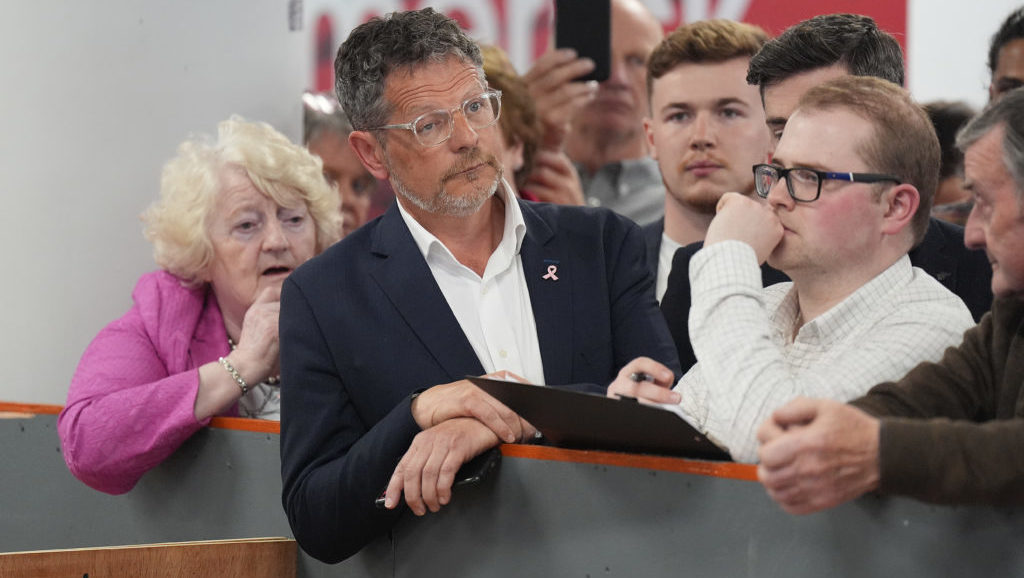
Moran said he was sure that staff at Aughinish did not want to see their product being used in the war against Ukraine, but he had not “been at a table” to ask management at the plant if a more invasive form of monitoring supervision of operations at the plant was possible.
It should be possible to trace where the product goes when exported.
“If you look at food, if you look at airplanes, you look at all sorts of products at the moment, you can actually do a very good job of following where the source of raw materials is and indeed where they end up. And I don't think it's beyond the ability of people that are willing to find a solution to go down that route.
“I don't know if the government has been having those kinds of conversations with the management.
“The legislation around my role was very clear that the mayor of Limerick should be, if they ask, consulted so that Limerick's interests are at the table where decisions are being made. The government has launched an investigation into this. The Department of Enterprise has launched an investigation into this.”
Moran acknowledged that the report might not be able to conclude whether product from Aughinish Alumina was or was not being used by the Russian military in Ukraine.
“All I'm asking is that they can reassure me themselves that they've done everything to actually work through the interests of Limerick in the considerations they're doing.”
He said he understood the report was confidential, but he was sure they could trust the mayor of Limerick. During his time in the Department of Finance, he had dealt with “an awful lot more confidential documents”. He just wanted to protect the interests of Limerick.
“If the government is serious about reforming local government, then they also need to step up and resource and respect the roles that they're creating to change that centralisation of power.”
Inaccurate misrepresentation
Minister of State of the Department of Agriculture, Food and the Marine Niall Collins, who is a TD for Limerick, has said that workers at Aughinish Alumina were concerned and upset at the “inaccurate misrepresentation” of the situation at the plant.
“I think it's fair to say they're quite concerned and I think they're quite upset at what they would have described as a lot of inaccurate misrepresentation in some of the reporting that has taken place,” he told RTÉ radio’s Today with David McCullagh show.
“It has not been proven at all, and no evidence has been offered at all that any of the product which leaves Aughinish in Limerick ends up in what's been described as the Russian military complex.”
Collins said that the forthcoming report would “probably help both the government and the European Commission to square that circle because that's a kind of a virtual circle that's going around.
“I have seen reported, for example, that there are many organisations globally who can provide oversight and verification and there's no reason why this can't be applied to Aughinish also, where product going into Russia such as alumina can be overseen and verified that it leaves Russia as aluminium. Many organisations do that, and I think that would be an avenue.”
“The workers, obviously they're concerned, and they're keen to stress, and I think this needs to be said, that alumina, which is manufactured in Limerick, is listed as a critical raw material.
"Secondly, that aluminium, which is ultimately the end product, is not a sanctioned product across the European Union and there are many hundreds and thousands of non-sanctioned products like, for example, food and there's no focus on any others of those.”
Collins said he was keen to point out on behalf of staff at Aughinish “no law, regulation, condition of licence or EU sanction has been broken by the Aughinish plant.
“They have been subjected to a campaign of misinformation by some within the media and indeed by some within the political environment. I've heard speakers in Dáil Éireann, Social Democrats and Labour Party.
“The entire point is that they're not sanctioned and it is part of a global supply chain. And there are many, many, many products which aren't sanctioned, which do go into a global supply chain, as we know, and who knows where they end up. So the point I'm making to you is this. The question has been asked, and allegations have been made, and it can't be proven or disproven one way or another.
“But there are oversight mechanisms which can be put in place. And I'm sure the European Commission will look at that when they receive the report from the Irish government.”