Green Fingers: Growing some vintage or heritage plants
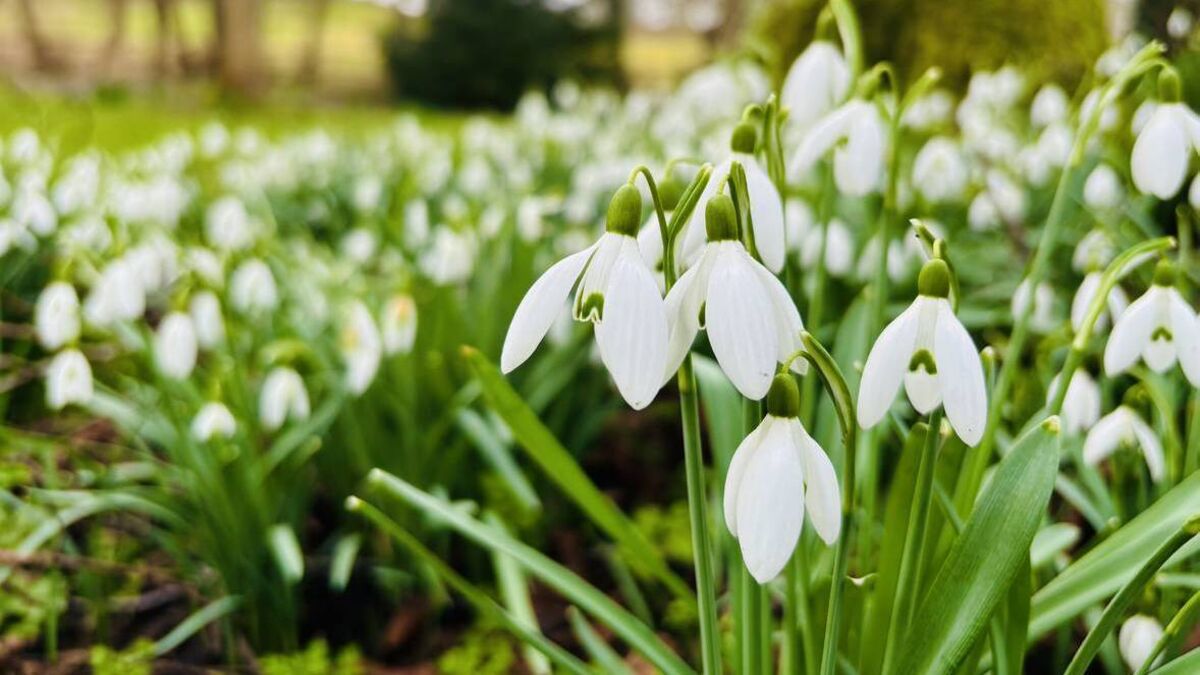
The snowdrop could be classified as a heritage or vintage plant, which I think of as a plant cultivated for over a hundred years.
I am sometimes surprised and amazed at some of the plants that manage to not only grow here but to thrive in less ideal conditions.
As many readers will know we have been clearing out ivies and brambles from some of the shrub borders, only to notice that clumps of snowdrops have popped out from being smothered for years and are now in flower.
We all like to get out on the few fine days and potter about in the garden. We have made good progress and have also replanted many shrubs that are too close to their neighbours.
At the same time we are always on the lookout for something in flower and it is always a special time, as flowers are scarce enough at this time of year.
Mahonias and Christmas box are fading, while camellias are starting to flower, but there is still colour in witch hazels, hellebores, winter honeysuckle, daphne and, of course, snowdrops.
I should think that everyone loves snowdrops, and it might be something to do with the fact that they grow in mid-winter with beautiful white flowers.
The snowdrop could also be classified as a heritage or vintage plant, which I think of as a plant cultivated for over a hundred years, and the common snowdrops are certainly in that category as they are grown for more than 300 years, and typically seen in old estates, orchards and churchyards.
The common snowdrops are hard to beat and include Galanthus nivalis and its double form ‘Flore Pleno’ and G.elwesii but many variants and selections from these and other species are available. It is difficult to avoid starting a collection!
So far, we have avoided that obsession and sometimes look with amusement at those who have become addicted but friends and gardeners keep giving us some and now we have over 25 species and cultivars that we treasure.
I should think the majority of people who mention heritage or vintage plants mean either vegetable or fruiting plants, whereas it does include all plant types.
Some people might say there is no point in growing these old plants when newer plants are available, while others might say that to preserve uniqueness, variety and for historical reasons they should be grown. There is merit in both points of view and in some food crops outside our interest, such as cereals, there is a benefit in having original seed stock from which to breed new strains.
Having a wide range of plant types is difficult for the producer to bring to the consumer, when having a narrow range of goods is easier to grow and sell. The push in breeding has been to introduce food crops that are easy to cultivate, give good yields of a uniform size and shape, and a long shelf life.
Monoculture with one plant, such as the potato ‘Lumper’, was devastating in the famine years but while we have moved on from that position, the dangers remain of crop failures from relying on too few crops.
There is still a quiet period in the garden before growth starts, and I would suggest that you look critically at everything in your garden and outside sheds or tunnels, and do things that would otherwise be left alone when the busy times arrive.
If you have any queries or comments you are welcome to share them with me on 051-384273 or orchardstowngardencentre@hotmail.com and if of general intertest I will include them is a future article.