Forestry: Planting for the future under the Social and Woodland Scheme
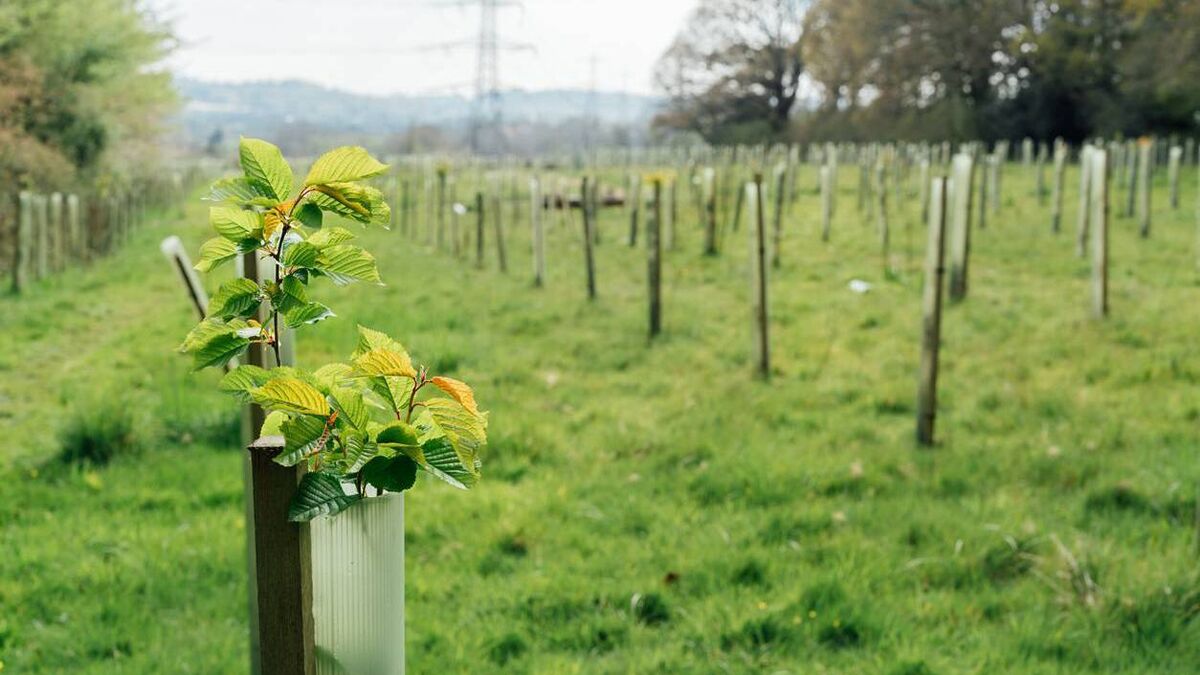
Under the Social and Woodland Scheme, a wide variety of native species can be planted, including oak, birch, alder, hazel, holly, and rowan, each bringing its own ecological benefits.
Tree planting across Ireland continues to gain momentum, and the Social and Woodland Scheme (SWS) is playing an increasingly important role in helping landowners create sustainable, long-term woodland projects.
Designed to encourage the establishment, maintenance, and protection of small woodlands, the SWS supports individuals, community groups, and farms who wish to enhance their land, while contributing to environmental improvement.
Under the scheme, a wide variety of native species can be planted, including oak, birch, alder, hazel, holly, and rowan, each bringing its own ecological benefits.
Native trees help restore biodiversity, improve soil health, encourage wildlife habitats, and strengthen local ecosystems. They also play a vital part in climate action by absorbing carbon dioxide and helping to regulate water levels in areas prone to flooding.
Many participants in the SWS say one of the key advantages of the scheme is that it supports smaller parcels of land that might not qualify for larger forestry programmes. This has led to a significant increase in the establishment of pocket woodlands, shelterbelts, riparian buffers, and nature corridors.
These smaller projects, when added together across communities, make a major contribution to Ireland’s environmental goals.
The planting phase is straightforward, with guidance available on species selection, layout, and preparation. Once trees are established, ongoing maintenance such as protecting young saplings, controlling competitive vegetation, and ensuring proper spacing helps the woodland thrive. Support from the SWS makes this process more manageable, especially for first-time participants.
Across the region, landowners involved in the scheme report a strong sense of satisfaction in seeing their newly planted areas take shape. What begins as a few rows of saplings quickly grows into healthy woodland that will benefit future generations.
In addition to environmental gains, many value the aesthetic improvement to their land and the increased biodiversity that follows.
The SWS is a reminder that even modest areas of planting can make a meaningful difference. With continued interest and local engagement, these small woodlands will become vital green spaces — supporting wildlife, improving the landscape, and contributing to Ireland’s long-term sustainability goals.
Minister of State with responsibility for Forestry, Farm Safety and Horticulture, Michael Healy-Rae TD, has announced the appointment of the next COFORD Council, which will play a key role in providing scientific and forestry advice to assist in the delivery and implementation of Ireland’s Forest Strategy.
Minister Healy-Rae stated: “I am delighted to announce that Professor Áine Ní Dhubháin has agreed to be the next chair of the COFORD Council; she will bring a wealth of experience to this important role.
"The wider membership of this Council, which I am appointing, is drawn from across a diverse field of scientific expertise in forestry, including ecology, carbon and timber."
Professor Áine Ní Dhubháin is the Director of the Forestry undergraduate degree programme in University College Dublin. She brings considerable expertise in forestry and has led a wide number of scientific studies, which have provided outputs that have helped shape forest policy and the sector.
The COFORD Council is appointed by the Minister of State at the Department and has been in existence for over 30 years. It has undergone many changes over the years, and this new Council will have a particular focus on scientific knowledge and research expertise.
Its work will complement the work of the Forest Strategy Consultative Committee, which is the Department of Agriculture, Food and the Marine’s main forestry stakeholder platform.
Minister Healy-Rae continued: “The studies and reports published by COFORD are important for the development of the forest sector, for example, recent reports from COFORD on potential annual roundwood production, and indicative plant and seed supply, provide forecast information that supports the strategic development of the sector.
"These types of reports are prepared by working groups of the COFORD Council and involve stakeholders from across the sector, as well as cross-border collaboration with counterparts in Northern Ireland.”
The new chairperson of the Council, Professor Áine Ní Dhubháin, stated: “I am delighted to accept the Minister’s nomination to chair this Council and look forward to working with my Council colleagues and with the Department to provide advice and to continue to connect science and policy.
"I have worked for many years on previous Councils and know that, through collaboration, we can continue to produce studies that will support the sector and its stakeholders.”
Minister Healy-Rae also recently announced the opening of the Forestry Knowledge Transfer Group (KTG) Scheme 2026.
Announcing the scheme, the Minister said: “The Forestry Knowledge Transfer Group Scheme gives forest owners practical, hands-on knowledge and the confidence to make informed decisions about their forests.”
The aim of the KTG Scheme is to promote active, sustainable forest management by building forest owners’ knowledge, awareness and decision-making capacity to support the management of their forests.
Now entering its seventh year, the Forestry KTG Scheme has become a cornerstone of knowledge transfer in the sector. Since its introduction in 2018, the Department has supported almost 3,000 forest owners to participate in locally based groups, helping them build the skills and confidence to actively manage their forests and maximise their long-term value.
The Minister continued: “Groups are led by professional foresters and operate through field visits, demonstrations and peer-to-peer discussion, enabling participants to learn from both experts and fellow forest owners. These groups are about practical learning and real-world experience. They help owners to take a more active role in managing their forests.”
A key enhancement to the 2026 Scheme is the introduction of two dedicated Focus Areas, allowing organisers and participants to tailor learning to their specific needs.
Focus Area A – Sustainable Forest Management (SFM): Covering core silviculture, thinning, forest operations, forest health and resilience.
Focus Area B – Forest Management Plans (FMPs) and Forest Certification (FC): Supporting owners to prepare management plans and take practical steps towards certification and higher management standards.
As Focus Area B is a new addition to the scheme, and in order to maximise uptake and support wider adoption of forest management planning and certification, all forest owners will be eligible to join a Focus Area B group, irrespective of whether they have participated in a Forestry KTG in previous years.
This expanded access removes previous participation restrictions and ensures that any owner wishing to develop a Forest Management Plan or progress towards certification can do so through the scheme.
Minister Healy-Rae continued: “We want to make it easier for every forest owner to engage with planning and certification. Opening Focus Area B to all participants gives more owners a clear pathway to better management standards and stronger market opportunities.”
Recognising that forest owners may be unable to attend some meetings, the scheme also provides flexibility to ensure continued participation. Participants in this scheme may nominate a family member or joint owner to attend meetings on their behalf.
The Minister concluded: “The new focus areas and the option to nominate someone to attend on your behalf ensures that nobody misses out on the opportunity to build skills and knowledge on managing your forests.”