Green Fingers: Barking up the right tree
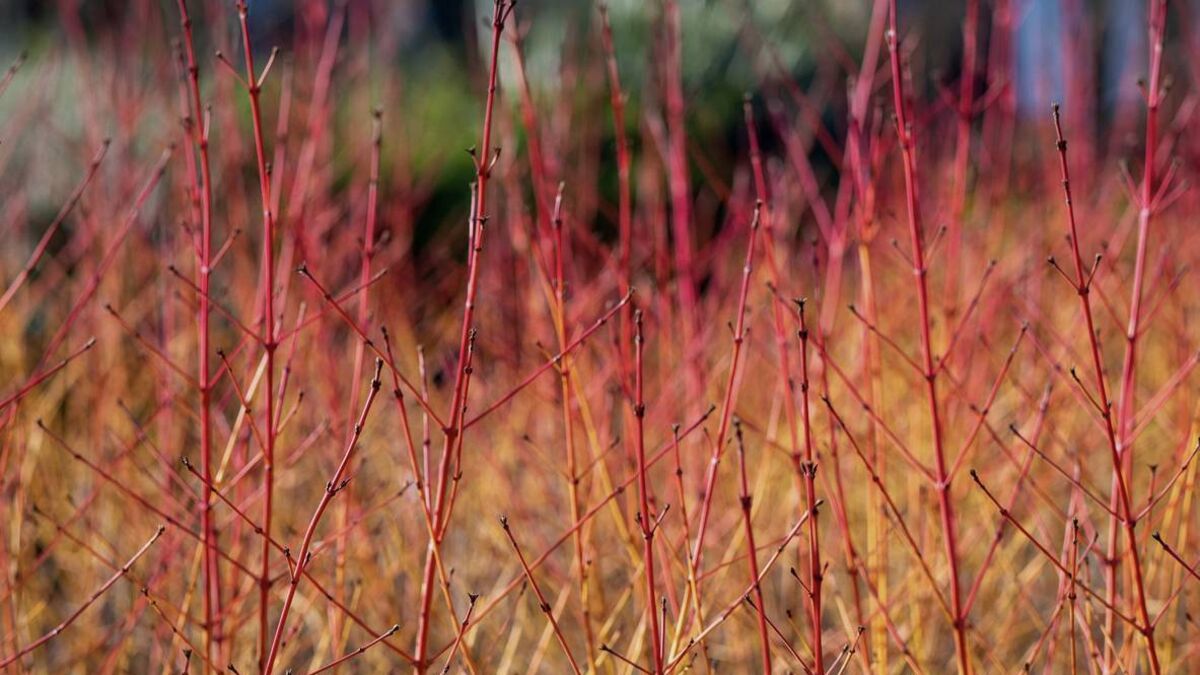
Dogwood in winter.
Many plants have to be managed in one way or other, otherwise they will outgrow their allotted space and smother other weaker plants.
It is said that if an area is abandoned to nature there will be a continuous cycle of growth of plants that grow and die until it all ends up with one tree dominating the space.
Sorting this is not that easy as briars have taken advantage of my ‘easy going’ gardening activity and now it is down to building up the determination to ‘go for gold’ and get stuck in.
Besides that, the vast majority of garden plants will take kindly to hard cutting back and pruning, and should grow back with vigour the following season.
The only obstacle that holds you back is a lack of confidence or perhaps you are reluctant to do the right thing for fear of damaging the plant. At times, hard pruning, cutting back or trimming are all necessary if you are to have a garden full of lovely plants.
While gardens go through a dormant period during the winter months, and it can look pretty dull with little of interest to show, but it need not be so, as there are enough plants that can liven up the area if chosen with care.
I have mentioned winter flowering plants recently and will only repeat some here, including a few left out the last time. From the low-growing we would suggest winter heathers, hellebores, cyclamen, aconites and snowdrops, and moving to medium and tall-growing plants, which would include Camellia, Daphne, Hamamelis (Witch Hazel), Mahonia, Sarcococca (Christmas Box), Viburnum tinus and Viburnum x bodnantense.
Whatever about plants that flower during the winter months, there are some that have dazzling displays of coloured stems for many months and the best is provided in the dogwood or Cornus family.
The stem colours are shades of amber (Midwinter Fire), yellow (Bud’s Yellow), and red (Siberica), but you can add to the enjoyment by choosing some that have coloured leaves in the summer, such as Aurea (Yellow leaves), Elegentissima (silver-edged leaves) or White Gold (yellow stems and silver-edged leaves). These plants can be enjoyed each winter and then all need annual pruning down to 30cm (1’) from the ground in late winter to allow for new growth for the following winter's display.
There are some trees that have coloured bark and they include the common birch, which is good, but there are other types with whiter bark, and outside that there are snake bark maples with striated white, pink stripes on a green background (e.g. Acer grosseri), cinnamon flaky bark (Acer griseum), and mahogany bark (Prunus serrula).
Some Eucalyptus species have beautiful striated, flaky or white bark but they are only suitable for larger gardens, and bamboos contain a number of types with either yellow, black or powder blue stems, which if placed with care can enrich the garden but need to be root contained as most will (if they like your conditions) spread out of control in time.
Some of our tomato seeds are up after sitting seven days on the warm kitchen windowsill. As soon as they have germinated they are moved to a cooler window in another room where growth will slow down until the plants get potted up into single 5-10cm ( 2-4”) pots. Chillies will take longer and need around 21 degrees celsius to encourage germination.
If you have any queries or comments you are welcome to share them with me on 051-384273 or orchardstowngardencentre@hotmail.com and if of general interest I will include them in a future article.