Green Fingers: Fruits of the forest
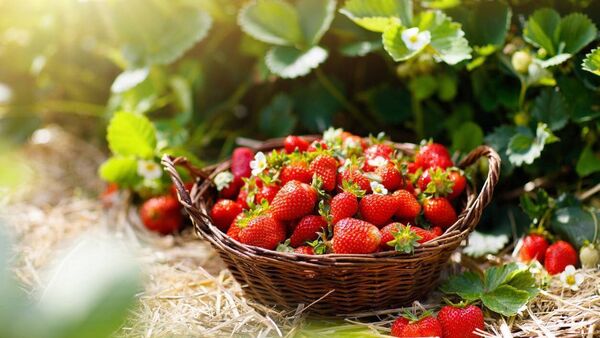
Strawberries are a sure bet and people of all ages and skills can grow them.
I do not know anyone who does not like fruit and, within this vast range of delicious food, there will be favourites. In some cases there will be some that do not appeal to others. Within this group, the popularity of some fruits will swing up and down. What is currently still very popular are blueberries, followed by strawberries and raspberries.
Most of this planet was originally covered with trees and within this habitat grew all the fruiting plants that we know today.
All that has changed is that we gathered, grew and selected from these wild native fruiting plants better yielding crops, to which we attached variety names to keep them distinguished and separate from other selections.
Of course, breeders have since come on board and sped up the process by breeding new improvements in a shorter time.
The name exotic conjures up some desirable thoughts of unusual, delicious fruits but if you think about it, exotic really refers to any fruiting plants that are not native and that is most of the fruit we enjoy.
Our obvious native fruits are the blackberry, hazel and our native blueberry, the ‘fraughan’ or bilberry. The nice thing is that we can grow a whole range of exotic fruits ourselves and the choice is up to us to decide what and how much to include in our garden.
There is very little we cannot grow given the correct conditions, even bananas and pineapples, but they are extreme examples and, of course, uneconomical, so usually confined to those who wish to grow something rare and unusual.
Next up the scale, which needs the protection of a glasshouse or tunnel, are apricots, nectarines, peaches and probably kiwi fruits, and all these produce good crops most years in this country.
We used to grow thornless blackberries but one year we thought why do we put in that effort of growing and training them on wires to crop a small harvest when there are abundant blackberries out in the wild, freely available to pick. We are thinking the same about loganberries as raspberries are slightly similar and much easier to grow.
The raspberry is a native of Europe. I have not come across them in Ireland but found pockets of them in the UK and other parts of Scandinavia, so you would expect that it is one of the obvious fruits to grow. They are simply planted 30cm (1’) apart in a row, and 12 plants upwards will give you a reasonable crop.
Strawberries are a sure bet and people of all ages and skills can grow them. They might produce fruit within weeks of planting them and certainly the following few years will give you increased yields.
They can be grown in hanging baskets or similar containers of all types, and in the ground where they are planted around 60cm (2’) apart. Ideally plant them into ground cover matting so weeds will not smother the plants. It is then a matter of waiting patiently for the fruit to arrive but remember to protect from birds at this stage!
Seed potatoes were sold out around St Patrick’s Day but the desire to grow some potatoes continues and all I can suggest if you wish to grow some in containers is that you use some bought from a shop that sells eating potatoes. The varieties may not be the ones you would prefer but it would be nice not to miss the season.
If you have any queries or comments you are welcome to share them with me on 051-384273 or orchardstowngardencentre@hotmail.com and if of general interest I will include them in a future article.