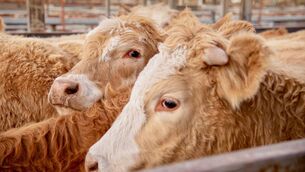
Farming: ICMSA query amount of beef imported into Ireland
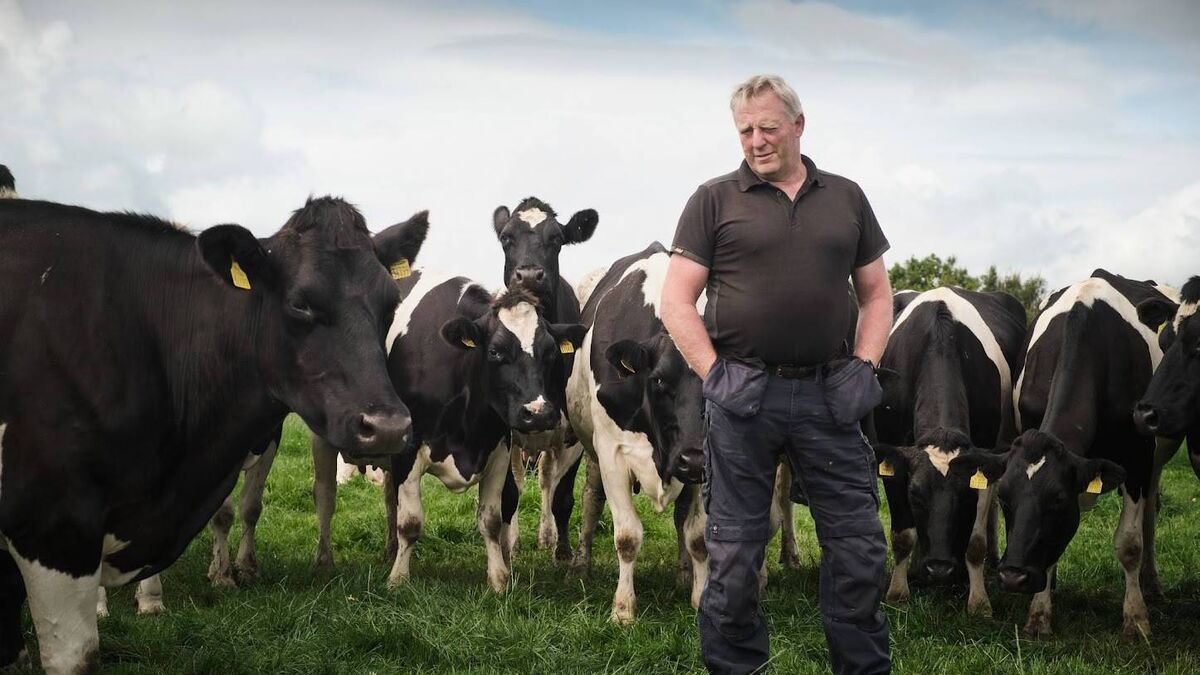
Michael O'Connell, Chair of ICMSA Livestock Committee.
The Chairperson of ICMSA’s Livestock Committee, Michael O’Connell has described as “downright disturbing” detailed figures released by the Department of Agriculture, Food and the Marine showing that over 40,000 tonnes of beef was imported into Ireland last year, the equivalent of 118,000 steers based on average carcass weight.
Mr O’Connell said that given that Ireland produced seven times more beef than it consumed, legitimate questions had to be asked about why anyone would need to import beef in any notable quantities and he said that those questions would only multiply as people realised that the largest single source of this beef being imported into Ireland was Great Britain, which was also the single biggest export market for Irish beef.
Mr O’Connell said something about this data did not add up and farmers – and anyone else with an interest in the sector – were entitled to ask where these 40,000 tonnes were going, how it was being sold and consumed and who was bringing it in?
“The Department has again confirmed that there were 40,910 tonnes of beef imported in 2025: the equivalent to 118,000 of Irish steers based on the average carcass weight for steers in 2025 of 346kg. That would equate to an extra 2,300 cattle per week that processors would have needed to purchase and slaughter. The very first question that arises is why you’d need to import so much beef into a country that exports over 90% of what it produces? That produces multiples of what it consumes?
"The second question is who is responsible for the importation of this product, and we better not be fobbed off with this latest nonsense that this is ‘commercially sensitive information’ or that phrase’s new variant, that this is part of a ‘contingency plan’.
"There have always been rumblings of imported beef, but the figures are startling and disturbing in equal measure. 2025 was the best year on record for a long time for beef farmers but – by the looks of it – it could have been better if not for the monstrous volume of imported beef brought into Ireland”, said Mr O’Connell.
The ICMSA Livestock Chairperson said that an even bigger mystery was the fact that the largest exporter of beef to Ireland is our closest neighbours in Great Britain.
“Explain to me how this makes sense? Britain is our largest destination for beef exports, while, also, bizarrely, being the source of the biggest volume of beef imports into Ireland. This is mind-boggling and we need to find out what’s going on there?
"As a nation, based on 2024 CSO figures, Ireland was 700% self-sufficient in terms of beef production, why would we need to import beef at all? The answer is simple: it is a means of controlling cattle prices, it’s a means of controlling price paid to farmers and, therefore, from a processor point of view, ultimately, it’s a way of controlling farmers.
"All of this has to be explored against the background of the Commission forcing through the Mercosur agreement. In the face of determined opposition by ICMSA and others, just 300 tons of beef was imported from Brazil and Argentina. It may be miniscule in the grand scheme of the agreement, but how long has it been coming into Ireland? What customs checks are carried out? What Food Safety Authority checks are carried out? Can it be guaranteed it is hormone-free and can it be traced to both who sold it and who consumed this beef?” he continued.
“Even after the controversy at the start of this year, there were 33 tons of Brazil beef already imported in January of this year. Do these private businesses or processors care about the health of the Irish people or the livelihoods of Irish farmers or – as usual – is their profit-line the only consideration? Spring 2026 has been one to forget for finishers between the colossal drop in price from last autumn to the hassle and annoyance of long waiting lists to get cattle slaughtered. We are beginning to understand why: there has been 3,705 tonnes of beef imported in the month of January 2026, which is the equivalent of 10,708 steers based on 2025 average carcass weight. Put very simply, in the four full weeks in January, this would have been the equivalent of circa an extra 2,700 cattle that needed to be killed per week to match the quantity of most likely sub-standard beef. That explains why farmers were not being given ‘slots’ in the factories and were finding it hard to get cattle slaughtered.
"It also begins to explain the complete hammering factories have given beef farmers on price this year,” said Mr O’Connell.
“We are asking Minister Heydon directly to come forward with an explanation for these beef imports. If there’s a rational explanation for this, then ICMSA and Irish beef farmers will be waiting impatiently to hear it,” he concluded.