Ireland to call for solidarity with Spain over Ceuta crisis at emergency EU meeting
Kenneth Fox
Ireland will set out the need for solidarity with Spain in the aftermath of last week’s migrant crisis in Ceuta when Minister for Justice Jim O’Callaghan chairs an emergency meeting of EU ministers on Tuesday.
As The Irish Times reports, tensions have risen in recent days after some EU member states warned they could impose border checks and even suspend Spain’s participation in Europe’s free-travel zone, the Schengen area.
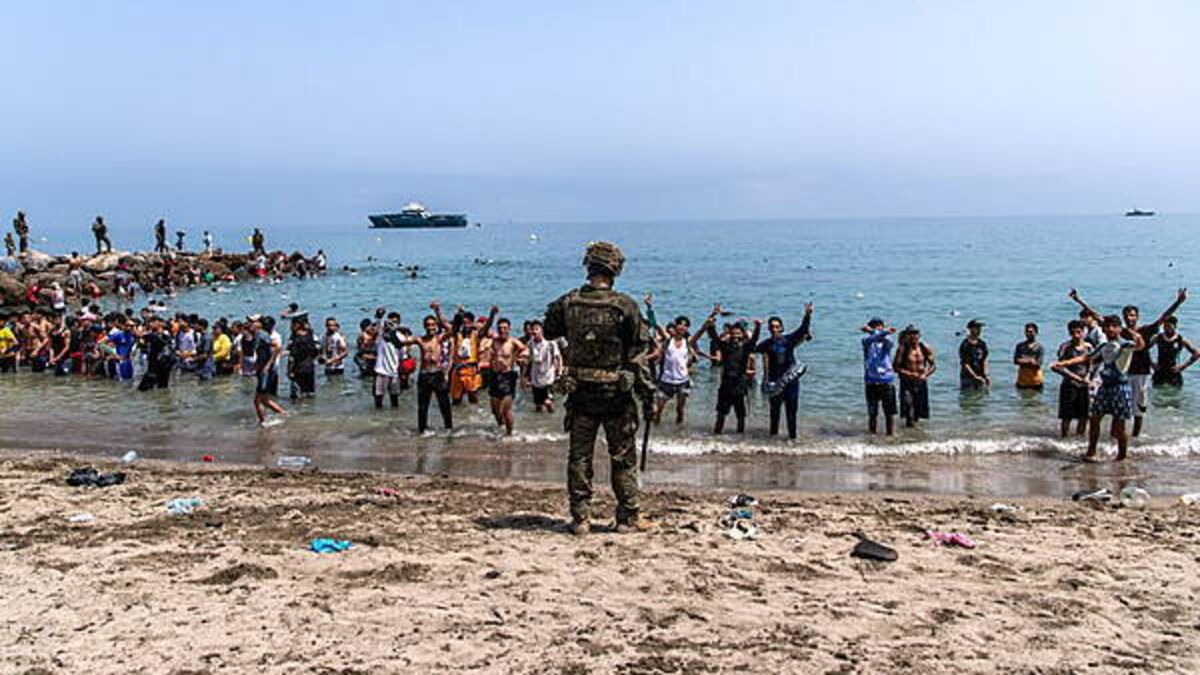
This came after more than 50,000 people crossed into the Spanish territory of Ceuta in North Africa from Morocco last Thursday and Friday
At least 72 people died in the attempted crossing, some drowning and others being crushed as they tried to cross a breakwater barrier.
Ireland has convened an emergency meeting of EU justice and home affairs ministers as part of its presidency of the Council of the European Union. The ministers will gather via video link.
O’Callaghan will open the meeting, with a Government source saying he will seek to “re-emphasise solidarity and unity at the heart of the European project”.
He will also outline the need for the EU to “work effectively together in how we deal with third countries”. He will call for this to be done.
Meanwhile, European Commission President Ursula von der Leyen proposed on Monday that the European Union further strengthen its borders and increase support for Morocco to help prevent a repeat of the chaotic influx of 50,000 migrants into the Spanish enclave of Ceuta last week.
Migration has been one of the European Union's most divisive political issues since the 2015-16 migration crisis, when more than a million refugees and migrants, many fleeing war in Syria, arrived in Europe.
The influx fuelled support for anti-immigration and far-right parties across the bloc and intensified years of disputes over border controls, asylum rules and burden-sharing.
Increasingly, the EU relies on migration agreements with countries in North Africa to curb irregular arrivals.
"Morocco is an important strategic partner, particularly in our efforts to combat migrant smuggling and illegal migration," von der Leyen wrote.
"In cooperation with Spain, especially on anything related to Ceuta and Melilla, we could enhance border management early-warning systems and improve our technical and financial support to Morocco."
Morocco said on Sunday that recent mass crossings to Ceuta and Melilla had been fuelled by misinformation on social media, human trafficking networks and misinterpretation of a Spanish court ruling.
In the event, most of those who breached the border barrier found no food or welcome, and returned to Moroccan soil.
Nevertheless, Italy suspended passport-free Schengen travel arrangements with Spain for a month, even though they do not apply to Ceuta, while 22 of the EU's 27 members urged coordinated action to strengthen the bloc's external borders.
The Ceuta incident is the first major test of the EU's Migration Pact, which entered into force in June after years of negotiations aimed at creating common migration rules and stronger solidarity among member states.
"The idea of the pact is control and solidarity between EU member states. Yet we've seen the opposite," said Bram Frouws, director of the Mixed Migration Centre.
"If the first major incident shows that the pact isn't doing much differently, that's politically risky," Frouws said, arguing that it could undermine confidence in European leaders and provide "fuel for the far right".
With elections approaching in several EU countries, migration remains among the bloc's most politically sensitive issues.
Critics argue the strategy of relying on transit countries leaves Europe vulnerable to pressure if these relax migration controls, or threaten to do so, in pursuit of political or economic concessions.
"Europe's increasing reliance on neighbouring countries for migration control may reduce arrivals in the short term, but it can also provide those countries with significant political leverage," said Alberto-Horst Neidhardt, senior policy analyst at the European Policy Centre.
Additional reporting Reuters