Explained: How does a no confidence motion work? Why is Sinn Féin tabling one?

Eva Osborne
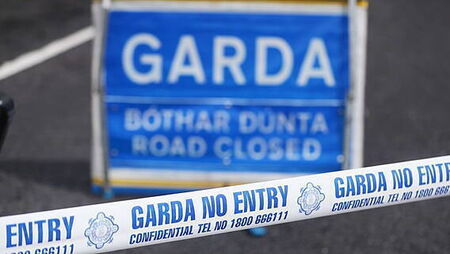
Sinn Féin will table a motion of no confidence in the Government on Tuesday, following days of fuel protests and disruption on Irish roads.
Why?
Sinn Féin is criticising the Government for not reconvening the Dáil last week and for not engaging directly with fuel protesters.
In its proposal, Sinn Féin is calling on the Dáil to declare no confidence in the current Fianna Fáil and Fine Gael coalition Government.
The party said the Government failed to adequately protect people from financial hardship and ignored warnings as fuel prices rose sharply for weeks while the Dáil did not sit for 20 days.
Sinn Féin added that the latest financial package is full of "half-measures" that fail to make fuel affordable and leaves workers, families, and the most vulnerable to carry the burden of "Government failure".
How does it work?
The no confidence motion will be debated in the Dáil. Government and opposition TDs argue for or against it.
After debate, the Dáil votes. All TDs vote, including Government, opposition, and Independent TDs.
If a motion of no confidence in the Taoiseach or Government is passed by the Dáil, then the Constitution requires that both the Taoiseach and the Government resign.
After this, either a replacement Taoiseach is elected by the Dáil, or the Dáil is dissolved and a general election is held.
If a no confidence motion is defeated by the Dáil, the Government may then table a confidence motion to prove they still have support.
If a confidence motion is defeated by the Dáil, it has the same consequences as if a no confidence motion were passed.
Have no confidence motions ever been successful?
While no confidence motions are common political tools, they virtually never succeed in bringing down a government in the Dáil.
Usually, the no confidence motions will be defeated, and the Government will successfully table motions of confidence, either in themselves or in a particular minister.
In 2021, Minister for Foreign Affairs at the time, Simon Coveney, survived a motion of no confidence after the Dáil voted confidence by 92 votes to 59.
Controversy surrounding the failed appointment of former government minister Katherine Zappone as a special envoy to the United Nations led to the motion of no confidence in Coveney being tabled by Sinn Féin.
In 2023, the Government survived a vote of no confidence in the Dáil. It was tabled by the Labour Party following the Government's decision to allow the moratorium on no-fault evictions to lapse at the end of the month.
In 2025, there was a motion of no confidence in the Ceann Comhairle, Verona Murphy, following the Dáil speaking rights row.
A Government motion expressing that the Dáil has confidence in the Ceann Comhairle passed by 96 votes to 71, with two abstentions.
At the time, there were chaotic scenes in the chamber over the speaking rule changes, which resulted in the suspension of the Dáil and prompted the main opposition parties to express a lack of confidence in Murphy.