View from the Green Room: Mega hit for Notable Works
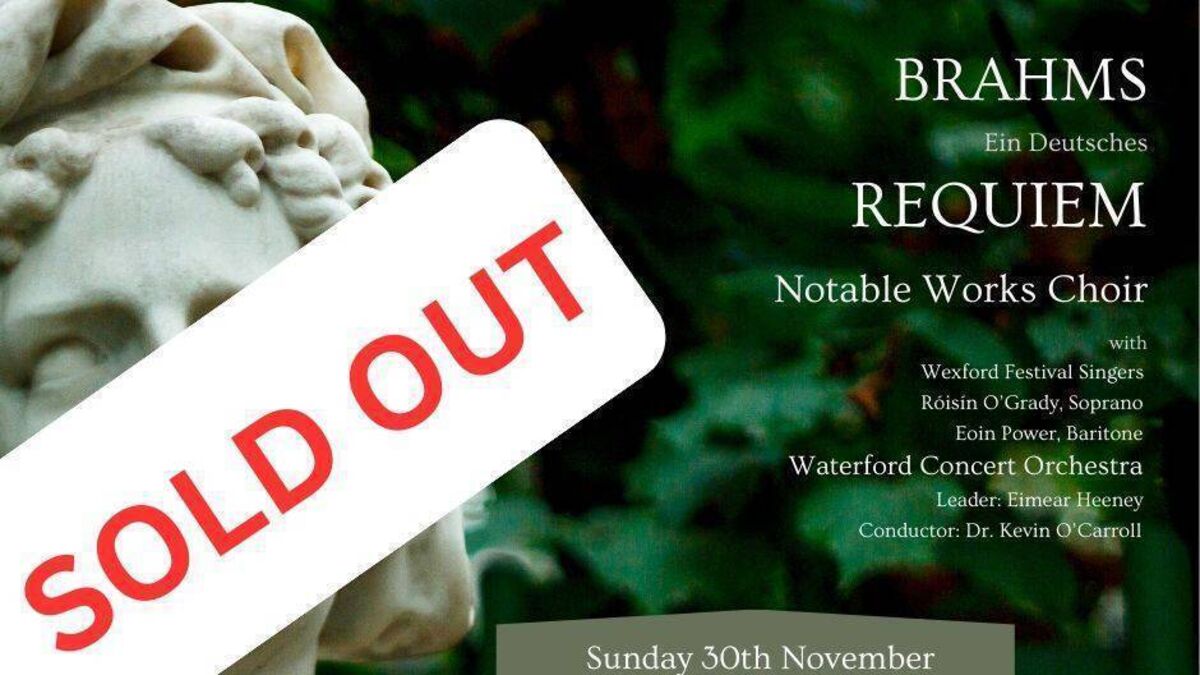
Brahms Requiem performed at St John's Church.
Notable Works is a project choir, based in Waterford city, that performs large-scale orchestral works. To date, they have performed Handel’s Messiah, Faure’s Requiem, Karl Jenkins’ Armed Man and Hayden’s Creation.
The Brahms Requiem is a mega-classic. And it’s a big sing with a massive chorus for this classic, orchestral work. There are seven movements, which together last around 70 minutes, and it is both Brahms's longest composition and largest ensemble work.
The Brahms Requiem is different. It’s written in German and not Latin and takes its biblical references, not from the Bible, but from the Lutheran Bible.
Writing a non-liturgical German Protestant requiem was original and ground-breaking. The libretto, written by Brahms himself, opens with ‘Blessed are they that mourn for they shall be comforted’ and avoids traditional Catholic sermonizing on death and punishment.
Instead, the emphasis is clearly on consolation of the living who are both mourning the dead and contemplating their own mortality.
There’s a distinctly humanist quality to the text that certainly appeals to a modern audience and the standing ovation from the packed church is well deserved.
Brahms wrote the Requiem (1865) in the immediate years after the death of his mother Christiane and a decade after the attempted suicide and death of his close friend and fellow composer Robert Schumann.
Clearly Johannes was in dire need of consolation and this is a work of extraordinary power and compassion; a requiem for the living to allow them to deal with death.
The style of the piece is massive as it blends contemporary Romanticism with influences from earlier composers such as Bach, Schumann, and Beethoven. The huge Notable Works chorus includes singers from all over the South East – with soloists soprano Róisín O’Grady and baritone Eoin Power – and is accompanied by the 40-strong Waterford Orchestra, led by Eimear Heeney.
The ensemble sound, especially when supporting the singers in prayerful moments of consolation, is gentle and tender, while the energy and drive of this orchestra and chorus – especially in the big fugal choruses – is epic.
Eoin Power’s baritone fills the church with ease and his rich bass notes bring comfort and consolation. Eoin moves easily through the registers and his strong sense of narrative holds his audience.
Soprano Róisín O’Grady brings quality and assurance to her every performance and she has the talent to float exquisite lines high over the accompaniment, along with the vocal power to dominate the climactic lines in her solo. O’Grady’s beautiful, rich soprano voice brings an impassioned tenderness to the work.
Brahms claimed he could have named this his ‘Human Requiem’ because he focused on comforting the living. The music comforts, calms, suggests hope, all the while acknowledging the tragedy of death.
Under MD Kevin O’Carroll’s baton the choir and orchestra get to the heart and emotion of the Requiem. Kevin’s control of the massive chorus and orchestra is mightily impressive. The chorus of some 112 voices from Wexford and Waterford is the perfect expression of Brahms’ love of polyphony and the layered entries and exits, along with melody lines that float and travel around the chorus, dazzles.
A superb night from Notable Works.
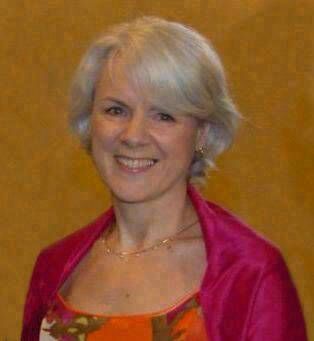
My column this week is dedicated to the wonderful Deirdre Scanlon, who spent a lifetime teaching string players and performing in concerts, shows and events all over the South East.
Deirdre taught and inspired young violists and violinists at the WIT Music School (now SETU), which her late father Fintan O’Carroll was hugely influential in establishing.
Deirdre was also instrumental in establishing the junior strings orchestras in the college, of which she was musical director.
In setting goals and standards for them, such as performing in the National Concert Hall, Deirdre turned young players into accomplished musicians.
Above all, Deirdre passed on the love of music and the passion of playing to a generation of young musicians.
There was a joy in knowing Deirdre. She was warm and kind and, also, my wife Maeve’s closest friend. Both grew up together, sat side by side in the orchestras and in their string quartet and were frequent visitors to each other’s homes.
God bless you, Deirdre. One of our own.