What did you do in your childhood?
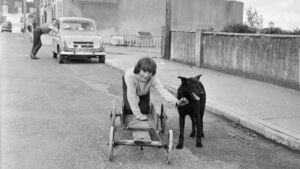
Playing with an old go kart in Rice Park, Waterford city.
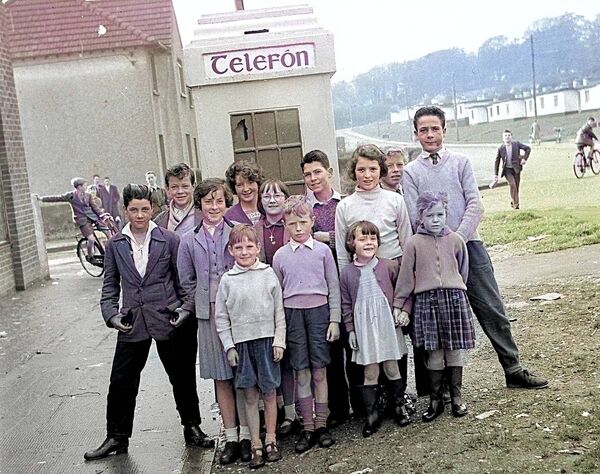
Waterford City of the 1950s and 60s differs greatly from today, and I would like to try to revive memories that older readers might have of their past and inform younger readers of the of my childhood and teen years.
It was a time when mobile phones, iPads, Tablets, or PlayStations had yet to be invented, and in fact, most homes did not even have a television. We entertained ourselves in separate ways.
I am from Tycor Avenue, situated at the Top of the Town, where neighbours came from fine stock and in good and tough times, they looked out for one another. The neighbourhood was a natural playground and wonderland; the back gardens of the houses were huge, so during summertime they became the ideal location for using the imagination and enjoying carefree, happy days.
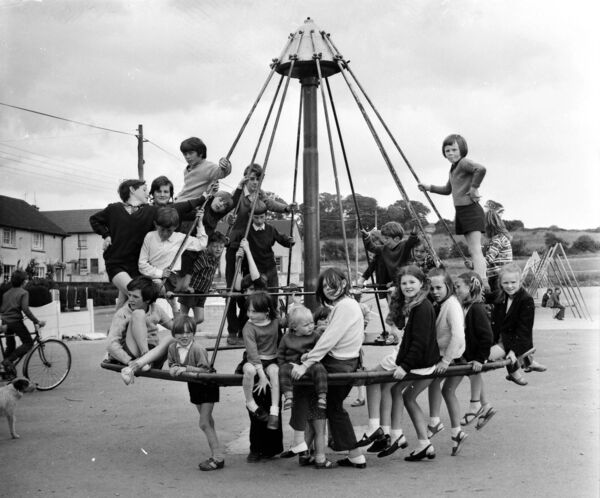
We became soldiers, cowboys, Indians, heroes or villains; armed with our guns, holsters and cowboy hats we thought we were invincible. We played “hide and seek”, “knock-a-dolly”, we had fencing duels, and we acted out many other games. We spent hours playing on the street as it was virtually traffic-free and a safe venue for our pastimes. Hurling and football featured regularly where neighbours’ gates became goal posts.
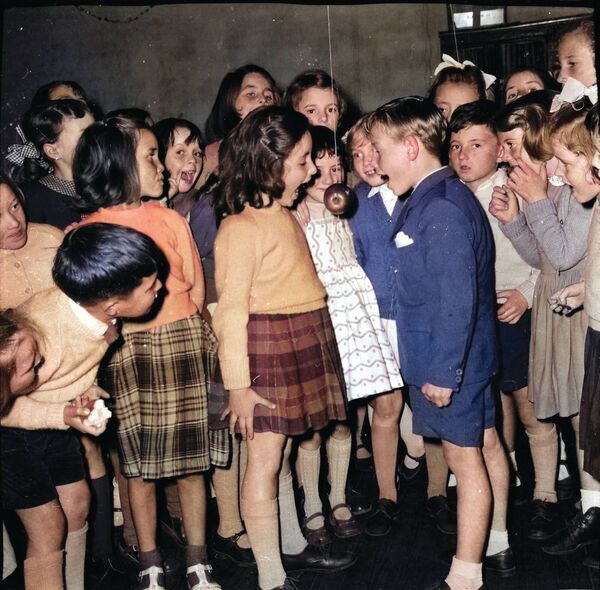
Ropes played a key role in our childhood. Ropes were attached to street poles, and the end of the rope was looped so that we could sit in it, and we then twirled around the pole in circles. The more acrobatic of us could turn our bodies so that our legs pointed to the sky as our heads spun round inches from the ground!
Skipping was an activity mainly for girls but sometimes the boys joined in as we stood waiting for our turn to run under the rope and skip without tripping or tangling our legs.
Summertime brought the “Trolley Season”. We made the trolleys from discarded children’s prams, including their wheels. Pieces of wood were crafted into a cage and attached to the frame and this provided seating, a piece of twine served to steer the cart. Now that we were ready, the races began.
On one occasion as we played football on Upper Yellow Road, a Black Maria (Garda car) suddenly appeared, and two guards got out and gave chase. Our crime was that it was illegal to play football on a public road and had we been caught we would have been prosecuted. To escape we ran and then climbed over an extremely high wall and fell into an area (opposite White’s shop, Keane’s Road) that we called the Yak-yaks (Bohemians F.C. had a playing pitch there for years).
Visits by our street gang during summer and early autumn to the “Rusty Track” was always eagerly anticipated. The Rusty Track site runs adjacent to the Greenway at Bilberry, it was a little used railway line that once serviced Bilberry Station, mainly to transport products from the Iron Foundry, to what is now Waterford Plunkett Train Station. The track was replaced by a new railway line that connected Waterford to Cork; we called it the “Silver Track”, as it was new and shiny. To get to the Rusty Track we walked through the “Hilly Fields” where the Hillview housing estate is located.
We regularly walked along the tracks, exploring the area for rabbits, birds, badgers, or other forms of wildlife. Sometimes we bent down and put our ears to the track to listen for an approaching train. As autumn arrived, we made sure to bring our “Tramore” buckets with us so that we could pick blackberries and bring them home for our Mams to make jam. As we got older, we dared one another to walk on the new railway track and make our way to the Red Iron Bridge, a railway bridge that crossed the River Suir. On one occasion we were lucky to have just left the bridge as a train approached.
In 2019 I attended Jim Nolan’s play “The Red Iron” in Garter Lane theatre and the memories came flooding back as the play reminded me of our activities of long ago. I was emotional as Jim name-checked the streets from the Top of the Town; Tycor Avenue, Keane’s Road, Ard na Gréine, Griffith Place, Upper Yellow Road, and Congress Place, all so familiar to me.
During dark winter nights, boys would gather on the street, and occasionally the conversation might turn to “girls”. If a girl from the neighbourhood had an ample cleavage, and if her name were mentioned, immediately someone would say, “She did not get them sitting by the fire.” This statement of fact was instantly accepted, even though none of us had a clue what it meant.
Carnivals or fun fairs were held regularly in Waterford in the 50s and 60s. The carnival I remember fondly was a fundraiser for the Holy Family Church. The carnival was located inside the grounds of the military barracks in Barrack Street, opposite Mount Sion School. The song, played on the public address system, that most reminds me of that event is Tom Jones’ “What’s New Pussy Cat”. All sorts of attractions were there, including carousels, swinging boats, boxing punch bag, chair planes and, of course, “bumper” cars. The spinning wheel was popular, whereby you bought a raffle ticket and if your number was called you won a prize, usually a soft toy or an ornament.
A neighbour worked for CIE delivering parcels from a horse and cart and, in summertime, during his daytime “dinner-break”, he would, sometimes, give the children of the neighbourhood a spin on the cart. Another neighbour kept a close eye on the horse’s visit and at the first sign he ran with his shovel to retrieve the manure left on the street so that he could fertilise the vegetables that he grew in his garden. That CIE man loved the horses, and he tended to them in the company’s stables, located off Bridge Street. In the mid-60s, tractors replaced the horses to all our disappointment.
Finally, the names of some of the products that we bought, ate or drank that come to mind from that era are, Flash Bars, Black Jacks, Gob Stoppers, Choc Ices, Patsy Ice Lollies, Tayto Crisps, Big Brother Lemonade, Jaffora Orange, Penny Snakes, Marsh Mallows, Macintosh’s Caramac, Cadbury’s chocolate, HB ice-cream, Pomara minerals, Rowntree’s pastilles and Sticky Toffee Apples.