Amorim's departure reignites the 'manager vs head coach' debate
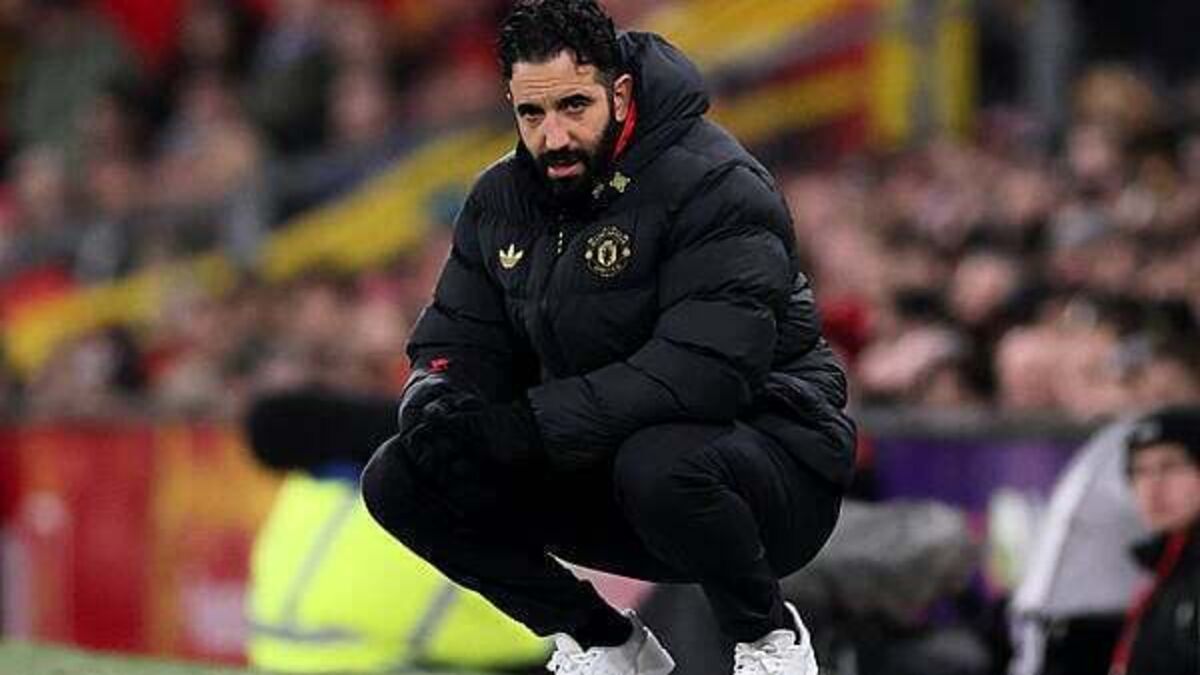
James Cox
In truth, the writing was on the wall for Ruben Amorim for a long time. However, his explosive Manchester United departure has once again reignited the 'manager vs head coach' debate in football.
When one thinks of the all-powerful manager, Alex Ferguson is the first name that comes to mind, and his shadow still looms large over Old Trafford, and did over Amorim until this morning.
After United's 1-1 draw with Leeds at Elland Road, Amorim effectively signed off on his 14 months in charge as he unleashed frustration at the club's board, insisting he was the Manchester United 'manager', despite signing a contract to become 'head coach'.
"I notice that you receive selective information about everything," he told the assembled reporters.
"I came here to be the manager of Manchester United, not to be the coach of Manchester United. That is clear.
"I know that my name is not [Thomas] Tuchel, it's not [Antonio] Conte, it's not [Jose] Mourinho, but I'm the manager of Manchester United and it's going to be like this for 18 months or when the board decides to change.
"That was my point. I want to finish with that. I'm not going to quit. I will do my job until another guy is coming here to replace me."
He added: "I just want to say I'm going to be the manager of this team, not just the coach. I was really clear on that.
"That is going to finish in 18 months and then everyone is going to move on. That was the deal. That is my job, not to be a coach.
"If people cannot handle the Gary Nevilles and the criticisms of everything, we need to change the club.
"I just want to say that I came here to be the manager of Manchester United, not to be the coach.
"Every department - the scouting department, the sport director - needs to do their job. I will do mine for 18 months, and then we move on."
The only thing odd about the sacking of Amorim appears to be the timing.
Despite frustrating results of late, including home draws with Wolves and West Ham, United are in sixth place, on the same points as fifth place Chelsea and just three off Liverpool in fourth.
When you factor in them missing three of their best players at the African Cup of nations (Bryan Mbeumo, Amad Diallo and Noussair Mazraoui) and without more leading men through injury (Bruno Fernandes, Mason Mount and Matthijs de Ligt), the timing may seem strange.
Amorim could have had few complaints about being fired after the club finished 15th in the Premier League last season, or lost the Europa League final to Tottenham.

This season a slow start could have spelt the end for the Portuguese, or the historically bad result of a League Cup exit to League Two side Grimsby Town.
Despite all this, he was always backed by the Old Trafford hierarchy, part-owner Jim Ratcliffe, chief executive Omar Berrada and director of football Jason Wilcox.
A fallout with Wilcox, who previously had a good relationship with Amorim, proved to be the final straw.
Amorim pushed for the signing of Premier League-proven Ollie Watkins (Aston Villa) over the summer, but he was overruled by Berrada and Wilcox who favoured a £73 million deal to sign Benjamin Sesko from Red Bull Leipzig.
Sesko has struggled for goals, with the issue exacerbated recently without the creative output of Fernandes, Diallo and Mbeumo.
Amorim is also believed to have been pushing for January signings, which Wilcox did not sanction.
Player recruitment appears to have been a big issue for Amorim, as he wanted more control in this department.
This is one of the key differences between a manager and head coach in modern football.
What is the difference between a manager and head coach?
A manager has near full control over the recruitment of players and transfer targets, whereas head coaches have an input with the ultimate decisions lying with the higher-ups (Wilcox and Berrada for United).
The head coach chooses the playing style, which has been a big issue for United with Amorim unhappy at Wilcox encouraging him to move from his favoured 3-5-2 formation.
Managers like Ferguson, and Arsene Wenger at Arsenal, had full control over what players were signed and no interference from the club hierarchy.
When Unai Emery was appointed as Arsenal head coach in 2018, it ended 22 years of Wenger's leadership as manager.
At this time it was uncommon in the Premier League, but now the title head coach is more prevalent than manager.
Which is better?
Most would prefer to be called a manager, but in modern football head coach is a far more common title.
This is because of the fickle nature of the game where managers or head coaches are frequently sacked after bad runs of form.
Spells like Ferguson at United (27 years) and Wenger at Arsenal (22 years) are now a thing of the past, despite the nostalgia these types of figures hold for modern fans.

This means clubs prefer to have many branches of leadership deciding how millions are spent on players rather than one totemic figure.
In reality though, many head coaches are essentially managers and trusted with more authority when they prove themselves to be successful.
Ultimately, results were the undoing of Amorim rather than his title.