REVIEW: Author gives readers peek inside mind of an ordinary woman - the results are extraordinary
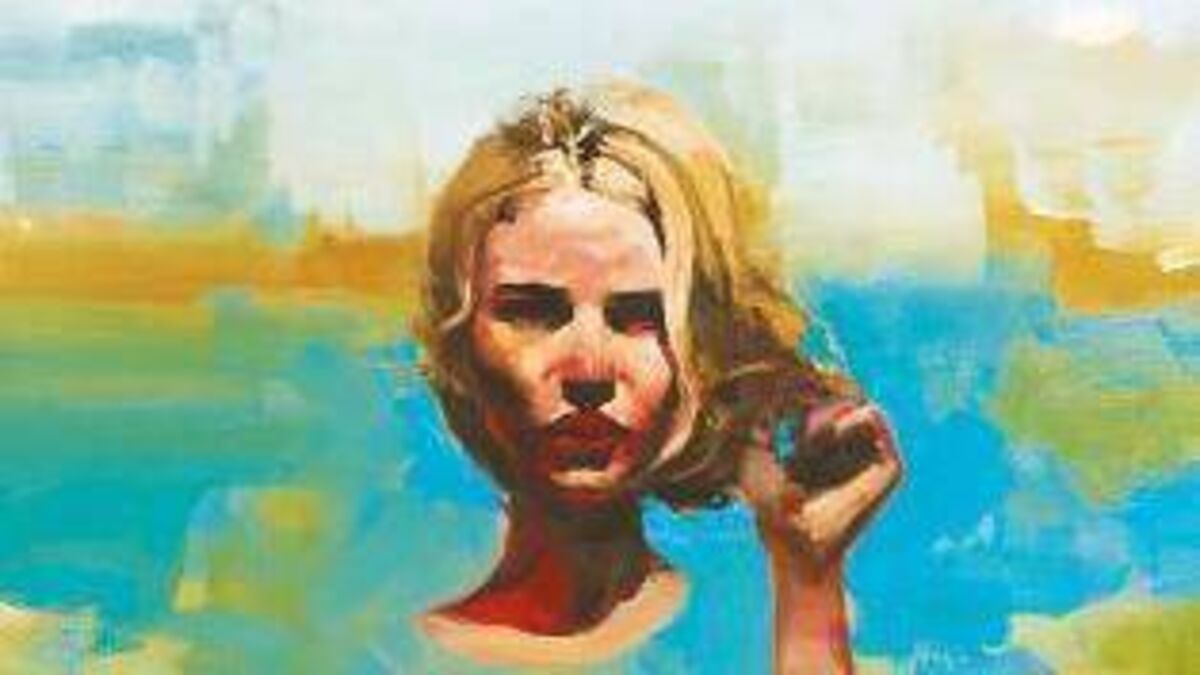
A Beautiful Loan by Mary Costello came out this year.
I read 'A Beautiful Loan' by Mary Costello over the course of a weekend. This gave me the odd experience of time travel because the book itself takes place over three decades.
On the back of the book, J.M. Coetzee says something interesting: “Mary Costello brings to life a woman who would otherwise have faded into oblivion.”
Our narrator Anna leads a fairly ordinary life. She is a teacher in Dublin, she falls in love with a man who doesn’t treat her well. They marry and he only becomes more distant and aloof. And on the book goes, filled with chapters of grief, of loss, of anger, of peace, of excitement. The book trundles through this woman’s innermost life. Reading the book gave me the curious feeling of being on a train, slowly making my way through one woman's emotional landscape.
This is what makes the book interesting: Anna is dedicated to the study of self-knowledge. Indeed, she is dedicated to study itself. She learns all there is to know about French Existentialism, Carl Jung and the Islamic Faith.
The prologue is clear about what Anna’s project is: “How to understand all this, then: How to understand why we do what we do, or tolerate what we tolerate, or love who we love.” The other characters in the novel are mere sketches. Outlined hastily in black and white, we recognise them by their purpose: the parents, the husband, the lover. Anna sometimes gives startling flashes of insight into why they do what they do but throughout the book we are mostly in just the companionship of Anna.
If the other characters are sketches, the book's cover accurately conveys Anna. Painted by Michael Carson, it shows a woman, clearly defined but also somehow part of the landscape behind her: her self not defined but permeable to her environment.
At its core, this is a novel that explores the effect that art and ideas can have on the soul. This is not done through grand statements but through careful study and attention to detail on Anna’s part. She believes that loving someone means truly knowing them. She reads voraciously about Albert Camus, finds old photographs of him, and reads the novels and thinkers he was inspired by.
At a moment of intense loss, Anna turns to Islam. Once again, her first port of call is study. She does not ask her Muslim boyfriend to merely teach her the actions she should follow; instead, she reads the philosophy behind the religion, the ancient texts, the modern interpretations.
Anna is the type of person to give herself over completely to her passions. For others, this might be food or sex or travel, Anna’s passion is ideas. And she dedicates her life to the exploration of these ideas.
By doing this, she grows increasingly sensitive, especially to the natural world. She adopts a dog and this in itself leads to a new understanding of the world. Costello writes: “She has altered me, generated in me a new awareness of animal consciousness, of their moment-by-moment existence.”
After adopting ‘Boo’ Anna becomes a vegetarian, “This is what Boo has done to me. I start seeing it everywhere, the innocent suffering of animals.”
Costello uses animals as an excellent narrative tool to explore the dangers of becoming too enamoured with the world of ideas. Although at first Anna finds her appreciation of nature and animals heightened by her newfound faith, her boyfriend Karim becomes increasingly dogmatic (excuse the pun) and refuses to let Boo sleep inside the house; instead, she is relegated to a kennel in the back garden.
When Anna first meets Karim, he is not a strict Muslim; he drinks alcohol and doesn’t pray every day. But when tragedy strikes both of their lives, they both become lost in the ‘rules’ of the religion. They stop drinking alcohol, Anna hides her faith from her family and friends, and most importantly, she stops reading books and watching films. She becomes culturally and artistically “impoverished”. The beginning of the novel tells the reader that Anna is committed to understanding her psyche, and it appropriately ends with a therapist explaining the constant fluctuations in life.
She says: “And you love to study, you’re a seeker of knowledge – it’s who you are. So for the most part, Islam, like any religion or philosophy, gave you meaning for a while. So don’t be too hard on yourself.”
On the face of it, not much happens. There is marriage, obsession, breakups, deaths, miscarriages, and all the other brutal instances that comprise a life. But rather than using these things to make up the story, Costello explores what these events, which is to say life in general, to a person. By the end of the novel, the answer is clear.