Fr Liam Power: The Commission on Women Deacons - It Doesn’t Say No
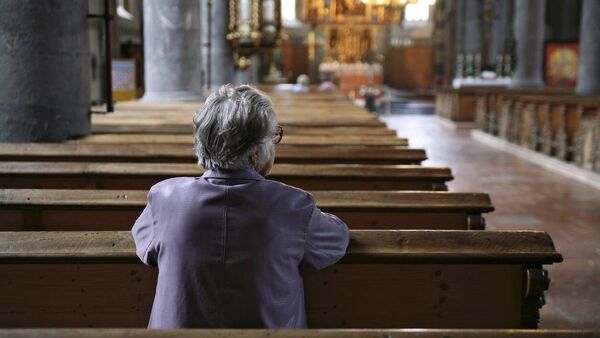
'I'm upset because so many women, deeply committed to their faith, and who give so generously of their time and talent to serve the mission, really felt betrayed.'
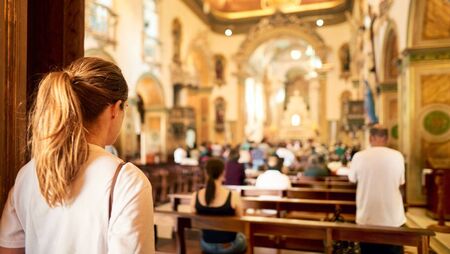
Like all churches throughout the diocese, our parish churches were packed for the Christmas Eve Masses. We scheduled a special Mass for children at 5.00pm on Christmas Eve. We had to ask parishioners to book on the Eventbrite platform, there was such a demand for places.
The Mass was booked out in 20 minutes, faster than a Taylor Swift concert!
Our children’s liturgy committee ensured that the service was really child-friendly, involving as it did the children in a nativity play. They felt really engaged.
I always find the Christmas liturgies to be so uplifting, so full of joy and hope. The Christmas services afford us an oasis of peace and calm in the midst of such violent upheavals and threats of war in an increasingly turbulent world.
However, I must admit that I felt very disappointed coming up to Christmas.
The second Commission established by the Vatican to examine the possibility of female deacons issued a report in December. It concluded that the Church cannot currently move forward towards admitting women to the diaconate... "(I)n light of Sacred Scripture, Tradition, and ecclesiastical teaching, this assessment is strong, although it does not allow for a definitive judgment to be formulated at this time.”
The report, therefore, does not rule out women deacons but states that more study is necessary.
I'm upset because so many women, deeply committed to their faith, and who give so generously of their time and talent to serve the mission, really felt betrayed. Inputs to the Synod on Synodality in 2023 from all over the world named women’s role in the Church as an urgent consideration. Over 70 per cent of these syntheses included women’s ordination to the diaconate as a way of including women in leadership positions in the church.
Indeed the failure of the Church to include women in significant leadership roles, such as the Order of the Diaconate, seriously undermines its credibility in the culture of today. There is little tolerance in Western culture for institutions which do not support the equality of women or that seem to condone patriarchy.
I was heartened to read passages that were more nuanced in the report. It was published in Italian. Our parish pastoral administrator is an Italian native, and she helped me translate some of the more nuanced arguments, which many commentators failed to pick up on. The press only highlighted the more negative conclusions.
The report stated that because Jesus was male, only male deacons can sacramentally represent Christ. The masculinity of those who are ordained deacons is not accidental but “an integral part of sacramental identity (because Jesus was male) preserving the divine order of salvation in Christ”. Quite a mouthful!
Feminist theologian Elizabeth Johnson warns that exclusively male imagery for God and Christ functions to privilege male rule and undercuts women's spiritual power. It risks justifying the patriarchal family, which is so strategically central to the fascist state. In Nazi Germany, for example, it was state policy that the role of woman was to be a mother. Her duty was to raise children for her people.
Patriarchal gender roles are championed by the ultra-right wing Christian Nationalism in the United States. Usha Vance, wife of Vice President JD Vance, resigned from her law firm in 2024 to focus on their family. This seems to be a prerequisite for wives of Christian Nationalists such as Vance.
Hungarian Prime Minister Victor Orban touts the virtues of a patriarchal society and warns that the state must be protected from the encroachment of liberalism. He claims that the source of such hierarchy reaches all the way back to its Christian roots established by St Stephen in the second century, which, of course, is a total aberration.
However, the Commission recognises the difficulties arising from the claim that only males can sacramentally represent Christ in Holy Orders. It goes on to nuance this rather dubious claim. The report acknowledges that there is a tension here with central teachings in the Tradition. For example, the creation narrative in the book of Genesis states unequivocally that male and female are created in the image and likeness of God.
The traditional stance against the ordination of women deacons is also in tension with the teaching of St Paul in the Letter to the Galatians, which states, “In Christ Jesus there is no more distinction between male and female” as “all are one in Christ”.
The report also acknowledges that, throughout history, the title of deacon referring to women was recognised, “although the meaning of this role was not univocal”.
But the Commission concludes that a purely historical perspective does not allow us to reach definitive certainty. Ultimately, the question must be decided on the doctrinal level.
There has been no definitive declaration as of yet on the issue of women deacons. Therefore, it is still an open question. The wording in the report suggests that there may be a possibility of doctrinal development here. I believe such a development would significantly enhance the life and mission of the Church and its credibility today.