Fr Liam Power: Christian Leadership and the Presidential Election
Fine Gael is continuing in that very not-so-honourable tradition by denying a huge swathe of the electorate a voice in the presidential campaign.
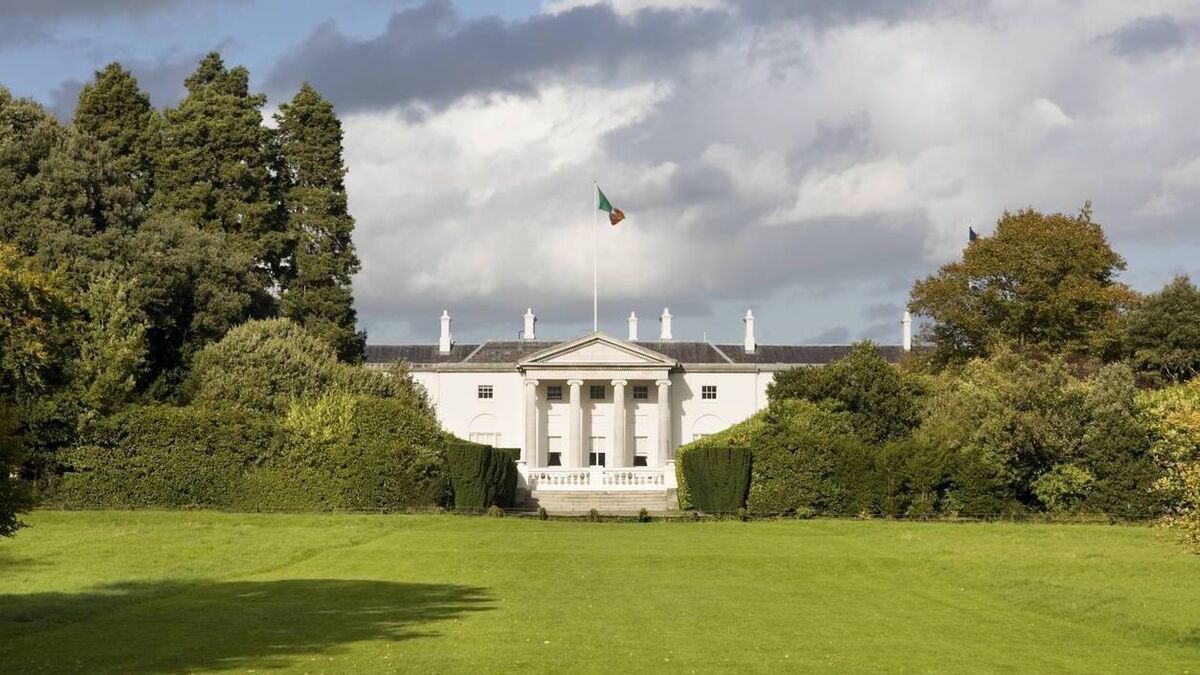
On October 24 the Irish electorate will elect the 10th President of Ireland. I thought it might be opportune to reflect on the role of the president, infused as it was with new vision and relevance by Mary Robinson, Mary McAleese and Michael D. Higgins.
I will do so in light of the vision of Christian leadership as enunciated by the late Pope Francis in his insightful encyclical Fratelli Tutti.
The office of President is largely ceremonial. While the Constitution confers limited powers on the holder of the office, it does state that he or she “shall take precedence over all other persons in the state”. This makes it an exalted public position in our Republic and it occupies a unique leadership role in it.
Pope Francis challenges the idea of leadership as power and instead stresses that a leader is called to be servant of all and should prioritise the poor and the excluded.
Leaders should promote unity, peace and mutual respect, and not division. The leader must be open to dialogue and “build bridges, not walls”, and must at all times promote the common good.
(I believe that most people of goodwill would support this vision of leadership regardless of beliefs.)
Mary Robinson was the first woman to be elected as President, serving from 1990 till 1997. Historians credit her as being intent on using “the symbolic power of the office to recognise, support and validate the new pluralist Ireland and to promote the liberal norms of respect for human rights, tolerance and pluralism.”
By accepting invitations to visit Northern Ireland, she helped to normalise the relationship between North and South. She was the first Irish president to visit Britain in an official capacity.
Mary McAleese served two terms as President (1917-2011). A Catholic and Northern nationalist, she was very clear that she would be a non-sectarian head of state.
Her presidential theme was that of building bridges. She was particularly focused on the Peace Process and visited Northern Ireland on more than one hundred occasions. She welcomed the British Monarch to a state banquet in Dublin Castle, thus breaking the last taboo in Anglo-Irish relations.
Both McAleese and Robinson transformed the office of the presidency, utilising the soft, persuasive and symbolic power vested in the office. They acted as cultural signifiers of the nation, valuing and fostering social engagement.
Both were truly representative of the people embodying the ideals and values towards which we aspired.
They fostered a deep bond with the electorate and, in the words of many commentators, gave the role of president a new renewed sense of relevance.
They found spaces “in which the constitution was silent” ( to quote Academic Yvonne Galligan) to develop their vision of the Presidency.
Michael D. Higgins has continued in this vein, developing themes of his presidency focusing on homelessness, inequality and immigration.
He regularly commented on public issues stretching the boundaries of the office to the limits. But, again, he connected with the people and I believe Irish citizens were proud of the fact that he was their president.
He placed much emphasis on the role of the arts and culture in general in shaping the soul of a just society.
I think Pope Francis would have approved of their leadership style.
Journalist Fintan O’Toole has highlighted how hugely significant the office of the president is for a modern Ireland. He claims it is the only consistent voice for the articulation of higher values to inform the soul of the nation as the Church has lost its moral authority.
But in forging such a positive vision for our country he argues that all voices should be heard. There is a significant portion of the population who feel they are being ignored, that is the 45% who feel that Catholic teachings are of benefit to Irish society. There is no one to speak on their behalf.
O’Toole (of all people) has championed the cause of Maria Steen. Coming from a positive vision of the presidency, he argues that Oireachtas members and local councils owe it to the Irish electorate to ensure that the “socially conservative voice is represented on the ballot paper”.
“Steen would be a strong and stimulating presence in the presidential debates.”
I believe it is a serious abdication of responsibility to Irish democracy for Fine Gael to refuse to support the nomination of an independent candidate of the stature of Maria Steen. It is partisan and narrow-minded as it fails to respect the office of the presidency as representative of all the people.
Mind you, Fine Gael has form in this regard. Liam Cosgrave, Taoiseach from 1973-1977, had a very narrow interpretation of the role of President and, according to academic Kevin Rafter, was rather dismissive of the office holders.
He stymied Erskine Childers and Cearbhall O’Dalaigh, who were keen on strengthening the non-constitutional role of the president. According to Rafter, Cosgrave must share the greatest responsibility for the subsequent resignation of Cearbhall O’Dalaigh as president as he acted in a very partisan manner at the time, protecting party loyalty rather than respecting the presidential office.
Fine Gael is continuing in that very not-so-honourable tradition by denying a huge swathe of the electorate a voice in the presidential campaign.
We have witnessed exemplary leadership by two previous and the current office holder of the Irish presidency, exploiting the full potential of soft power (rooted in Christian and indeed universal values as outlined by Pope Francis), persuasion and symbolism. Let’s hope that the 10th president of our republic will follow in their illustrious footsteps.