Editorial: Offshore wind energy - and bringing the public on board
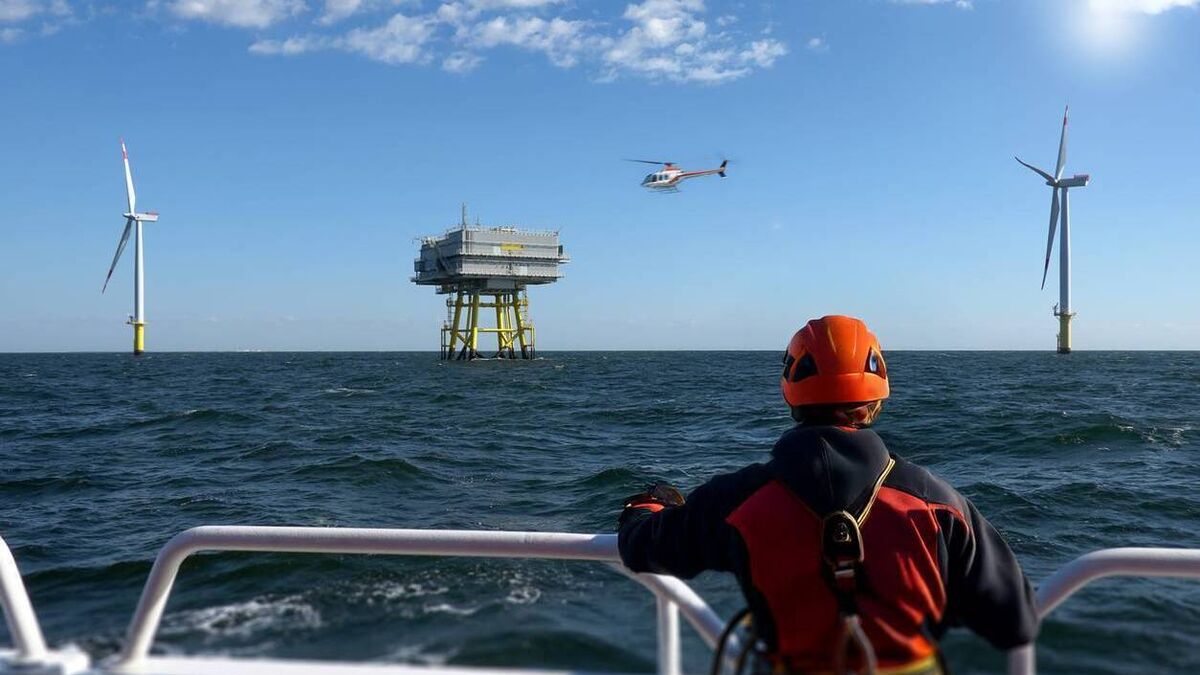
Our nearest neighbour, the UK, is streets ahead, with 15GW being harvested in offshore wind energy.
There is currently huge interest nationally, and a degree of concern locally, at the imminent development of offshore wind energy off the Waterford and Wexford coastline.
Heretofore, Ireland has only taken small steps into this latent energy source - with people living on the eastern seaboard, and those who drive the N11 to Dublin, familiar with what's known as the Arklow bank windfarm.
For comparison's sake, these turbines - seven in number - are much smaller in scale to what will ultimately be developed in the seas off Waterford and south Wexford. They produce just over 25 megawatts (MW).
They are but a small toe dipped into the sea of possibility of offshore wind energy, which Ireland has yet to develop at scale.
Our nearest neighbour, the UK, is streets ahead in this regard, with 15GW being harvested in offshore wind energy.
To put this in context, Ireland is aiming to reach 5 gigawatts (GW) by 2030 - if it makes good on the targets it has set out.
This is dependent on significant port upgrading and development, alongside the development of offshore wind infrastructure. But we are now starting our march - with the Tonn Nua venture one of the first of focus off the south coast.
The South Coast Designated Maritime Area includes for four offshore wind farms, including Tonn Nua, which will be delivered by a joint venture between ESB and Danish energy multinational Ørsted.
A meeting at the Port of Waterford recently looked at the economic boon that Tonn Nua, and its three sister windfarms, have the potential to open up in the South East. An economic report put figures on the value of offshore wind, with a 'Gross Additional Value' the four wind farms could generate an estimated €1.7-€2.2 billion.
Tonn Nua is projected to develop 900MW of energy, enough to power around 800,000 homes. Overall, the total south coast energy development - from the four windfarms - could produce 4.9GW of energy. In addition, construction could see 4,000 jobs generated at peak.
CEO of the Port of Waterford, David Sinnott, is encouraging local politicians to back the progression of the wind farms, thus avoiding what he termed "stop-start cycles". He is hoping decision makers will be empowered to make what he is calling "sufficiently good decisions".
“We have the capacity. The challenge now is to create the capability, the systems, the coordination, the confidence that will bring certainty to the market and ensure competitive tension,” he told businesspeople and stakeholders gathered for the release of the economic report.
The Waterford News & Star covered the event, where speakers framed the development as one that’s both a necessity and inevitable.
The cost of energy is keenly in the public eye at the moment, with the price of diesel in particular making eyes water at the pumps - it may be just the start of a very volatile period for oil prices given the conflict in the Middle East.
But there is no denying that the coastal views we've come to enjoy, with blue seas stretching all the way to the horizon, may have to be relinquished in favour of a sustainable energy alternative.
We are not on our own in looking to capitalise on offshore wind energy, with the market ever-developing. The UK is not sitting at 15GW either - the race is very much on, and Ireland is barely out of the starting blocks in an increasingly competitive international race for dominance.
The onus is not merely on politicians to encourage "sufficiently good decisions", though; it is on all stakeholders to bring the public with them on this journey, and that is best done through transparent, clear communication of what is being asked of us all.