Catherine Drea: Here in so-called rural Ireland
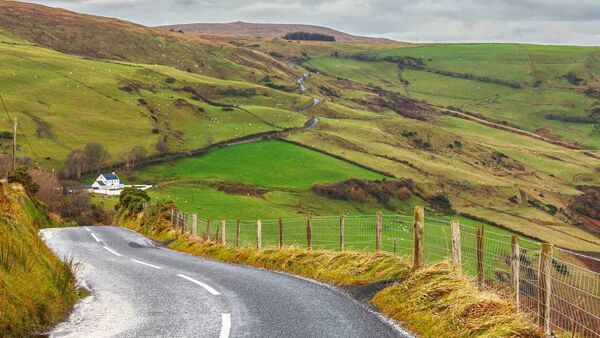
Here in so-called “rural Ireland” we have our own priorities.
When Leo Varadkar talked about the rural-urban divide, it reminded me yet again that people who live in the leafy suburbs of Dublin believe that everywhere outside of their little bubble is “rural Ireland”. I find it hilarious when they talk about “going down the country” for their holidays. Forget all the stereotypes, those of us living in “rural Ireland” (whatever that is) are a diverse, creative and colourful group of people.
We all originally came from the land. Even if you don’t know which piece of land your forefathers lived off, be sure that back there somewhere, even if it was just half an acre, their survival depended on it.
While browsing the 1926 Census I could see that the division of these few acres down through the generations has determined the current structure of our families; modern society, our communities, industries, food production and culture.
In 1926, 51% of Irish people worked in agriculture. By 2022 this had fallen to 4%.
Over the generations, one of the lads, the eldest, usually, inherited the land and everyone else had to fend for themselves. This shift in how we would make our living without land, is part of my own family history too. My lot were the younger children that had to find other ways of earning a crust. However, in spite of moving into town, some of them still longed for a quieter, rural existence. When my father brought me down treelined boreens to his grandparents' farm, it was like he had come home.
Farming in those days was akin to visiting a pet farm for this young child. A very elderly widowed aunt was running the place. With a sack tied around her waist and muck up to her elbows she entranced me with her wildness and her knowledge. Unlike a farm today with only a couple of huge machines in the yard, Aunt Margaret had a yard full of hens and geese, a few pigs in an open pen, a garden with cabbages, spuds, apple trees and rhubarb, and bigger animals up in the fields. This was all quite magical.
When farming was lost to them, the various family members, brothers, sisters and cousins set up aligned businesses, opted for education or got skilled in vital trades. The eldest sons who benefited or who were burdened with inheritance literally ploughed on while the others moved into the nearest town or went even further afield.
According to the Census, on both sides of my family there were brothers and sisters living in the family home well into their 20s. This really surprised me and there are echoes of the present housing situation in that. I always assumed that they would have married young and died young. Many of them never married at all and stayed in the family home, noted as “home duties”, “labourer” or “assistant.” Later some of these single siblings emigrated to the United States and to England.
Ireland is a very small country with a fantastic quality of life and sense of community. However, we are dogged by a new kind of rage. If the country had erupted over anything I would have hoped for marches protesting the severe housing shortage, the high cost of living, the gaps in health care. I would have marched for the urgent need of planning to tackle climate change, biodiversity loss, skills shortages.
But the parents of children with life-threatening scoliosis or the carers of adults with special needs asking what happens when I die, would never be able to bring the country to a stand-still, would they? And if they lived down a boreen in rural Ireland there surely wouldn’t be any accessible transport to bring them there? And if they needed it, there wouldn’t be an airport or a 24/7 cardiac care service within a two-hour drive? And although paying the same taxes as everyone else, they wouldn’t have water mains or even a bin collection? Sure I could go on!
The future of rural Ireland is uncertain. While the economists are full of anxiety about our inability to feed ourselves, instead of growing more food we are importing more food. Instead of supporting more people to work in agriculture, more people are leaving it.
We are a self-sufficient lot out here in the sticks and do things for ourselves, but I can’t help thinking that humans are not a very evolved species when I dwell on all the things in the country that need to be fixed. Where is the inspiration, the creativity, the leadership? It’s just not visible to us down this grassy boreen.
The good news out here though is that the swallows and house martins have arrived. Within hours of completing their journey of thousands of miles they had repaired their old nests, taken up residence in their new homes and set about creating a family.
“And we think we’re smart,” says I to Himself!
There are so many challenges. It makes you wonder about how our tax money is being used and why 2.5 billion will be spent on a Luas for Cork City when that money could provide solar-powered energy for every dwelling in the country, build more houses, create more places in care, support indigenous rural enterprises… you name it.
You see here in so-called “rural Ireland” we have our own priorities, but we are too busy getting through the day to shout about them.