Waterford's Adam Sweeney aims to become the youngest Irish person to summit Mount Everest
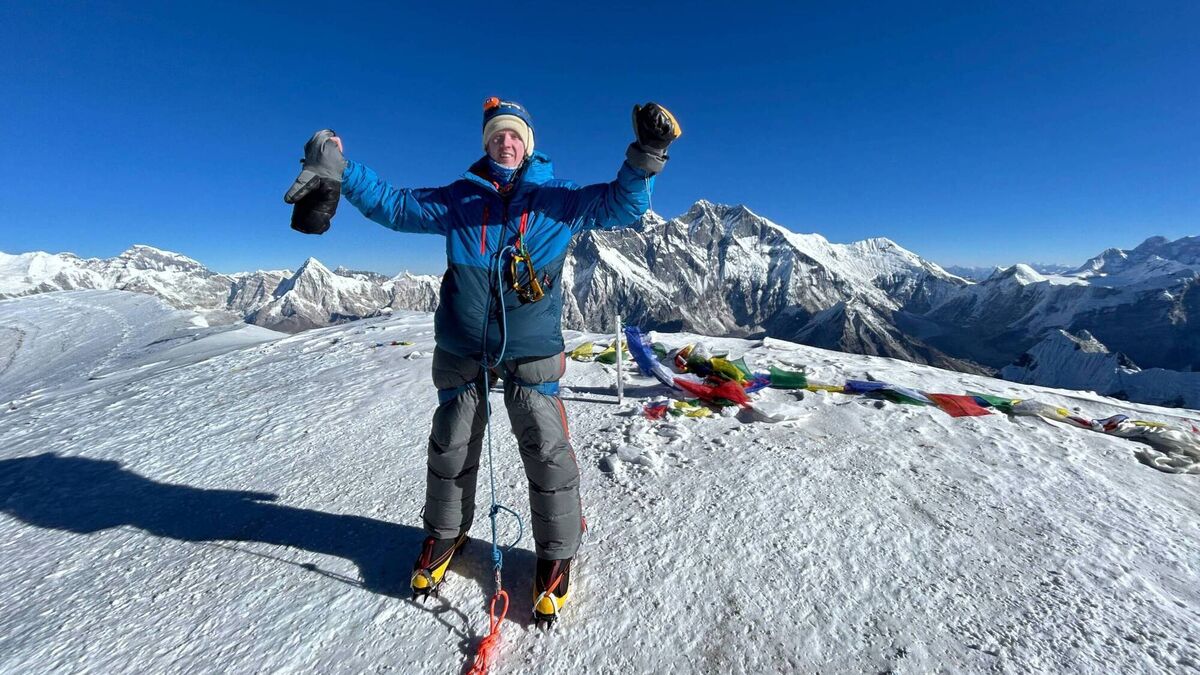
Adam Sweeney is part of the first all-Irish team to attempt Everest's summit in over 30 years
13,737 summits, 65 of whom were Irish. 29,000 feet. 339 deaths.
These will be the numbers swirling through Adam Sweeney’s head as he attempts to become the youngest ever Irish person, and the first from Waterford (he believes), to summit Mount Everest.
Another pretty damning figure? €55,000. This will be the price Sweeney pays to take on the highest mountain in the world.
According to Sweeney, that’s on the low end of things - and trips to the top of the world often breach six figures.
For the 22-year-old from Dunmore East, the plans to tackle Everest have been in place for over two years. They first began incubating in his mind when he was 19, and had just summited Aconcagua - the highest peak in South America.
Everest was the natural step up.
Recalling the ascent up Aconcagua, which stands at 22,840 feet, Sweeney could be accused of being slightly naïve. His previous highest mountain was Scotland’s Ben Nevis (4,400 feet).
A genial, happy-go-lucky character, he seemed to relish the massive step-up, even if he found himself a bit out of his depth.
“It was terrible…Young, oblivious, went over, did that, struggled doing it,” Sweeney laughs.
A breath of inspiration also came when he was attending Newtown Secondary School and was visited by former student Jenny Copeland, who summited Mount Everest in 2019.
Plans for Everest were put in place early to build a funding base.
Operating as a bit of a chancer - he’s been knocking into local businesses, getting a few bits and bobs, as well as rallying support via a GoFundMe.
His parents, who own Dunmore Adventure, have also been instrumental.
A natural love for the outdoors has always been there through his parents. When he was 16, he cycled the perimeter of Ireland during the COVID lockdown.
For now, Sweeney’s deferred his dual life of wild outdoorsman and accountant; now its solely the former that occupies his hours.
He acknowledges it’s a dichotomous existence, and that people in JBM Accountants, the firm he’s interned with, would see him as somewhat of a “nutter”.
“There was good craic in the firm, like they're always kind of giving out, ‘what are you doing? Crazy'." He’s now enjoying the monotony of his training days, where he says thousands of shedded calories give license towards free eating.
He dedicates hours on the mountainous trails across Ireland, while also ticking the boxes of ‘Zone 2’ aerobic work - medium-intensity training that raises his aerobic floor in preparation for two months spent on Everest.
To have what author Tom Wolfe called "the right stuff", to possess an at-times delusional sense of self-belief and an ability to enjoy the pain, seems a necessary requirement to summit Everest.
“I think it's a bit of stubbornness,” Sweeney says of the required qualities in a mountaineer.
“You’re doing summer nights, you’re so mentally exhausted…the mental part is the harder part I think.
“Whenever I'm out on exhibitions or runs, stuff like that, I really enjoy kind of pushing myself to the point where the legs are really heavy, I'm feeling crap. It's having that stubbornness and also going out and having a bit of craic.”
Sweeney plans to take the more common path up to the summit of Everest, threading through the Southwest Face from Nepal.
He’ll be joined by three other Irishmen, including former Mayo intercounty footballer Padraig O’Hara and professional mountaineer and K2 summiter Jason Black.
“I've done (Ama Dablam) with (Black). And then we went over to France. And then with Padraig, I’ve done Morocco and France. And like, oh man, the craic you’d have up there is unbelievable.
“You can be sitting in base camp for three weeks. And you want to have good company, because there's only so much doom scrolling you can do through Instagram reels.”
Sweeney will be spending around two months on the side of Everest.
For all successful ascents, the practice of ‘rotations’ come into play - Sweeney and his partners will travel up the mountain, and then continually drop back down to base camp at a lower altitude.
The process is repeated several times, going that bit higher every day. It drives physiological adaptation, and ensures the body comes hyper-efficient working off the thin air of Everest - an experience that many describe as like breathing through a straw.
When the fitness is nailed down, and an appropriate weather window clears up, that is when they make the drive to the summit. There are five camps in total spread over the mountain.
“Once you get to camp through three, you'll come all the way back down (to base). And then that's kind of when you go, because if you go to camp four, you're not getting much benefit.
“So you go 1-2-3-4, and then two hours, maybe three hours in camp, where you're not sleeping, you're not breathing properly, not eating anything, so you're going up, and then you come back down to camp three, and then sleeping.
“It's a long exhibition spent out in tents…I’m not mad into sleeping in tents.”
In 2014, 13 Sherpas, the indigenous people of the Himalayan mountains, were killed in an avalanche.
While the death rate for those who prepare for Everest properly and use oxygen is less than 1%, Everest is a beast of nature.
It shows no restraint for anyone, no matter the gear they were, their past experiences, the line they walk. Not even if they’re a son of the land.
Jenny Copeland, the woman who inspired Sweeney to take on Everest, lost one of her climbing partners on the mountain in a freak accident.
One of Sweeney’s crew has been seeing a therapist, trying to brace himself for the sight of a dead body - which there are plenty of on Everest.
Sweeney is a bit more easygoing.
“It's the thing with the mountain. I think a lot of people do beat around the bush with it as well.
“For me, it's worth the risk. Now, I know for family, it's hard to explain to them.
“I wouldn't say it’s the fun part, but it's like a bit of excitement, you know what I mean?”
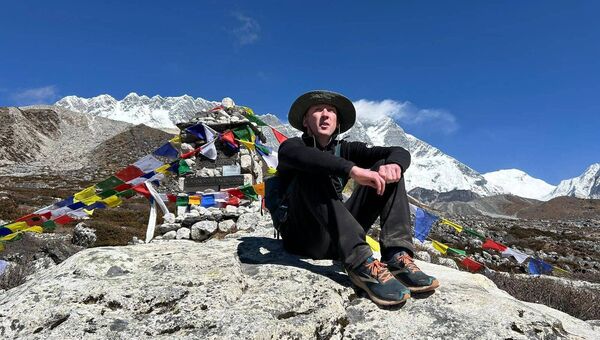
There are several physical risk factors posed by Everest. High Altitude Pulmonary Edema can fill the lungs with fluid, while High Altitude Cerebral Edema can cause brain swelling, leading to potential death within hours.
It’s key to get out of the ‘death zone’ at the peak of Everest as quickly as possible, and save enough energy for the descent.
“Once you're in the death zone, you don't want to be there for long at all…Once you get up, you'd want to speak to the lads.
“You're going to go down, you're going to have a few pints and stuff like that…We've all given up a lot to actually be able to do this, but you have to be so careful coming down, that's kind of where most people slip.”
So what comes next after you reach the summit of the world?
If the job is to be carried out successfully, Sweeney says a 100-kilometre ultramarathon with his sister waits in the wings.
K2 remains in the back of his mind, though the 25% death rate understandably proves intimidating.
A return back to the office will be on, where the highs of mountaineering will have to be replaced with bean counting, until his next adventure, anyway.
Adam’s GoFundMe is still active and can be accessed here. He plans to fly to Kathmandu in April.