Waterford teen hurler who wins heart battle to put school teams to the test
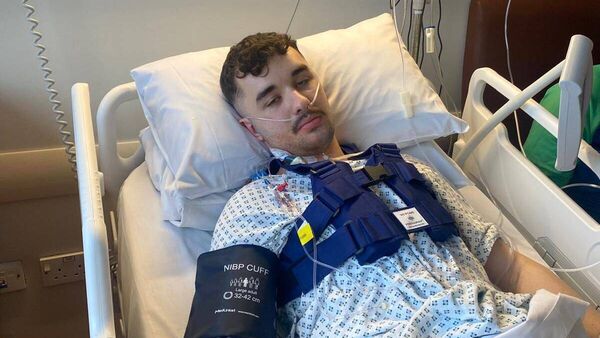
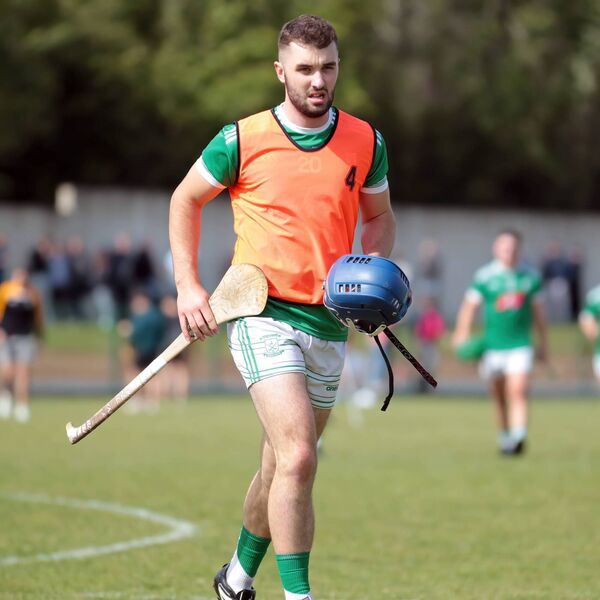
Conor following heart surgery last December.
Seventeen-year-old Ferrybank hurler Conor Haley has had one hell of a year.
Last December, he had surgery for not one but two holes in his heart.
Conor didn’t even know he had the congenital heart condition Sinus Venosus. After months of hard work, he is now back on the hurling field.
“I would have played the first senior game against Dungarvan, and it was like six months prior to that, I was waking up on a ventilator in ICU. Like, to be back out on the field, it was a surreal kind of feeling,” said Conor.
But Conor doesn’t want the story to end there. Conor, his father John, and their sporting community are trying to raise money to get the hurling and camogie teams at the Abbey Community College tested for conditions like Conor’s.
They are organising a Golf Classic and charity hurling match in the hopes of raising at least €6,000 for the Dillon Quirke Foundation.
“It’s the legacy after this. The Dillon Quirke thing is that it's SADS, Sudden Adult Death Syndrome, and it's lucky Conor wasn’t another statistic for that. That’s what we want to do [for the school],” said John.
Conor and John said that Conor had always struggled with running and was often injured after matches. Conor had been playing sports all of his life, so they never considered that anything was seriously wrong.
“I would be training as part of the pre-season in Waterford, and we would be training like five nights of training - two in the gym, three on the field.
“But we did like running training, and I remember down in Colligan Woods running, and I pushed myself as hard as I could, and I was dead last by about five minutes behind.
“But I never thought anything of it. I just thought I was unfit and stuff,” said Conor.
They couldn’t explain Conor’s symptoms, but thought they might have something to do with energy drinks.
Conor told us that he used to drink three or four cans of Monster a day. But when he decided to give them up, he felt worse.
One day last August, he woke up and knew he needed help.
“I woke up and had really bad pain in my chest, and I was getting really bad palpitations, and I didn’t feel right either. I went into work, but I got sent home, and that night I still couldn't sleep, so I went into A&E and I got referred for an echo,” said Conor.
The echocardiogram revealed a hole in Conor’s heart, which the doctors could fix with keyhole surgery.
“In August, when he got the diagnosis, it was a complete shock for a young fella hurling and out doing sport all his life. We always thought it was a lack of fitness with Conor running. It was a big shock in August when we got the diagnosis,” said John.
Conor was scheduled for surgery in December, but things did not go to plan.
During the surgery, the doctors found a second hole.
“They rang us and said get up to the hospital urgently, and we didn’t know what was going on, and that was when they told us they found the second hole,” said John.
Conor had open heart surgery 10 days after his keyhole procedure, on a Friday.
“I woke up in the ICU room on a ventilator, and my hands were tied to the bed so I wouldn’t pull it out,” said Conor.
The surgery was a success, but the recovery would take months of hard work.
And that work began just two days after his surgery.
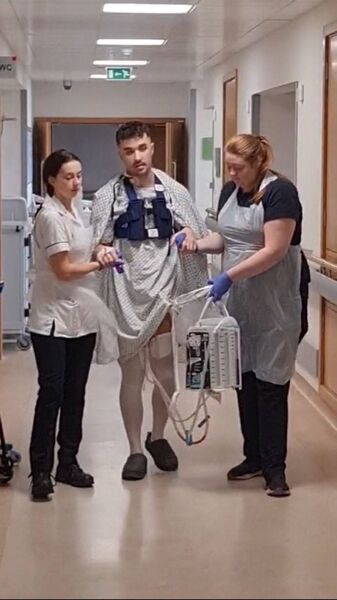
“On the Sunday, I still had the drains in, and I had to go for my first walk with them in.
"It was probably one of the toughest things I’ve ever had to do. It was probably not even the length of the hallway and two people holding me up. I stand up and walk up and back.
“And then the next day I had to do the same thing, but a bit longer.
"I walked in the evening on the Monday, and the nurse was with me, and when I got back and it was less than three minutes, I couldn’t speak, I was that tired. I had to go straight to bed,” said Conor.
By his fourth day in the hospital, Conor was able to walk up two flights of stairs, the threshold for his discharge on Christmas Eve.
When he returned home, his mother, Marguerite, “done everything for him.”
He was allowed to walk for eight minutes up and down his estate in the morning and another eight minutes in the evening.
But three weeks later, Conor was walking by himself, and now he is back on the hurling field.
“I was allowed to run in February, say. I had a brace on me to keep the breastbone intact, so I wasn’t allowed to do anything.
"But I went back running in February until March. And I was only allowed to run; I wasn’t allowed to lift anything over 5kg.
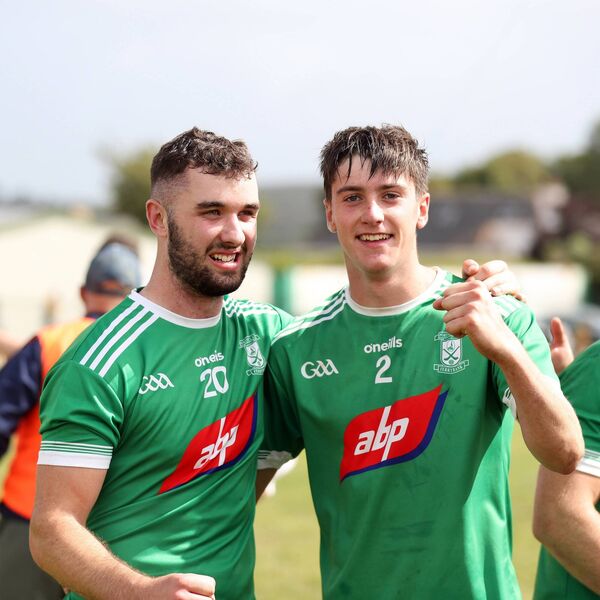
“But then by March I was back hurling, but no contact. So, constantly back training. And then in June, I was allowed back contact,” said Conor.
Conor played his first match in August, and he is very happy to be back to doing what he loves.
“I didn’t think I would be playing this year, but at least I got to and can play. I was just happy to play,” said Conor.
John said that Conor worked exceptionally hard to get well again, but they couldn't have done it without the amazing doctors who treated him.
“Professor Andrew Maree [Consultant Interventional Cardiologist] in St James and Prof Lars Nölke [Surgeon] in Blackrock were absolutely brilliant.
“We couldn’t do it without them, and their support was absolutely brilliant.
"Everything was explained, and what they were going to do, and the treatment we got at the hospital was fantastic, and from the ordinary person wheeling him in to the head doctor, it was excellent care we got,” said John.
Conor and his family had no idea that the young hurler was walking around with a rare congenital heart defect that could have killed him.
So, Conor, his family, and their community are trying to raise money to get the hurling teams at the Abbey Community College in Ferrybank tested.
It costs €4,500 to test 45 people, and Conor is aiming to get the senior hurling and senior camogie teams tested.
But Conor doesn’t want to stop there because if they can raise more, they can get the junior teams tested as well.
The overall goal is to raise €6,000.
On September 26, Waterford Golf Club is hosting a Golf Classic.
The money raised will go to the Dillon Quirke Foundation, who help screen GAA players around the country for heart conditions.
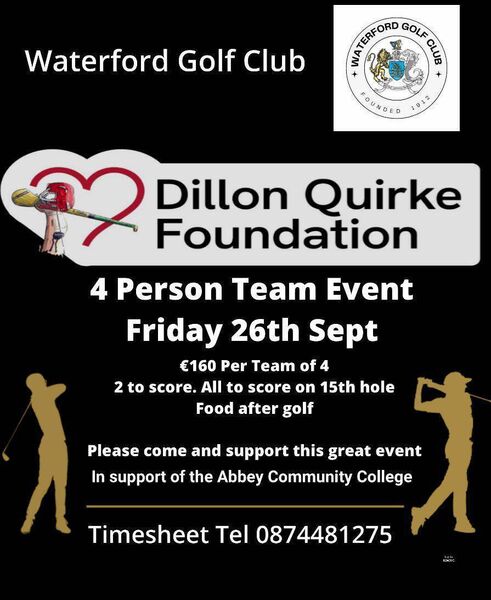
The foundation was set up in honour of the Tipperary hurler who passed away from SADS in August 2022.
There will also be a charity hurling match at the school, teachers v students, but the date for that is to be confirmed.
“It’s so important to us and to the school, so it doesn’t happen again. We were told by the surgeon that Conor is a very lucky boy, that he didn’t drop because of the two holes in the heart.
"There was no blood flow, and the oxygen was very limited,” said John.
You can get involved and help Conor and John by putting in a team in the Golf Classic or sponsoring a tee box.
A team of four costs €160, and it is €50 to sponsor the tee box Conor and John are also looking for a main sponsor for the event and are asking local businesses to consider lending their support.
“The more sponsors we get, the more people will get tested. We have had a lot of support already, but we need a lot more,” said John.
Anyone who would like to support the cause can contact Waterford Golf Club on 087 448 1275 or Nicky Heffernan on 087 672 4212.
Conor’s recovery, while impressive, was by no means easy, and there are a number of people he would like to thank for their support.
Conor said his school were brilliant throughout the whole process and for that he would like to thank them, in particular, Ms Jefford, Mr Rice, and Mr Stapleton.
He would like to thank Lisa and Phil from No.9 Café, where he works, and Ferrybank Hurling Club, and Ken McGrath, who spoke to him before his first match back.
Conor and his family would also like to thank personal trainers Ian Keoghan and James O’Sullivan for helping to get back out there.
And to Ger Condon for organising the golf classic.
Conor was very lucky.
While there were signs, there were also easy explanations that just weren’t it.
When the teams are tested, there is a possibility that some young athletes will need treatment.
Conor says that while it might seem scary, you do come out the better.
“Like there’s a better side to it. The better part is after it, when it’s all done. It will be a tough few months, but once it’s done, you are grand then, said Conor.
John’s advice is to just get it done and don’t take the risk that it is nothing.
“What I would say is just get it done straight away and don’t leave it to hang on. Just in case anything happens. Prevention is better than cure.
"And that’s what we are trying to do for other people.
If something does turn up don’t ignore it. It might only be something small, but it could be something bigger as well and it could save your life,” said John.