Micheál Marrinan, a life dedicated to Irish and Waterford culture
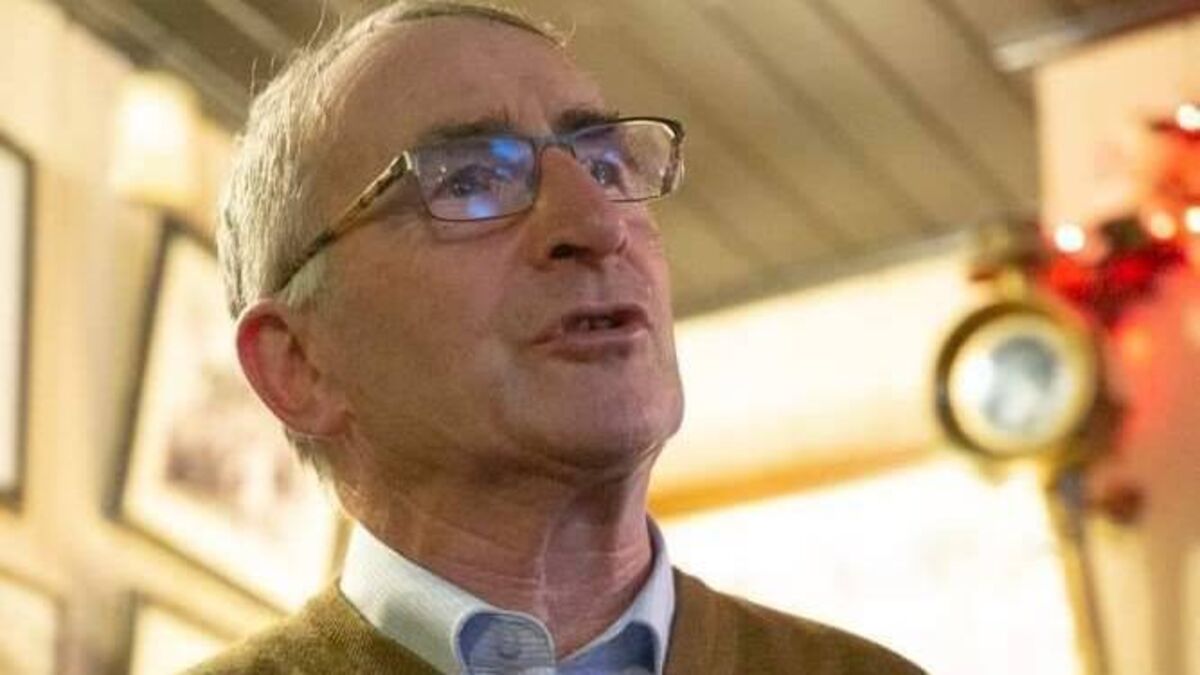
Micheál Marrinan
Over my life, I have met few people who have made a huge impact on me. None from what is termed the “good and the great”, but rather people who work quietly in the background and give their life and soul to their community.
Unfortunately, the memory of most of these people goes unnoticed and unrecognised.
I would like, today, to recognise one such person, Micheál Marrinan. I first met Micheál many years ago while playing in Dungarvan with a band named 'Simon'. We struck up a conversation and very soon realised that we had common interests in politics, Irish history and Irish music.
From that day, we became firm friends.
Over the years I watched him and his late wife Mary selflessly devote their lives to the promotion of Irish culture through music, song and dance, producing some of the best musicians in the country.
Time has moved on and I believe that his selfless dedication should be recognised not only in Waterford but by all who cherish our Gaelic culture.
The following is a short biographical history of that dedication.
Micheál Marrinan is originally from West Cork but with a huge background and part upbringing in North Clare. He took up employment in Waterford City in 1971.
On his first night in the city, he met the chairman of the city branch of Comhaltas Ceóltóirí Éireann and within a couple of weeks was hurling with Griffith Place GAA club.
He also became involved in a number of voluntary organisations dealing with urgent social issues and helped establish the nightclub Catch 22 to raise funds.
In 1974, on his marriage, he moved to his new home in Coolnasmear, Co. Waterford, joining Kilgobinet GAA where he became secretary two years later. Although the parish was also home to Colligan GAA, he was struck by the fact that no club existed for the children. He gradually developed the idea and shortly after St. Pat’s/Naomh Pádraigh was founded.
With this completed, he set about developing a stage for local traditional talent for both adults and children through involvement in Scór. This led to the establishment of what is now known as Craobh na gComarach/Comeraghs Comhaltas branch, and the amateur drama group KCK Players.
His innovative ideas led to his election as chairman of Comhaltas County Board and by the mid-1980s he had developed a team of dedicated volunteers.
Along with his late wife Mary, two centres for teaching adults set dancing were set up in Dungarvan and Waterford city. As a voluntary organiser he saw several new branches being established, which covered most of the county.
More importantly, he decided to create a chain of music classes by facilitating his fellow Clareman Bobby Gardiner as a full-time teacher and numerous part-time teachers to cover all instruments associated with traditional music.
In administering these his main aim was a consistent list of tunes and small class sizes across all instruments and teachers.
The burden of opening, closing and supervision of premises, publicity and the registration of students’ collection of fees and photocopying was taken on by himself and committee volunteers.
The classes in Stradbally, Kilmacthomas, Ring and Old Parish were in a close circle with Cúil na Sméar and Micheál kept a special interest in Ballinameela also.
Having retired from chair of the county board, during which time he introduced several innovations, including the non-competitive Mol an Óige to the county Fleadh Cheoil, he continued to develop new ideas and ways of developing audiences. The Connery’s Singers Club was established and through the new branches Fleadhs and Féiles were held in Kilmacthomas, Ballyduff East and West, and Cappoquin, as well as two Munster Fleadhs in Lismore.
Having begun to learn to play the concertina himself he set up a self-help group for adults coming back to music, which is still going strong at weekly gatherings.
His involvement in bringing the Oireachtas to Dungarvan in 1994 led to the development of the annual traditional music festival Féile na nDéise. As usual, while acting as an advisor himself, he established a committee of locals to run it.
From the early years, the backbone of the Cúil na Sméar projects was the regular children’s session, which eventually became a fixture each Sunday at 6pm.
Up to the present day more often than not you will find Micheál himself there as facilitator.
As part of a youth leader and teacher development programme senior teen musicians are often given the responsibility too. It is no surprise then that many former students are now prominent teachers around the county and at festivals elsewhere.
Through the years many members have won trophies at every level up to All-Ireland and two former students have won the much-coveted TG4 Young Musician of the Year, Caoímhín Ó Fearaíl and MacDara ó Faoláin.
Twinning with other Comhaltas branches around Ireland and with music academies on the continent, as well as the huge annual excursion to the Willie Clancy Summer School have all been part of the success that is associated with Cúil na Sméar, which has spread thoughout the whole county.
In 1998, after 20 years of slowly developing a following for traditional music he established the Cúil na Sméar winter concert series.
For over 20 years, five times each winter these concerts featured all the major names in traditional music and were run in Cúil na Sméar Hall without the use of amplification.
Over the years Cúil na Sméar has become synonymous with the traditional performing arts. It was no coincidence that the world-renowned band Danú first saw the light in Dungarvan.
For the first years their concerts were hosted by the volunteers of Comeraghs Comhaltas. Their leader Benny McCarthy, whose mother Mary was for many years treasurer, is still rooted in the area. His late father, too, was a valued committee member especially in the famous Marquee festival run at Bridgie Terry’s in 1990.
The band Caladh Nua, too, had a strong relationship with the branch through box-player Derek Morrissey and it was no surprise when he brought the TV team to Cúil na Sméar to do a documentary where he himself had attended classes for many years.
Micheál himself is well-known as a traditional singer and writer of serious and humorous songs. He took first prize in both Irish and English Newly Composed Ballads in 1987 at Fleadh Cheoil na hÉireann and has won numerous acting awards and other song-writing competitions, as well as being the first Waterford writer to have a poem published in the renowned New Irish Writing edited by David Marcus.
Over the years, he has received presentations for his contribution to communities in West Waterford and in 2023 he received the prestigious Nioclás Tóibín Award. He is a regular guest at festivals around the country, both as a performer and teacher. He has contributed to various programmes on TG4, Radio na Ghaeltachta, Clare FM and Radio 1.
On retiring from farming at the encouragement of the late Liam Clancy he launched his own CD, 'Between Milltown and Ennistymon'. A number of his songs have been recorded by other performers and are also sung in Fleadh competitions. Over the years, he has made a point of collecting local songs and ballads around the county and has made this collection available to publishers.
In the most recent issue of An Linn Bhuí – Iris Ghaeltacht na nDéise, he gives an account of his initial years in Co. Waterford. I believe that the people of Waterford should be made aware of the enormous and unmatched contribution that Michaél has made and that he be recognised for his selfless dedication to the promotion and preservation of Irish culture in Waterford and further afield.