Jury deliberate as trial concludes into collision with bus in which Waterford teenagers on e-scooter died
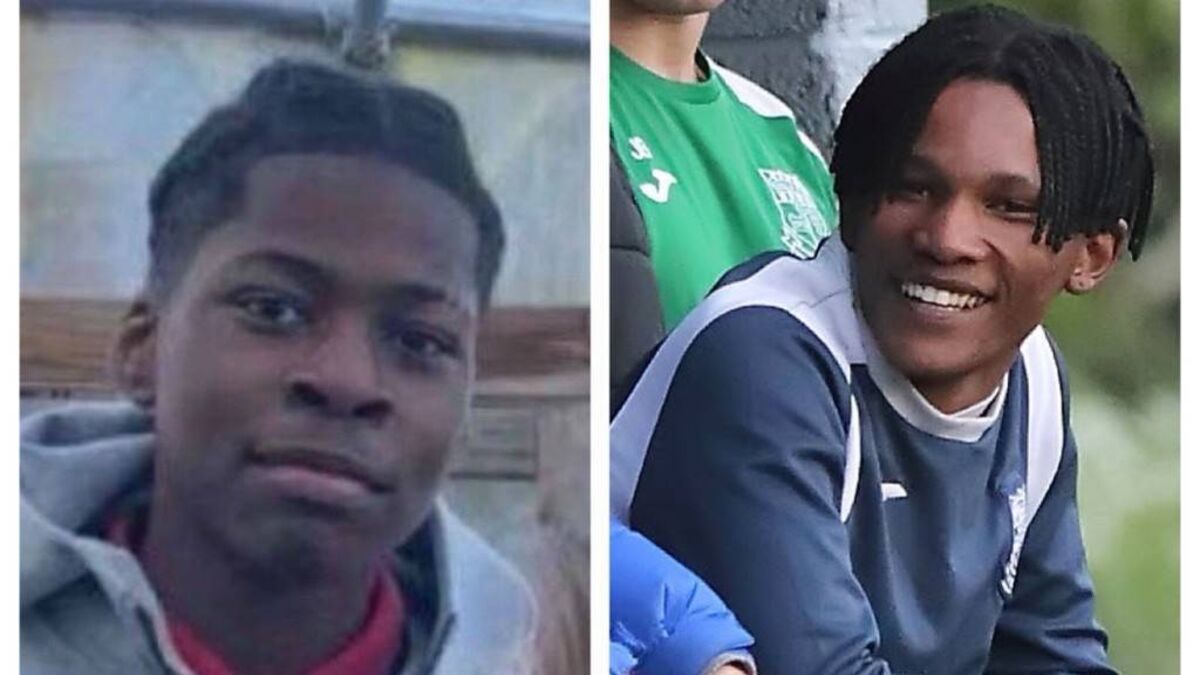
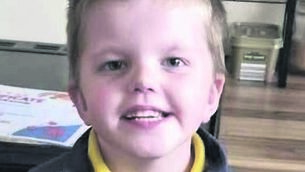
Gilbert Collins and Avuzwa Sampo.
A bus driver charged with dangerous driving causing the deaths of two teenagers in Waterford city has pleaded not guilty before Waterford Circuit Court.
The collision occurred on the Cork Road in Waterford city at approximately 2am on June 27, 2024.
Gilbert Collins (15) and Avuzwa Sampo (17) were both riding on a single e-scooter that morning, when a bus driven by Adrian Doyle (43), who has an address at Ard Glas, Abbey Road, Ferrybank, Co Waterford, collided with them.
A jury of nine men and three women was empanelled last week to try Mr Doyle.
The trial commenced on Tuesday afternoon, November 2, with garda members who attended the scene on the morning of the collision presenting evidence to the jury.
At approximately 2am, on June 27, 2024, Adrian Doyle was driving a JJ Kavanagh & Sons bus on the Cork Road towards Waterford city centre.
He was the sole occupant of the bus at the time, and was on route to his first pickup of the night at South East Technological University.
A single e-scooter, driven by Avuzwa Sampo, with Gilbert Collins a passenger, was travelling in the same direction and on the same side of the road as the bus.
The boys were travelling from Snap Fitness, a gym located close to the scene where they had been earlier that morning.
1.3 seconds before the collision, both the bus and the e-scooter veered right, towards the middle line of the road. Upon impact, the bus was travelling 77km/h in a 50km/h zone.
Doyle said he did not see the e-scooter prior to the collision and did not have any time to react.
Gardai on patrol in the city and stationed at Waterford Garda Station were called to the scene. They observed considerable damage to the windscreen of the bus. The undercarriage was also damaged, consistent with the vehicle driving over the e-scooter after the impact.
There was debris and items of clothing strewn across the road. The main stem of the e-scooter was snapped off. The scooter was found 41 metres from the area of impact.
Gilbert Collins was found deceased on the road. Avuzwa Sampo was found face down on a grass verge near a footpath. He was unresponsive and was transferred by ambulance to University Hospital Waterford. He did not survive his injuries.
Gardai who interacted with Adrian Doyle on the roadside said that he was in a highly distressed state and was very animated.
A drugs and alcohol test was administered at the scene, with negative results.
Garda Maurice Mahon, a forensic collision investigator, said weather conditions were dry that morning, and the road was in very good condition.
He said, however, that he believed streetlighting on the road was poor. He indicated that the e-scooter had no rear lights. Both of the boys were dressed in dark clothing.
There was no evidence of the bus braking prior to the collision.
Doyle said to gardaí that he pressed the brake, but it didn’t work. He said he pressed it again after the collision had already occurred.
During the investigation, gardaí analysed CCTV footage along the route, as well as dashcam footage from inside the bus, which shows the moment of the collision.
Images taken by gardaí at the scene, as well as aerial drone images and maps, were provided to the jury as evidence.
A large amount of CCTV footage was played in court.
Prior to the footage being played, Judge Eugene O’Kelly warned the jury and family members of the deceased in the courtroom that the content might be graphic in nature.
The footage showed the two boys arriving on an e-scooter to Waterford Retail Park at close to 1am. They disembarked the e-scooter and entered Snap Fitness, a gym located within the retail park.
Approximately an hour later, footage shows them leaving the gym and getting back onto the e-scooter.
Avuzwa Sampo drove the e-scooter out of the retail park and onto the Cork Road, with Gilbert Collins to his rear.
Large amounts of footage was extracted from car garages and businesses along the Cork Road, showing the boys travel along the road in the direction of Waterford city centre.
Footage also showed the white JJ Kavanagh & Sons coach driven by Adrian Doyle travelling in the same direction.
The moment of collision was captured clearly via onboard dashcam footage from the bus.
This footage showed the two boys veer to the centre of the road, before an immediate shattering of the front windscreen upon impact.
The moment of the collision prompted a strong emotional reaction from family members of the deceased in the courtroom, with audible expressions of distress.
A number of family members exited the court after seeing the footage.
Footage from cameras positioned to the sides and rear of the bus also showed the moment of collision. These angles show debris fly across the road.
After the collision, the bus drove a short distance before stopping, and Adrian Doyle disembarked at approximately 2:03am.
As well as the CCTV footage, the jury were provided with images and maps.
Images showed the aftermath of the collision, with debris and items of clothing strewn across the road.
Evidence was provided to the jury by Garda Billy Mernagh on the condition of the bus and the e-scooter.
There was damage done to the windscreen and front bumper of the bus following the collision, however, its tyres and brakes were in good condition.
The e-scooter was deemed not road legal, had no visible lights and was above the permitted electrical power threshold, Garda Mernagh said.
Meanwhile, Garda JP Scallan provided data from the bus’s onboard tachograph, a device, which records speeds and actions of the driver.
He said the device was in perfect condition.
Adrian Doyle was driving 77km/h at the time of the collision, in a 50km/h zone.
Alan Kirwan, Executive Engineer at Waterford City and County Council, provided an overview of speed limits to the jury. He confirmed that the stretch of road was within a 50km/h zone, and that there is clear road signage in place.
Day three of trial
On day three of the trial, further evidence was provided, including the memorandum of interview that Doyle gave to the gardaí in the aftermath of the collision, and testimony from eyewitnesses who saw the boys on the road that night.
Additionally, the prosecution and defence offered their closing statements to the jury.
They described the case as tragic, difficult and appalling.
Mr. Stephen Bardgett operates a mechanical workshop on the Cork Road. On the morning of the collision, he told the jury that he left his garage and drove onto the road, where he recalls overtaking an e-scooter that was carrying two people.
He remembers the rear passenger of the scooter looking over his shoulder at his car as he passed.
Mr. Bardgett recalled them both wearing dark clothing. He wondered what they were doing on the road at that hour of the morning.
Mr. Bardgett remembers learning later that day that there had been a collision involving an e-scooter on the Cork Road. He realised it could have been the two boys he had seen earlier.
A separate witness, Mr. Craig McDowall, who was called on behalf of the defence, said that at approximately 1:15am that morning, he approached a roundabout on the outskirts of Waterford city, when he saw something unusual. He said that he saw a “black flash” appear; an e-scooter travelling quickly with no lights. He said the e-scooter had travelled the wrong way around the roundabout.
He recalled exclaiming to his wife in the passenger seat that the e-scooter would have hit the side of their car if they had arrived moments later.
State Prosecutor, Mr. Niall Storan, cross-examined the witness, saying that it couldn’t have been Gilbert or Avuzwa he saw, because CCTV footage showed they were at Snap Fitness in Waterford Retail Park at the time Mr. McDowall said he saw the e-scooter on the roundabout.
Mr. McDowall said his recollection of seeing the e-scooter at 1:15am was approximate, and not exact.
Although Mr. Bardgett and Mr. McDowall were not in the vicinity when the collision itself happened, another man was, Mr. Keith Hatch, who was working the night shift at Schivo Medical on the Cork Road.
Mr. Hatch told the jury that he left the Schivo building at approximately 2am to go on his scheduled break.
He was standing outside the building waiting for a food order to arrive, when he saw the lights of a vehicle pass by on the road. He said it sounded as if the vehicle was driving quickly.
Suddenly, he heard glass smashing further down the road.
He hopped a railing onto the road to investigate and briefly began recording the smashed windscreen of the bus on his mobile phone.
He stopped recording and saw two boys on the ground.
One of them was lying face down on a grass verge on the side of the road making a groaning noise.
The other, Mr. Hatch said, was very clearly already dead.
He recalls being in a state of shock and feeling sick.
He saw the driver of the bus on the road and asked him: "What the f*ck happened?"
The driver, Mr. Adrian Doyle, was already on the phone to gardaí.
Detective Garda Paul Flynn interviewed Mr. Doyle by arrangement at Waterford Garda Station later that afternoon.
During the interview, Mr. Doyle told him that he drove trucks and buses. He had got his rigid truck driver’s licence in 2009 and obtained his bus licence in 2016. He had been working full-time as a bus driver for JJ Kavanagh & Sons, driving night routes to Dublin Airport.
He had no health issues, no difficulties sleeping and no serious problems in his life that would have impacted his work.
The morning of the collision started completely normal, he said. At approximately 1am, he collected the bus at the JJ Kavanagh & Sons depot on the Dunmore Road.
He completed a checklist and made his way to a depot at Butlerstown to complete further checks. He left the depot and proceeded onto the Cork Road towards his first pick up of the night at South East Technological University.
He was in no hurry, because he had commenced his route early, he said.
He told gardaí that he knew the road well and that there were perfect driving conditions that night. He recalled suddenly hitting something. He didn’t know what it was and thought it could have been an animal.
He said everything felt like it went in slow motion after that.
Detective Flynn said to Mr. Doyle that the onboard dashcam and tachograph show the bus was travelling 77km/h in a 50km/h zone when the collision occurred. Mr. Doyle said he thought he was travelling the 50km/h speed limit.
Detective Flynn said to Mr. Doyle that it looked as if he attempted to overtake the e-scooter in the dashcam footage.
Mr. Doyle said he did not attempt an overtake, but that he pressed the brake twice. The first time it didn’t work, and so he pressed it a second time.
Evidence shows that he drove onwards for another 15 seconds after the collision.
Doyle was asked if he recalled one of the boys turning his head to look at him moments before the collision. He said he did not see that.
Additional evidence was provided by Garda Padraig Coholan, a Public Service Vehicle (PSV) Inspector with An Garda Siochana.
He conducted a brake test on the bus in the aftermath of the incident. The vehicle passed.
Mr. Darren Flynn, a CVRT inspector, conducted a road worthiness test on the bus in August 2024. The brake tests he conducted also passed.
Inspector Alan Kissane, of Dungarvan Garda Station, said to the jury that he took a statement in 2024 from Mr. Donal O’Brien, who was Adrian Doyle’s boss at JJ Kavanagh & Sons.
Mr. O’Brien said in this statement that Doyle would always commence his routes ahead of time.
He described Mr. Doyle as a “very conscientious guy”.
The prosecution and defence provided their closing arguments to the jury.
State Prosecutor Niall Storan BL, described the case as “tragic and difficult”.
He said that there was no evidence of pre-collision braking from Doyle, and that the bus was in a perfect roadworthy condition.
He acknowledged that the two boys on the scooter “weren’t doing what they should have been doing”.
The scooter had no lights, they were on the road in the very early hours of the morning, and it was illegal for the two boys to be riding together.
He said the decisions the boys took that night “are matters of sadness”.
Despite this, the bus driven by Mr. Doyle was “absolutely flying”, Mr. Storan said.
He was driving 77km/h in a 50km/h zone, and he showed no signs of slowing until after the collision.
It was a straight road, weather conditions were good, and video evidence showed the area to be well lit, Mr Storan added.
He said that Mr. Doyle approached a slow-moving object on the road, and could have avoided it had he been driving the speed limit.
Defence counsel for Mr Doyle, Ms Kate Egan SC, said in her speech to the jury that her client is “fighting for his life”.
He is a single man, unmarried, and his occupation as a bus driver was very important to him.
She said that Mr Doyle is “appalled” by the incident, and that he recalls the CCTV footage in his mind every time he closes his eyes.
“Make no mistake, he is suffering, and he has been punished plenty,” Ms Egan said.
She asked the jury to consider the dashcam footage they were shown in court yesterday, pointing out that the angle of the footage is vastly different to the view of the road Mr Doyle had in the driver’s seat.
This footage showed the two boys veer to the centre of the road moments prior to the collision.
Ms Egan said there was no risk of injury prior to “those poor kids” veering towards the centre of the road.
She said her client had no option, and he couldn’t have avoided them.
The matter has now been put to the jury to decide upon.
Unlike the majority of criminal cases, which involve guilty, or not guilty verdicts, this particular case also includes an alternative verdict option.
Legislation dictates that the charge of dangerous driving causing death can be downgraded to a lesser offence; careless driving causing death, if the jury decide to do so.
The difference between the two charges was explained in depth to the jury by Judge O’Kelly on Friday.
Whilst doing so, he described the case as “very tragic”.
He explained to the jury that no medical evidence or post-mortem examinations were provided to them during the trial because it is fully accepted that the boys died as a result of the injuries they sustained from the collision.
Following the delivery of the judge's charge, the jury began their deliberations.
The case returns to Waterford Circuit Court today (Tuesday, November 10).