“It seems to me that the sooner we go, the better for them” - survivors speak out on 'package'
Mary's childhood was marred by abuse she suffered in industrial residential schools.
“It seems to me that the sooner we go, the better for them” – Mary*, Waterford
Survivors of State-run institutions are speaking out about their experiences in navigating healthcare, housing and supports.
On Tuesday, September 22, survivors will gather at The Dáil to protest the lack of comprehensive care despite the promises made by the Government.
The move comes after an organisation, appointed by the Department of Education to liaise with survivors, held a meeting in Waterford City.
Sage Advocacy recently held a meeting in The Granville for survivors to inform them about their health and educational entitlements.
The meeting left many of them confused and frustrated with the HSE and various governmental Departments.
It was at this meeting that survivors spoke about taking the issue straight to Leinster House. Miriam Moriarty Owens was one of the attendees.
Miriam is a survivor who participated in a 51-day hunger strike protest outside the Dáil earlier this year.
The protest concluded in February when Taoiseach Micheál Martin gave a State apology to the survivors. It was the fourth State apology offered to survivors of residential industrial abuse in 27 years.
Taoiseach Martin told survivors that they would be given a medical card for life, prioritisation for housing, and better access to counselling and physiotherapy.
Six months since that announcement, one survivor in the Déise has spoken out about her struggle to access vital supports.
At the meeting in The Granville, Miriam met Mary.
Mary spent her childhood moving from one abusive home to another.
Born in the late 1950’s, she was hospitalised at an early age for malnutrition.
Before reaching adulthood, she had lived in numerous industrial schools and orphanages up and down the country.
She was almost adopted, but it fell through because her industrial school failed to provide her vaccination records.
Now in her 70’s, she is living in Waterford at a relative’s home after a falling out with other family members.
She is prone to bouts of depression and suffers from various physical ailments.
She has been on a physiotherapy waiting list for 9 months.
She received correspondence from the HSE regarding her ‘enhanced’ medical card – a card that would ensure that Mary, and other survivors like her, receive comprehensive medical care.
The letter stipulates that the enhanced card offers ‘improved access’ to both counselling and physiotherapy, as well as home nursing and home support.
She said: “That’s what we were supposed to get, but what’s on there is what the medical card gives you anyway.”
Mary feels that she and other survivors have been sold a cod: “It was a three-star medical card, you get prioritised.
"If you need a surgery, you go up the list.
"If you need housing, they were saying, you go up the list.
“They said that us survivors would be put at the top of the housing list. There’s nothing…nothing.”
The package for educational supports amounts to €600 a year. Miriam is sceptical about the package, saying: “They’re trying to shove education down us. Why does a woman of 80 or 90 need an education? We need medicine.”
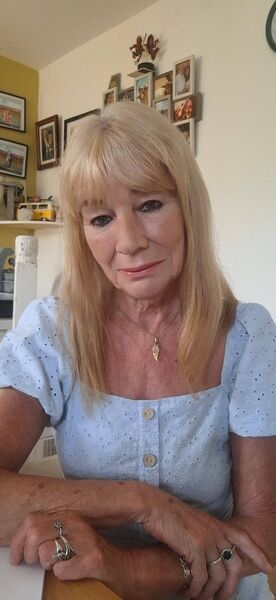
Finding therapeutic supports among other people can be extremely triggering for Mary.
She attended an educational group in Waterford City for a time but had to leave abruptly when the class were given a book to read.
Mary said: “The third week was when the book came into it. Each person had to read a chapter of the book, and I just couldn’t because there was too much in it that related to myself.”
“It was to do with a child and a father, and I had to get up and leave," she said.
"I just couldn’t. I was in floods in tears.”
No one from the HSE reached out to Mary after she left the group in distress.
Group settings are a source of pain for her.
She said: “You don’t want to be sitting listening to other people’s problems because it makes you more depressed. That’s why I had to pull away a bit.”
“I don’t tell people what I went through, and I find it difficult to listen to what other people went through," she said.
Before Christmas, Mary was connected to a ‘lovely’ psychotherapist in Waterford City.
Unfortunately, as is common with counsellors in the public health system, the psychotherapist was moved on after six weeks.
“He was there six weeks. End of story. Had to go back to Wexford and he’s never been replaced," said Mary.
“Everything that’s on there, I’m waiting on a list.”
Mary receives personal care at home twice a week provided by the HSE.
One of her greatest fears is the prospect of being moved into a nursing home.
Many survivors share her fears about having to live in another State-run institution.
According to Mary, the HSE does not offer home nursing.
She explained: “After what a lot of us have went through we don’t want to go to a nursing home.”
Part of the supports offered to survivors include a ‘funeral costs’ package – a morbid and somewhat revealing reminder of how the Government views them.
“It seems to me that the sooner we go, the better for them," said Mary.
Miriam has heard from survivors who had their medical cards questioned at their local pharmacist.
She is now intent on writing to every chemist in the Republic to ascertain their knowledge of the enhanced medical card.
She said: “The survivors going in, their chemists were questioning why we wanted a new medical card. That stops people from ringing up.”
Mary has also had trouble sharing her own card with her pharmacist, who told her: “We don’t know anything about this. We haven’t been informed.”
“They’re just pushing us, hoping that we give up," said Mary.
Miriam’s shares Mary’s sentiment and doubts the sincerity of Taoiseach Martin’s apology.
She remembers seeing him as the Minister of Education, at Bertie Ahern’s side in 1999, when the then-Taoiseach gave his own State apology to survivors.
She said: “I was speaking for survivors; he was speaking for the HSE.”
“If you apologise for something, you mean it. Otherwise, it’s only words.”