Hundreds of Waterford ABP workers face threat of deportation as redundancies loom
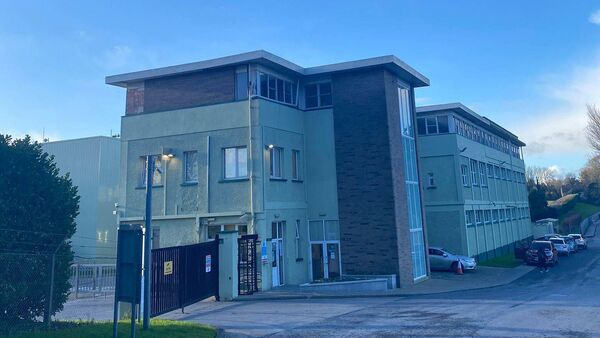
The ABP meat processing factory in Ferrybank. Photo: Libby Marchant
A majority of workers at the Ferrybank ABP meat processing factory will face the near-immediate threat of deportation, as 230 factory jobs hang in the balance following consultation announcements on Thursday, February 12.
Many of the workers are economic migrants who hail from Brazil, Poland or even the small Southeast Asian island of Timor Leste. Most of the workers were offered jobs and work permits at ABP while residing in their home country.
In the likely circumstance that they are made redundant, the workers could face deportation within a month if they do not find a new position.
In a letter sent to the employees and seen by the , ABP informed the 230 workers at the plant’s deboning facility about the consultation process.
Workers were asked to nominate representatives for consultation meetings by Monday afternoon (February 16).
The representatives were asked “to present ideas and alternatives, and to discuss options regarding potential consolidation.”
It was asked that the representatives come from a myriad of nationalities, genders, and departments.
“Our company operates in the environment of constant change, with market dynamics and supply chain pressures impacting the beef sector in Ireland and across the EU,” the letter read.
“This, combined with increased competition and ongoing political reforms, has required us to review and consider a possible consolidation of our operations.
“In summary, we are commencing a 30-day consultation period to discuss the possibility of closing the boning department in Waterford.
“Operations will remain unchanged over the next 30 days, as will working conditions during this period.”
Luke, who declined to use his real name for fear of persecution, is one of the Brazilian workers whose life in Ireland hangs by a thread following the news.
Speaking through a translator, his English is not strong enough to open up a wide variety of job opportunities.
Like almost all of his co-workers, excluding his Irish supervisors, Luke works on a ‘stamp 1’ work permit that provides tenure in Ireland only if he is in work.
He has worked in Ireland with ABP for four years and is one year away from gaining an Irish passport.
If he is unable to retain his job or find new employment within a month of his contract expiring on April 15, all progress towards an Irish passport will be wiped away.
He currently works on a €14/hour wage, and has had his working hours significantly diminished over time.
His initial contract provided for 40 hours a week, then 30-32 hours, and in more recent months he has been limited to 15-hour weeks. Those experiences were echoed by other ABP employees who spoke to the .
There is no redundancy compensation baked into his contract.
Luke’s wife lives in Ireland and is currently out of work.
He says that while some workers in the ABP Ferrybank site may be offered roles at alternative ABP facilities, it is more likely to fall to workers without children or dependent family members.
According to Ploy Norgate, an immigration specialist at Abbey Blue Legal, the workers' first port of call should be a Redundancy Notification Form that entitles redundant workers to a six-month grace period to find employment.
The understands that many of the affected workers at ABP intend to write a personalised letter to Minister for Justice Jim O’Callaghan pleading for compassion.
Ms Norgate says any attempt to do so would be futile, and that the six-month grace period functions as the only genuine opportunity to maintain domicile in Ireland.
She said applications for the grace period could already face a significant backlog.
The workers face an uphill struggle in trying to find new positions with limited English. Similar jobs in the meat processing industry have been cut.
ABP recently closed a packaging facility in Linden, Northern Ireland, at the cost of 338 jobs. Kepak, another one of the major beef processors in Ireland, recently announced a review of operations for its Clonee deboning facility with up to 100 jobs on the line.
The cuts have been attributed to a dwindling cattle herd in Ireland.
For Luke and other workers at Ferrybank, the dream of Ireland sold by ABP looks to be dimming.