Faith and famine: How Fr. Halley shaped 19th-century Dungarvan
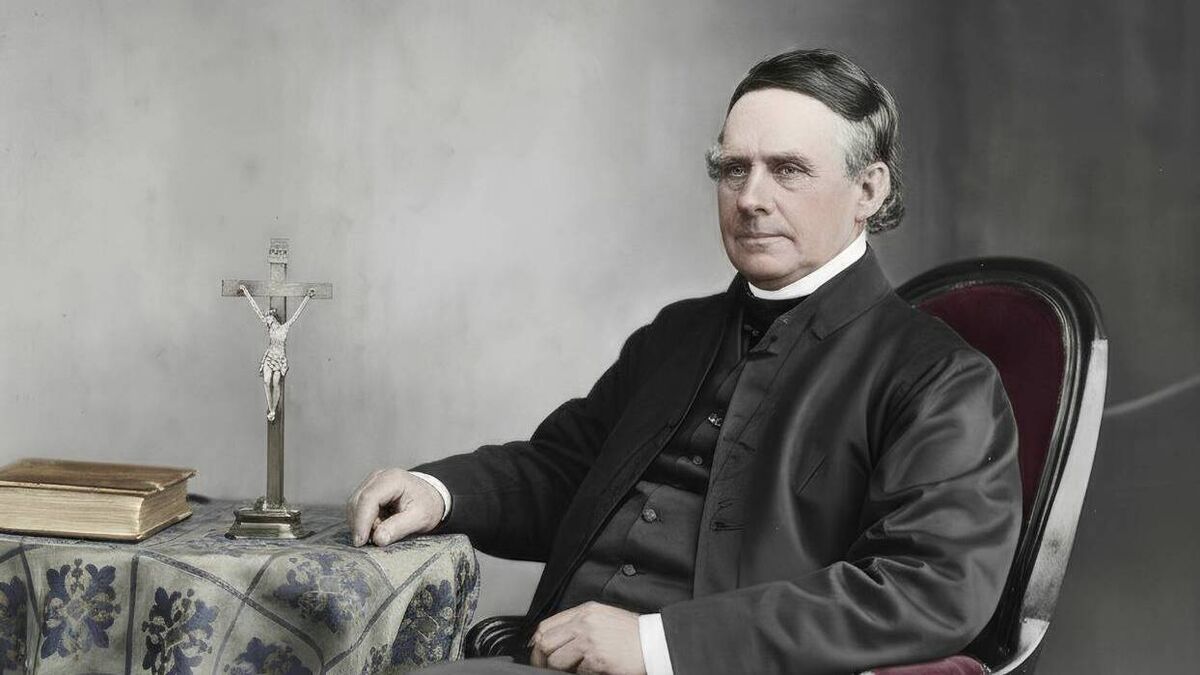
Parish Priest of Dungarvan, the Very Rev. Dr. Jeremiah Halley (1782–1875), circa 1870. Photo: Waterford County Museum. Enhanced and colourised by Martin Whelan.
If I were asked to list notable figures from Dungarvan’s history, several names would come to mind immediately. The Duke of Devonshire built much of the present town, while Cromwell destroyed a large part of the old one. Dan Fraher was a powerhouse of Gaelic sport and culture, Edward Brenan a pioneer of cycling and photography, and, of course, Edmund Keohan, who documented life in Victorian and Edwardian Dungarvan.
One name that might not immediately spring to mind is the Very Revd. Dr. Jeremiah Halley, a Dungarvan native who served as Parish Priest of Dungarvan for much of the 19th century. At the time of his death on Christmas Eve, 1875, in his 83rd year, he had been Parish Priest for 35 years, having previously served as curate of Dungarvan for 15 years.
During his fifty years of service, Dr. Halley played a central role in expanding and establishing many Catholic institutions familiar to generations of Dungarvan people. You could argue that no one did more than Dr. Halley to place the Catholic religion at the heart of life in the town.
He was active in Catholic politics all his life and was the last surviving priest that played an active role in the Waterford election of 1826. This election saw Villiers Stuart, a Protestant candidate who supported Catholic emancipation, defeat the pro-establishment Lord George Beresford. This was a significant step on the way to Catholic Emancipation, which allowed Catholics to hold public office, vote, and access universities, granting them greater political power and civil rights after centuries of discrimination.
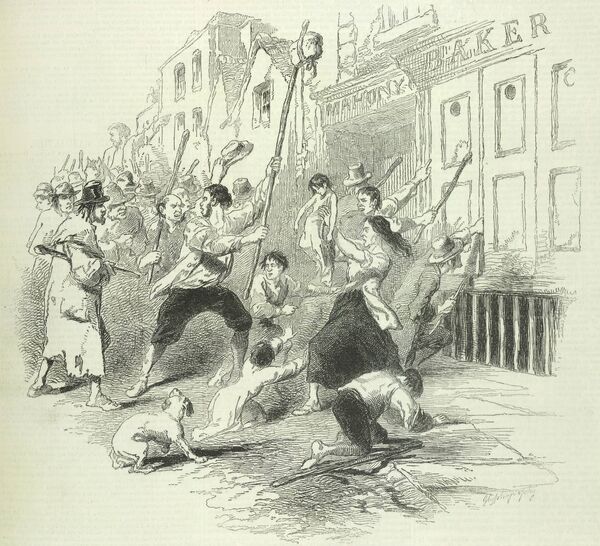
The clergy played a crucial role in elections at this time, effectively guiding their congregations on how to vote. In an 1857 letter from prospective Dungarvan MP Lord Acton to Lord Granville, Acton wrote, “With Halley of Dungarvan on my side, I might make sure of success.”
One of the chief aspirations of Halley’s life, according to his obituary, was to secure a thoroughly Catholic education for all children in the schools and the local workhouse. He maintained an “inflexible opposition” to all mixed systems.
The Presentation Nuns were established in Dungarvan in 1809, occupying various premises until 1858, when their convent and school were completed with Dr. Halley’s support. For more than a century, they educated generations of local girls until 1990, when the modern St. Mary’s Primary School was established on their former campus.
Dr. Halley’s influence on education did not end there. Dissatisfied with the form of prayer prescribed by the National Board of Education for the National School at Dungarvan Workhouse, he composed his own – undoubtedly more Catholic – version. Combined with the use of Christian Brothers textbooks, this stance meant the school operated outside the formal national school system, and without state grants, for 18 years until 1882. This meant that the school could not be formally inspected, of course this was easily solved by the simple expedient of Dr. Halley doing the inspection himself.
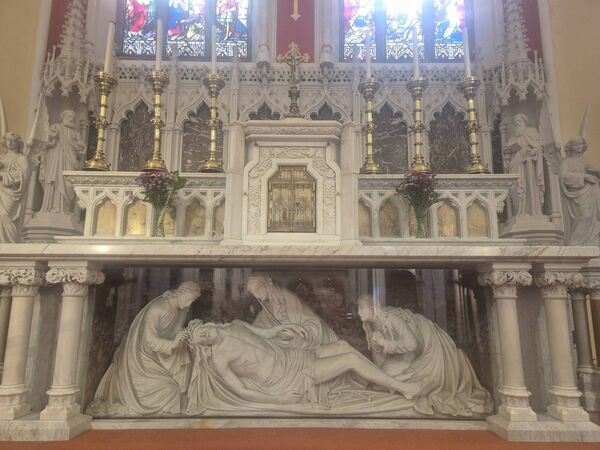
On January 16, 1872, Dr. Halley reported on his visit to the school. He examined every class, and his report stated that he was “greatly pleased and amazed at their knowledge of simple and compound addition, grammar, geography, and Christian Doctrine.” He stated that “their knowledge was far beyond what could be expected from children so young. Though immersed in poverty at present such in general is their talent that at a future day they will rise to respectable positions in society.”
In 1856 in his capacity of chaplain to Dungarvan Workhouse he requested that the Sisters of Mercy be admitted into the Workhouse to “impart religious consolation to the sick and infirm”.
By 1873 the nuns were employed as Infirmary nurses in the Workhouse. The Sisters of Mercy were involved in the establishment and operation of the County Home in 1920, a precursor to the current Dungarvan Community Hospital.
It is through his work during the Famine that Halley is now best remembered. In January 1846 the Dungarvan Relief Committee was established with Dr. Halley as Chairperson. These committees, along with the local workhouses, were tasked with helping the destitute suffering from starvation. They organised work-for-food programmes, sold subsidised food, organised donations from the better off, and supported the setting up of “soup kitchens” that handed out food to the most needy.
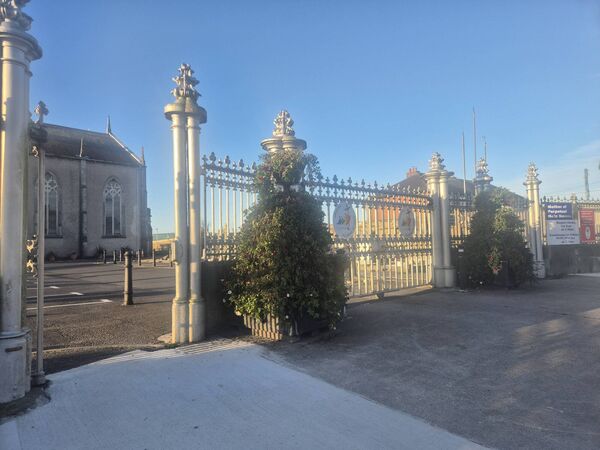
One of the more well-known relief schemes was called ‘Father Halley's Road’. This road began at Two Mile Bridge near Dungarvan and continued over the Drum Hills to Clashmore. As well as the road, several bridges were constructed. On one of these is a limestone plaque with the following inscription:
During the Famine, Halley, alongside figures such as local merchant Andrew Carberry, devoted himself tirelessly to providing for the destitute. He devoted his “time from morning until 3 o'clock in giving out-door relief to our starving poor.”
Not content with looking after the poor in life, he also sought to shepherd them in death. In April 1847 as Workhouse chaplain, Father Halley P.P. wrote to the Workhouse urging them to source another burial ground as the cemetery at Kilrush was full “the average depth of the graves is but 3 feet, thus having but almost 18 inches of earth over the coffin...should the present Famine continue even for 6 months, there will not be sufficient space in the Burial Ground.”
This resulted in the Dungarvan Workhouse opening a new graveyard at Reilig An tSléibhe, Pulla, where several thousand Famine victims were buried.
Also in April 1847, a crowd of labourers called to Father Halley's house in Bridge Street (now part of Lawlor’s Hotel), appealing to him to obtain work for them. He asked them not to resort to violence or public disorder and stated that he would have work for them on the following day. On the following day he arranged for 400 men to be employed picking stones at Abbeyside beach at one shilling a day.
Despite all of his undoubted good works, Halley appears to have been a somewhat conservative or establishment figure at heart. As this extract from published on October 13, 1849, conveys he had no time for revolutionary movements like Young Ireland, who saw Irish independence as an answer to the problems that were afflicting the country:
Father Halley could be seen as inflexible, conservative, and dogmatic – but he could never be accused of lacking integrity or moral courage. In December 1871 he engaged in one of the last political fights of his long life. The Guardians of the Workhouse recommended that the Catholic and Protestant chaplains to the Workhouse should get a rise in their annual fees. Father Halley declined the increase in wages because the Union finances would not be able to cover it. He noted that the Guardians were also looking for a raise in their own wages, and I imagine he suspected the increase in fees to the chaplains was a subterfuge to give cover to this claim.
In his correspondence, he noted the poor attendance of the Workhouse Board members, noting that many meetings were cancelled due to non-attendance: “I hope that what people say is not true 'that they would meet in sufficient numbers if a point was to be carried for a customer.’”
In plain language the people of the town were saying the Board only met when lucrative contracts were to be handed out to friends and relatives. He signed off his correspondence: “Let me conclude by impressing on you a divine aspiration, 'Aperi ustrum et vindica causam pauperium.' I hope for so enlightened a body there is no need for translation, yet some may want it - 'Open your mouths and vindicate the cause of the poor.'”
This letter seems to have stunned or embarrassed the Workhouse Board into silence as there is no further correspondence on the matter. However, they did not forget Father Halley's remarks. Unusually when he passed away there was no glowing tribute from them, no note of regret at his death.
I think the lack of an empty tribute wouldn’t have mattered too much to Fr. Halley, he did what he thought was right. Ultimately, the people of Dungarvan seemed to agree with him, his funeral was attended by tens of thousands of people and gentry of all creeds.
Fr. Halley died on Christmas Eve, 1875 — one hundred and fifty years ago this year.