Drug intimidation is 'destroying' estates in Waterford
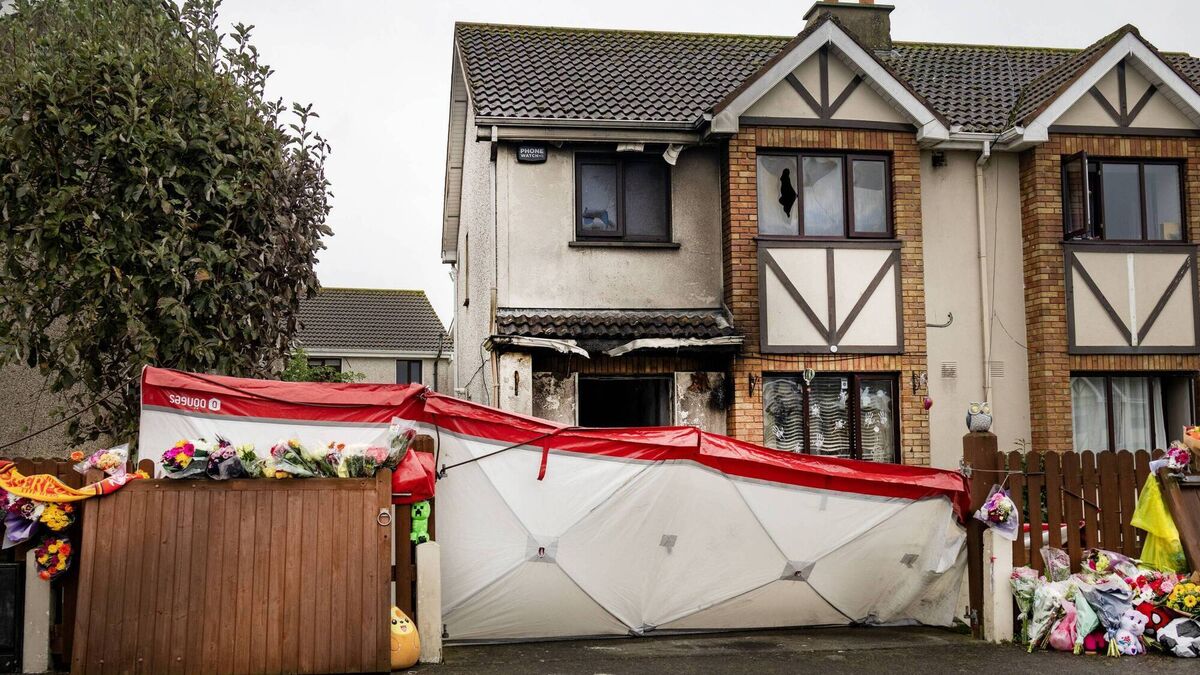
The property at Birchwood, which was subject of the fire in Waterford, is managed by Clúid Housing, one of Ireland’s largest housing agencies. Photo: Joe Evans
“Drug dealing, drug intimidation and extortion is destroying some estates in our city,” a local councillor said last week.
This is in the aftermath of the devastating house fire at Birchwood Estate last month, which claimed the lives of Philip and Kim English, along with their children Callum, Jayden and Elliot. Another child continues to receive treatment for serious injuries at Crumlin.
During a meeting last week, the role of housing authorities to prevent and remove antisocial behaviour from properties and estates was discussed.
The property, which was subject of the fire in Waterford, is managed by Clúid Housing, one of Ireland’s largest housing agencies.
In the aftermath of the tragedy, representatives from the agency were on the ground in Birchwood to support residents.
According to a statement, the agency has also liaised with relevant agencies and community services.
Last week, Waterford City and County Council discussed how their own housing stock should be managed in order to tackle criminality.
According to tenancy documents, Waterford Council adopts a "very strong position where acts of anti-social behaviour are proven".
The Council has the authority to refuse an allocation or defer an allocation to any housing applicant where it considers the applicant is, or has been involved, in anti-social behaviour.
Possession orders can also be obtained by the council from the District Court. If this order is granted, members of the Anti-Social Behaviour Unit will attend a property to evict the tenant, and the dwelling will be boarded up immediately.
Tenants evicted for Anti-Social Behaviour cannot apply to join the Council's housing waiting list or avail of any housing services, including the homeless service, for a period of 18 months.
Tenants evicted will be regarded as having deliberately rendered themselves homeless.
The Council relies heavily on Garda investigations, reports and court orders to enact these policies.
The Council’s Housing Director, Seamus De Faoite, has discussed the matter further.
He said the local housing authority “will not be found wanting”, and that cases against tenants have been actively pursued, including one example last month where a Council property was returned to the local authority as a result of antisocial behaviour from the tenant.
Mr. De Faoite added, however, that evicting an individual on the grounds of a criminal conviction is often nuanced, as there may be others residing in the property who have no involvement.
“In a lot of these instances we have to be aware that there may be a person who goes to jail, but there may also be a partner and kids who are left in the house. So we have to be conscious of that.”
One way to overcome this is via Excluding Orders specifically targetting the offenders and avoiding the need to evict the whole household.
“There is a due process in relation to that,” Mr. De Faoite said.
Also speaking on the matter last week was Councillor Jason Murphy, who said that “drug dealing, drug intimidation and extortion is destroying some estates in our city”.
Meanwhile, Sinn Féin Councillor John Hearne has been strongly advocating for a stronger response from the local authority.
He said that the Council needs to “go after the criminal gangs that cause devastation in our communities and deny them access to lands and premises.”
“It’s not good enough to ask the government to fight back, the city where the attack took place should fight back,” he said.