A great love story – over 60 years later
Dr Zhivago went on to win five Oscars and was M.G.M’s most successful film after 'Gone With The Wind'.
Like the ghosts of Christmas past, they turn up on our television channels around this time every year, those film favourites of yesterday, such as ‘The Sound Of Music’, ‘The Wizard Of Oz’, ‘The Great Escape’, ‘Zulu’ and ‘Doctor Zhivago’.
The latter film was first released 61 years ago, on December 22, 1965, to a lukewarm reception from the influential critics of the time but to the great delight of the general public who flocked to see it in droves, turning it into one of the biggest moneymakers in cinematic history.
Based on the Nobel Prize-winning novel by Boris Pasternak, and set against the backdrop of the Russian Revolution and the First World War, the film tells the story of Yuri Zhivago, a poet and physician and his love for the beautiful and tragic Lara.
Within weeks of its release 'Doctor Zhivago' had become a cinematic and cultural event. The fashionable folk of the sixties rushed to dress Zhivago style in heavy long coats, leather boots and fur hats. And the haunting 'Lara’s Theme' suddenly seemed to be playing in every hotel lobby and lift in the land.
Nearer to home a vocal version of 'Lara’s Theme', 'Somewhere my love' by Charlie Matthews of Waterford’s Royal Showband soared to the top of the Irish charts, staying there for weeks on end.
But, the story behind the making of this epic motion picture is one of high drama. The saga of a struggling studio, a banned novel and a director who would spend years and vast sums of money achieving his dream.
By the mid-nineteen sixties M.G.M, the great Hollywood studio, which once boasted about having “more stars than were in the heavens”, was in big trouble. A succession of big-budget films, including a disastrous remake of 'Mutiny on the Bounty' starring Marlon Brando, had performed badly at the box office, leaving the studio in a precarious financial position. What it needed now to restore its failing fortunes was a film on the scale of previous hits like 'Gone With The Wind' and 'Ben Hur', and who better to turn to than the most celebrated filmmaker of his generation, David Lean.
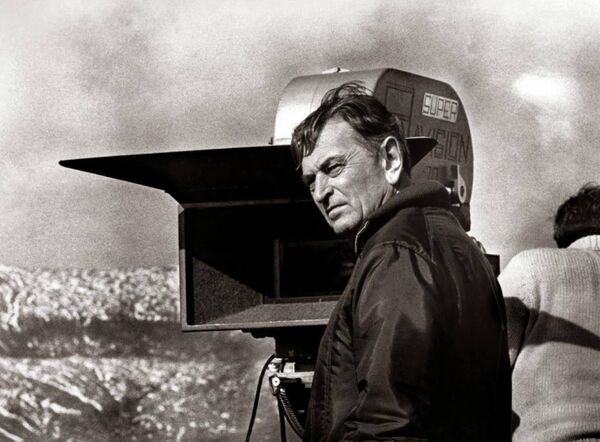
Born in Surrey in 1908, Lean entered the film industry as a teenager, working his way up from tea-boy to camera operator and editor before going on to direct some of the finest British films of the 1940s, which included 'Blithe Spirit', 'Brief Encounter', 'Great Expectations' and 'Oliver Twist'.
In the 1950s he had a huge hit with 'The Bridge On The River Kwai', followed a few years later by 'Lawrence Of Arabia'. Both films won Best Picture Oscars and were filmed on a grand scale in faraway exotic locations.
David Lean was at the peak of his career when M.G.M offered him the highest fee ever paid at that time to a director, plus a healthy share of the profits to direct 'Doctor Zhivago'. Boris Pasternak’s novel was a bestseller in western countries but was never published in his native Russia because it was considered critical of the Communist regime.
As playwright turned screenwriter Robert Bolt hammered out a screenplay from the lengthy novel, David Lean began selecting a cast.
Peter O’Toole was offered the title role but turned it down and Paul Newman was also considered, with the role finally going to handsome Egyptian actor Omar Sharif, who had made his screen debut in 'Lawrence Of Arabia'.
The search for an actress to play the part of Lara went on for months with Sophia Loren and Jane Fonda being strong contenders, before rising British star Julie Christie was chosen for the much-coveted role.
A strong supporting cast included Alec Guinness, Rod Steiger, Ralph Richardson and newcomers Tom Courtenay, Rita Tushingham and Geraldine Chaplin. Irish players Siobhan Mckenna and Jack McGowran were cast in small but important roles.
As a filmmaker, David Lean liked to work with the same crew on all his films.
These included cinematographer Freddie Young, construction manager Peter Dukelow and property master Eddie Fowley, who followed him from the jungles of Ceylon to the deserts of Arabia on his previous films and to Spain, standing in for Russia, where most of 'Doctor Zhivago' was shot.
Amongst the crew on 'Doctor Zhivago' was Waterford man Buddy O’Toole, who had been working in the British film industry since the early 1950s.
On an open plain near the city of Madrid an 800-strong crew erected a giant exterior set, which included a remarkably realistic copy of the Kremlin and a half-mile-long paved city street complete with shops and businesses created with astonishing attention to detail.
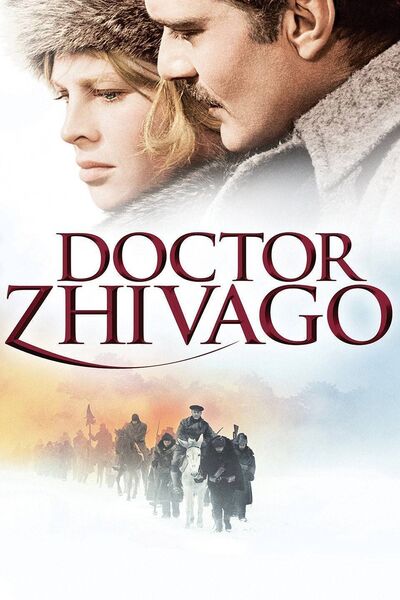
Filming took place during a sweltering heat wave with the cast delivering their lines dressed in heavy fur coats and surrounded by tons of fake snow. Scenes requiring real snow were filmed in Finland and Canada. After almost two years, during which the budget soared from five to eleven million dollars, 'Doctor Zhivago' was finally completed. It went on to win five Oscars and was M.G.M’s most successful film after 'Gone With The Wind'.
His vast share of the profits allowed David Lean to travel the world in grand style, researching new projects before hitting on Ireland for his next film, 'Ryan’s Daughter'. This was only a modest hit compared to 'Doctor Zhivago' but it has its admirers and has done wonders for tourism in West Kerry.
Stung by the critical reaction to 'Ryan’s Daughter', David Lean retreated from filmmaking and did not make another film for 14 years.
Sixty years on, 'Doctor Zhivago' still holds up well, a three-and-a-half-hour panorama of love and human drama played against a backdrop of war and Revolution, it has the old-fashioned virtues of a beginning, a middle, and an end. They don’t make them like that anymore!