Looking back: Waterford A Century Ago
Century ago
The year 1925 was one of many ups and down for Waterford, and indeed the country as whole.
The newly independent Irish Free State underwent a devastating food supply crisis and unemployment was extremely high.
It was, however, also a year in which Ireland continued in its growing statehood, and the country was persistent in its efforts to restore peace and secure stability following a long period of war.
, the precursor to the current day , captured every high and low through its diligent reporting.
The very first newspaper edition of the year covered “a storm of remarkable velocity”. Streets were flooded, tides overflowed their banks and “pedestrians had to wade their way in bare feet”. In Passage, vessels came under serious distress, as heavy waves battered the county’s shores.
Waterford News described the storm “as the worst in living memory”.
One article on the matter detailed a sad story about a woman who was found dead in a field a short distance from Kilmacow village. It is surmised that the woman entered the fields to avoid travelling through the water on the roads, which were flooded at the time. In the fields, however, she became “bogged in the soft soil” and died from cold and exposure.
Also in Waterford this year, the Corporation (Waterford Council) experienced quite a shakeup, as electoral areas were reshaped and redrawn with the abolition of Rural District Councils. The move was highly controversial, leading to months of reportage in the Waterford News.
Amidst this, Waterford Corporation was embroiled in not one, but two, cases of embezzlement, creating many a headline.
There were also ongoing serious concerns over unemployment in the city and county in 1925.
Waterford Corporation desperately rallied to devise ways and means to have “all possible forms of work started in the city and district immediately”.
Early in the year, there was a dramatic shooting incident which took place at Mayor’s Walk in the city. The “sensational shooting affair” involved a local man named Thomas Corcoran, who was known to have “occasionally showed annoyance at the impudent attentions of boys in the neighborhood”.
One night, the man was “badgered by some of the boys” whilst he was out for a walk. In a bizarre and shocking move, the man entered into his residence, and “reappeared with a Webley services revolver”.
He discharged two shots into the air, “with the object of frightening the lads. Needless to say, he succeeded very definitely.”
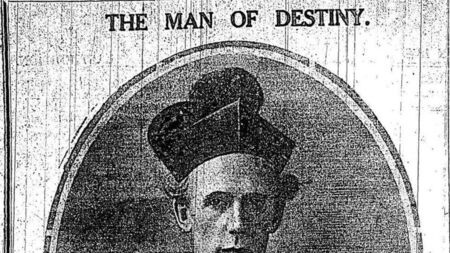
In the February 6 edition of the paper, a short story headlined “Mussolini and Ireland” outlined that the Italian dictator “was not afraid to champion the cause of Irish republicanism in the famous little paper of which he was once editor”.
The article described Mussolini as “epoch-making”. The subsequent decades would prove the description as an accurate one for all the wrong reasons.

Also in 1925, a prisoner endeavored upon a daring escape from the hands of civic guards while he was being escorted to the former Waterford Jail. A party of about nine men armed with revolvers boarded the train, which was transferring the prisoner. The guards aboard were immediately ordered to put their hands up, as the men freed the prisoner from a future behind the walls of the jail house.
The paper also reported on a dramatic fire which took place on Henrietta Street. A large crowd were attracted to the street upon hearing loud screams coming from within house number 19.
The residents of the house, according to the report, “became intensely excited”, and ran to windows overlooking the street below screaming for help.
“The whole area was awakened by the screams of girls and children,” the report continued.
Families residing in the house attempted to lower their children down onto the street using knotted bedsheets. Luckily, a local fireman happened to be walking his way through town at the time, and was attracted by the screams and confusion. He sprinted to the station to make others aware.
Ladders were raised towards the windows to aid the residents, who by this point were barely hanging on. In a touching gesture of community, “the neighbors round the street did everything possible for the stricken people, took them into their homes and attended to their immediate wants”.
Amidst the heavy reporting of hardships and controversies, the paper did also capture the more lighthearted side of Waterford life.

One such example is a thrilling account of how a young man risked his life to save a trapped bird. The article serves as a celebration of reporters of the past, whose extraordinary grasp of language could turn a relatively mundane story into a gripping tale of blockbuster proportions.
The article headlined, “Thrilling rescue of a wire trapped bird”, detailed the scene of an “adventurous young man risking his life to save a pigeon from death”.
The bird had been the “unwilling inmate of the habitation of some cold-blooded ruffian who kept it in captivity by means of a string tied to one of its legs”.
“The bird, however, seems to have outwitted its captor, broken the string and flown away. Overjoyed at having regained its freedom, it still experienced a discomfort by reason of the string.”
As it was escaping, the string tangled around the wires of a telegraph pole on the quay. Whilst dangling from a height of about fifty feet, a large crowd gathered below, before a young man took matters into his own hands.
The report said, “With their hearts in their mouths for his safety, the gathering below watched him grow smaller and smaller until he reached the summit. His every movement was watched with intense anxiety.”
Upon being freed by the man, the bird’s day went from bad to worse, as the cheers of adulation upon its release were replaced with horror.
Instead of flying away, the bird fell with exhaustion onto a nearby window sill.
Suddenly, out appeared “a fierce-looking black cat”.
“One more struggle for life was necessary, and it was doubtful if the bird, after its recent battle, was capable of that.”
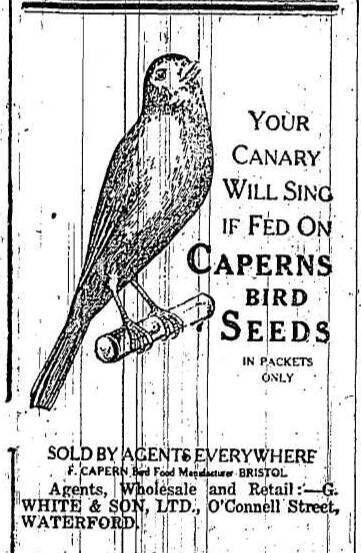
Thankfully, the bird managed to flutter its way to safety, and away “from the unrehearsed attentions of the black monster”.
It “soared to dizzy heights in ecstasy of unfettered freedom”.
“The young man who had risked his life to save the bird had by this time safely descended and was congratulated on his gallant action, but we think his bravery need no congratulation, for his human accomplishment speaks for itself,” the report concluded.