Lights…Camera…Curraghmore!
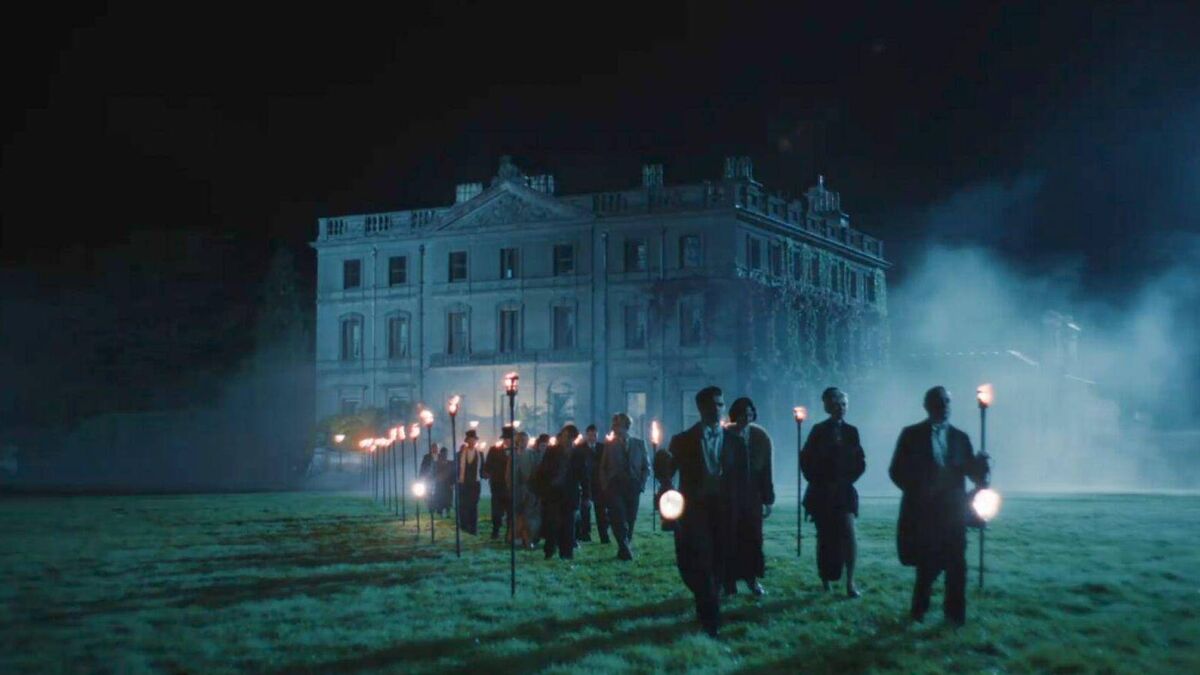
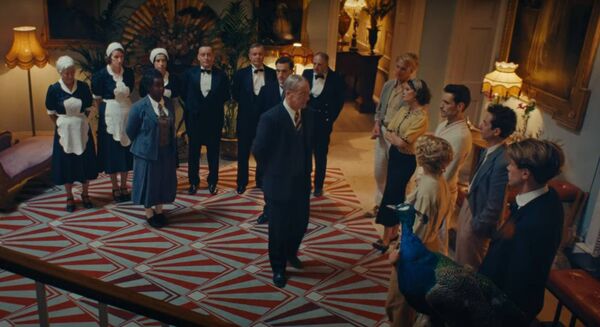
In the night garden: an atmospheric shot from ‘This is not a Murder Mystery’, which was shot at Curraghmore in the autumn of 2024.
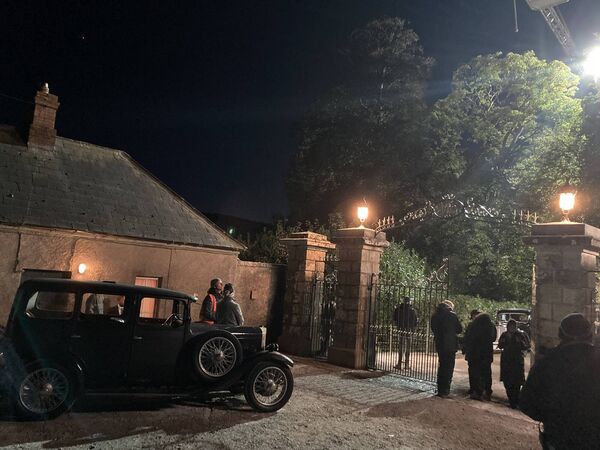
October 10, 2024. I’m stood at the ‘First Gates’, the principal entrance into Curraghmore Estate – or, for televisual purposes on this particular date – West Dean Estate. Night has fallen. Towering spotlights are illuminating an area, which would typically be in total darkness.
Vintage cars are parked either side of the gate, featuring a specially forged overhead sign, which, by welcome coincidence, features the initials ‘WD’ as its centrepiece. It’s a shame it can’t be left in place once the shoot moves to Flanders.
In a few minutes’ time, thousands of litres of water, sat in a tank high above us, will deliver a heavy rain shower during the last scene to be shot here following seven hectic weeks of filming. If the timing is in any way off, nobody stood around me will be best pleased at the end of such a lengthy shooting schedule.
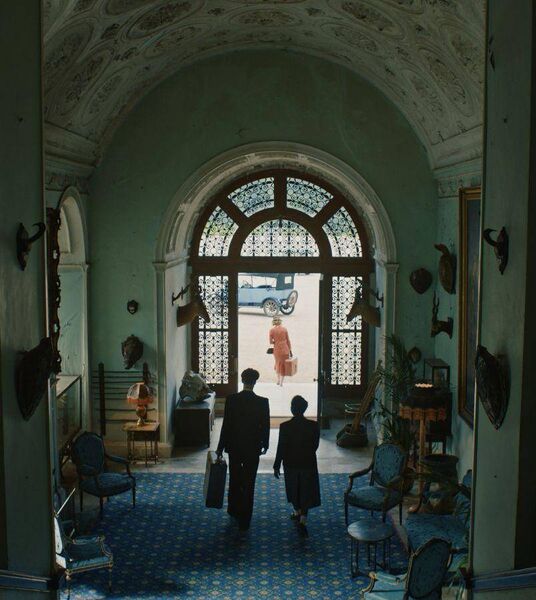
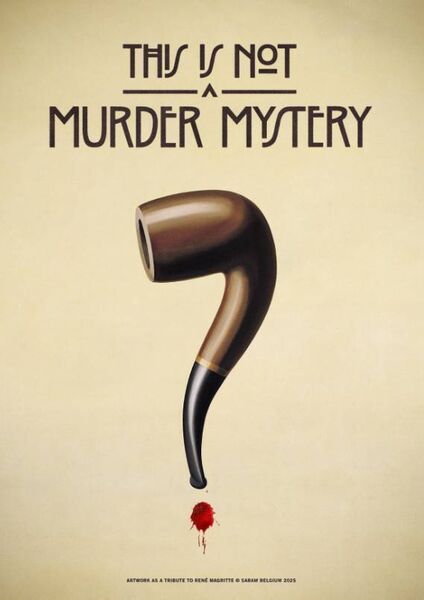
The moment feels almost as surreal as some of the works of Salvador Dali, who is among the protagonists of ‘This Is Not A Murder Mystery’, a six-part Belgian/Irish co-production set 90 years previously.
As timeless locations go, Curraghmore couldn’t be any more on the money.
Prior to that final shot, director Hans Herbots sat opposite me in a bustling catering marquee just a stone’s throw from where All Together Now’s main stage stands each August. He explained what it took to bring this production onto the lands of Lord and Lady Waterford.
“We did a big search throughout the whole of Europe to find the right estate to be able to tell our story,” he said.
“The story is set in quite a wealthy estate just outside of London so we needed an estate with some specific things. There needed to be a grand staircase, there needed to be rooms on the lower floors and it’s hard to find all these things in one castle.
“So I think we've seen at least 20 castles throughout all of Ireland, we've seen castles in France, all very impressive in their own ways but not quite right. But when we arrived here a year or so ago, I remember travelling along a really long driveway (known locally as ‘The Avenue’) that is quite striking, which I had not anticipated. And when we saw the house, the grounds and so much more, I think we as a crew all fell in love with (Curraghmore) straight away.
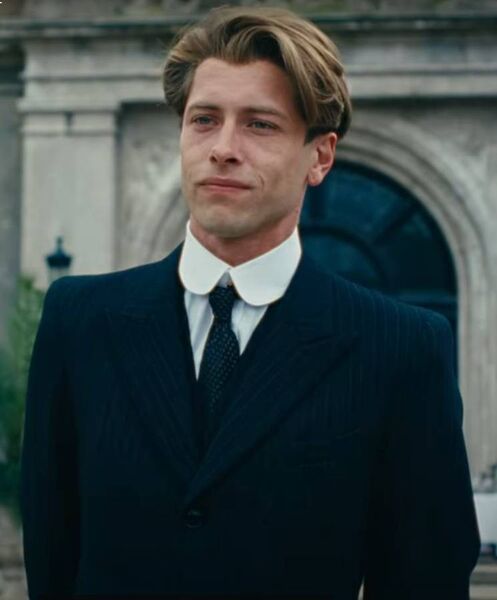
“The main entrance, full of history, immediately puts you in a certain atmosphere. Then you go up the stairs and it gets more and more refined the further and the deeper you go into the castle.
“So ultimately, for our story, it was a perfect match. And as always, when you find a location like this, it takes on a life of its own while telling your story and it’s been wonderful to work here.” Speaking at a time when details about the mini-series remained closely guarded, Hans Herbots did throw a few nuggets in my direction.
“While our title is ‘This is not a Murder Mystery’, it is a murder mystery! It tells the story of surrealist artists in the 1930s, before surrealism was well-known. And this includes Salvador Dali, Max Ernst, René Magritte, Man Ray and Lee Miller, all of whom spend one week in an estate and on the first night of their stay, there is a murder.
“This sends the estate into lockdown, then Scotland Yard arrives and they have one week to solve the mystery.”
Hans continued: “One of our artists, René Magritte, he becomes a detective in the story and tries to solve the mystery alongside those brought in by Scotland Yard.
“For me, it is a murder mystery with a twist – it’s a mixture of lightness, darkness and tension – and I feel we have a lot of really interesting characters because of the surrealism.
“So for me, it’s a really original mix of different elements.”
Standing in the archway between the stables and the main courtyard of Curraghmore House, Kirs Verschooten, the Head of Production with Panenka, the Belgium-based production company, bullet points me through the show.
“We are filming six episodes, and each episode is expected to have a running time of around 55 minutes approximately.
“As things stand, we are not eyeing up a second or subsequent season as this show has both a clear beginning and a clear end. But of course, we have some excellent writers on board who always dream of more – and there has been some talks about revisiting some of these characters in a prequel or even a sequel, perhaps – but right now, it’s not our intention.”
West Dean Estate, as Kris kindly informed me, is a real property in Sussex, with the first building of note there constructed by a Richard Lewknor in the 1620s. Edward James (1907-1984), who inherited West Dean in 1932 when he came of age, was described by BBC Arts as “the greatest English patron of art of the early 20th Century”.
During the 1930s, he transformed a hunting lodge at the estate into a “surrealist extravaganza”, which has clearly inspired some of the deliciously vivid design touches to several rooms within Curraghmore’s Norman Castle during the shoot.
“In our story, the lord of the house brings together all of these artists who are about to break out globally for a big exhibition in an attempt to ‘piggy-back’ a little off the successes which are about to happen for each of them,” said Kris.
“You could call the lord of the house in our story something of a visionary given who he has invited to his home, so while our story is fictional, there’s a call-back to what the atmosphere may well have been like at West Dean over 90 years ago.”
Eighty per cent of the production was shot in Curraghmore, with the remaining frames being filmed in both studio and on location in Belgium, Kris explained.
“Luckily, the interior of the main castle house itself is good for filming so we have used many interiors here, which is great but for the story we needed the house to be even bigger, which is why we need interior shots from elsewhere to add to what we’ve already locked in. And since the house here is still occupied, we didn’t want to overly intervene when it came to the private areas of the house where the Lord and Lady live so when it comes to bedroom shots in the show, for example, they will be shot in Belgium. That way we can combine all that is existing and beautiful here and then build what we need in Belgium based off what we have experienced here to ensure that the style is consistent between both…
“From a director’s perspective, you want to find a place which has been unexploited for filming, to show something that has never been shown before. The moment we drove up to the main house, I think that everybody’s mouths fell open; there was a near instant feeling of ‘this is it’. I am so glad that we took the time to drive two hours from Dublin to see this place, which truly is a diamond in the rough.
“And we have had so much good luck since arriving here. Over the seven weeks in which we’ve been shooting, I think we lost just one scene on the first day due to weather, which made us panic a little and had us wondering would it be like that every day. But from day two onwards, the only poor weather was over the weekends while we weren’t shooting. You could say that the weather gods shone kindly for us and helped us to show off the beautiful exteriors here. It’s such a stunning location.”
As the day gave way to night, the crew, required principals and several extras were transported to the First Gates.
Tucked just inside the gate, Supervising Art Director Jon Beer described Curraghmore as “pretty special as it’s the first time anyone’s been able to film here. It’s a privilege. We approached this shoot with a lot of respect for the location, the house and its history and we’ve been trying to work within that to bring it back in time to the 1930s as delicately as possible and without being too intrusive. It’s been a pleasure to work with the estate; everyone here has been so helpful in terms of helping us to get what we’ve been looking for – and it’s been a good experience.”
Outlining his brief, Jon (who worked on ‘Vikings’ for seven years) said that there are “various elements of the script that we need to provide. For example, it was originally scripted that Dali, at one point, wanted to escape the madness of what was going on in the estate – so he jumps onto these high, magnificent gates to escape – while the press is waiting on the other side. Now, the existing gates here aren’t particularly high and didn’t fit the bill, so we went through a whole process: do we build new gates, or can we add onto what’s already here and so on. But finally, we ended up painting the original gates and then adding the header and some lights to give it an extra sense of grandeur.
“And then the script was changed so rather than having Dali sat on top of a very high gate, he ends up sitting on one of the columns next to the gate. You’ve got to find the reality within the script and then marry that to the location, and we’re very happy with what we came up with for this scene.” While Curraghmore House naturally lent itself for many scenes, Jon and his team’s creative juices flowed throughout the shoot.
“Certain scripted elements create certain demands that we had to realise. There was a surrealist shower/phone booth needed so we had a sculpted model made and installed. There was also a crane that we needed to put onto the roof (of Curraghmore House) so we had to build a wooden and steel winch crane, which probably weighed 300 kilos, which we then had to fit onto a very delicate structure. A cross was also hanging from the crane so we also had to make that and then suspend it in front of the building in between very intricate carved stone detailing that’s been there for centuries. That kind of work requires a huge level of forward planning, to try and mitigate all the risks which can arise during a shoot, but it all came together well.”
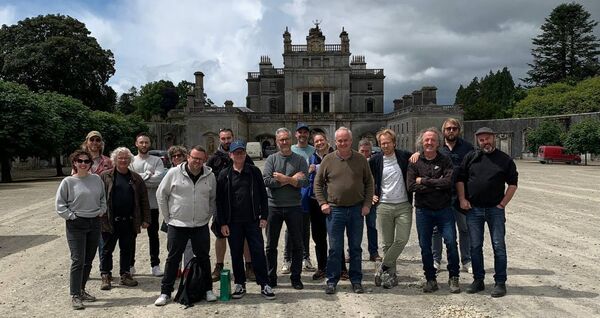
A 116-strong crew worked on the seven-week shoot, with the majority staying in Tramore, another location which proved very popular with Hans Herbots and his team.
“We got to know Tramore very well and loved our time there,” he said. “We became friendly with a lot of people who are running the local pubs, the bakery, the wine shop and so on – we had such a pleasant time here…
“We had a lot of practical considerations to put into practice in Curraghmore. We pretty much needed to develop our own village here – be it for food, make-up, costumes, toilets – everything you need to make a production run effectively. At times it felt like we were running a big festival yet everything ran really smoothy, which is very satisfying.”