Social Farming Ireland celebrates 20 years of innovation and 10 years of national funding
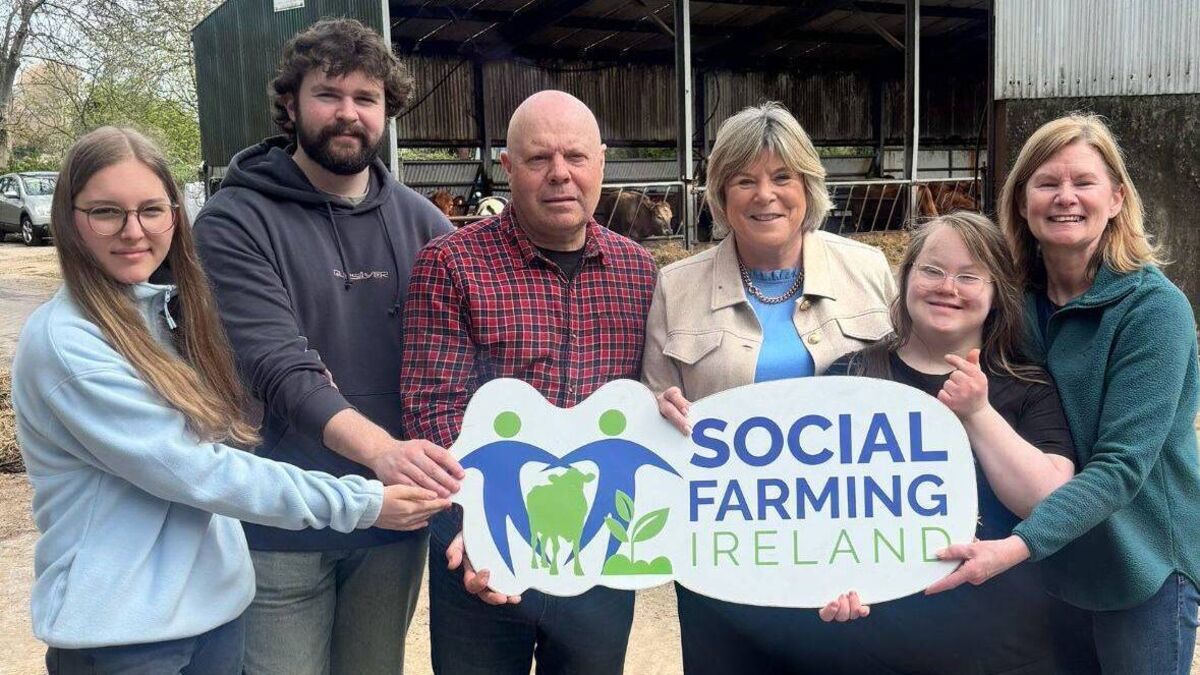
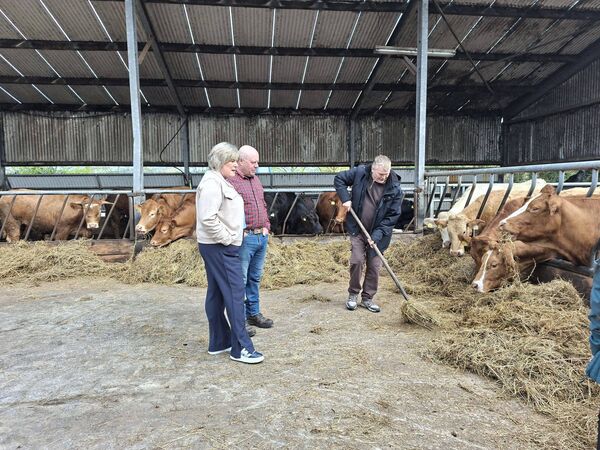
Minister Mary Butler TD with social farmers Ger and Ann O'Grady and family, Dungarvan.
Social Farming Ireland this week marked two major milestones: 20 years since the first conversations that sparked the development of social farming in Ireland, and 10 years of national funding for the network from the Department of Agriculture.
More than 200 delegates attended the national conference at the Heritage Hotel, Killenard, on Friday, April 24, reflecting the rapid growth and rising demand for Social Farming across rural and urban communities.
The Department of Agriculture’s long-standing support has been central to the model’s success. Social farming connects people with animals, plants, nature, and meaningful social engagement - benefits that support farm families, strengthen rural economies, and offer non-clinical, community-based support for disabled people, those with mental ill health, young people, people in the justice system, older people, refugees and many others.
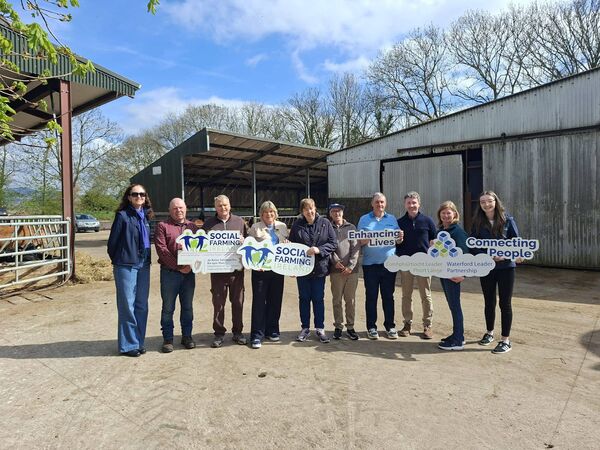
Developed over two decades, the Irish model draws on European best practice and has been adapted to meet Irish needs with full departmental backing. Social Farming Ireland enables participants to build confidence, improve wellbeing, and experience inclusion through everyday farm activities on ordinary family farms.
Farmers are compensated for their time and costs, ensuring the model remains viable and sustainable.
Speaking at the conference, Minister Martin Heydon T.D. praised the reach and impact of social farming, highlighting its role in supporting vulnerable groups.
Meeting farmers from the National Network, he acknowledged their commitment and stated his ambition to see social farming “grow and grow”, reaffirming his goal of making it “an integral part of farming across the country”.
He also highlighted his role in facilitating significant opportunities for social farming expansion across his cabinet colleagues in other government departments, including the Department of Justice, Health, Community and Rural Development, and strong potential within education and ageing supports.
Network leads Brian Smyth and Helen Doherty emphasised that, despite two decades of progress, the work is only beginning and looks ahead to continued innovation, collaboration, and community impact - building on 20 years of dedication and strong partnerships between farmers, families and advocates, services, communities, local development companies, and the Department of Agriculture, HSE, and many other stakeholders.
A highlight of the event was hearing directly from participants, advocates and services. Young people and adults shared powerful testimonies about increased confidence, improved wellbeing, new pathways and a different and better life for them, opened up through social farming. One young participant described the experience as “opening a door”, while another, recovering from mental ill health, said: “There’s not a bottle with medication in it that’s as good as going out to that farm.”
Farmers also spoke about reduced isolation, diversification opportunities, and the shared benefits experienced by both hosts and participants.
The conference also celebrated Social Farming Ireland’s recent win at the RDS Agricultural and Rural Awards, where it received the Sustainable Award for Rural Social Impact.
Closing the event, Peter Johnston of the Department of Agriculture, Food and the Marine reaffirmed the Department’s commitment to the programme, noting that “the real difference that social farming makes to the lives of participants, their families and host farmers cannot be overstated.”
Social Farming Ireland is delivered nationally by local development companies through regional hubs. Leitrim Development Company leads in collaboration with South West Mayo Development, West Limerick Resources, and Waterford LEADER Partnership.
Local regional co-ordinator Tanya Murphy of Waterford LEADER Partnership supports social farmers and services and works across Waterford, Wexford, South Tipperary, Carlow and Kilkenny to allow people to access and to spend time on farms. Eilís Cooney is the Social Farming Ireland South development manager supporting services in funding arrangements, expanding the network and promoting social farming as a diversification option for farming communities.
If you are interested in getting more information about social farming in your area, please feel free to get in contact with Tanya on 087 2311061 or Tanya.murphy@wlp.ie; Eilís on 086 8395516 or Ecooney@ldco.ie
Social farming is an innovative, cross-sectoral approach operating at the intersection of agriculture, health and social care, social inclusion, rural development, education, and environmental sustainability. Its strength lies in delivering integrated outcomes: improving health and wellbeing, paying farmers, diversifying farm income, enhancing person-centred care services, strengthening rural communities, and contributing to climate and sustainability goals.
Currently there are over 200 farmers who have been trained and supported by the National Social Farming Ireland Network since 2016 and who have delivered on their farms right across the country. In 2025, over one thousand people spent time on one of these farms, and the farmers were paid approximately one million euro for their support.