Rainbow iris and scented seas of lavender
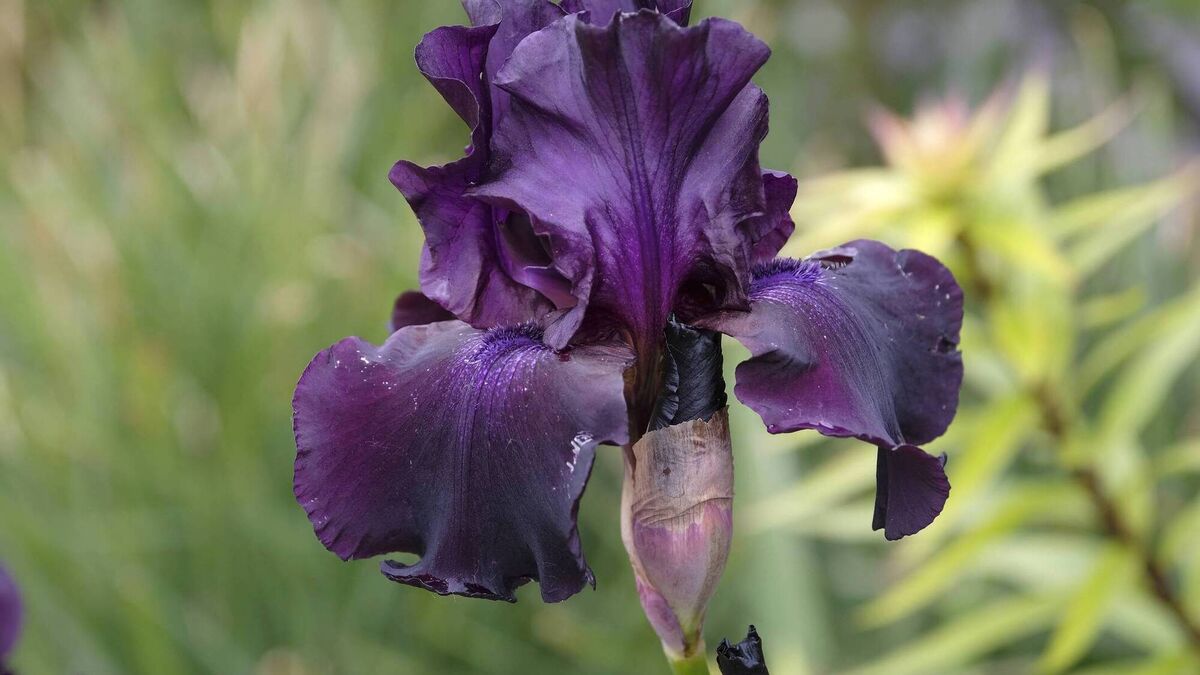
Dark purple bearded iris germanica 'Superstition' in flower.
From spring until autumn there are plants just waiting to burst out into bloom and, while the peak season might appear to be in the spring, there is usually an abundance of flowers right though the summer and, two of the more spectacular plants are the iris and lavender.
There are so many types of Iris and, it is possible to have some that like dry conditions while at the other end there are some that like to grow in water such as in a pond or stream, and in between there are all the other types. One of the most popular ones are the bearded iris and even then they are subdivided into different classes of which the most well-known is Iris germanica which grows to around 80cm (32”) and, so great is the colour range and individual beauty of the flowers that, quite often this is the Iris that is planted in groups by themselves.
It is the bearded iris that I will write about this week as they have just finished flowering and it is time to replant them now. These Iris will grow on most soils in a sunny area and, if you give them a good free draining or light soil they will be very happy but, do not ever plant them in heavy wet land. They are grown from fleshy roots and every four years they need digging up, splitting into smaller parts, trimming the foliage to half its length and replanted just below the surface. Some nice varieties to set you on the right track include- ‘Amethyst Flame’ (Lilac), ‘Black Hills’ (Violet-black), ‘Frost and Flame’ (White and red), ‘Jane Phillips (Sky blue) and ‘Staten Island’(Gold and Red).
Lavenders are one of the most accommodating and versatile plants that you can have in your garden. They need similar conditions to Iris above and will sulk and die when planted in heavy wet soils. Their cool colours in shades of blue/lilac or white are all sweet scented flowers and a must for most gardens as they are attractive all the year round with their grey/silvery foliage and then, their flowers which are long lasting can also be cut and harnessed for drying or preserving for fragrance indoors, especially welcome during the winter months. Lavenders need an annual prune After flowering, bringing the foliage down to close to last year’s growth, leaving a neat dome otherwise, if left alone the plants become untidy and woody and will eventually need replacing.
These plants come in dozens of different colour shades, shapes and sizes and are grown for a variety of qualities such as perfume and medicinal properties. Out of the 38 or more species there are two that are more suited to our wetter conditions, and they are Lavandula angustifolia and L. x intermedia and their numerous varieties and, with care in the selection of the various forms, you can have flowers from June until September. Typical reliable varieties include ‘Hidcote’, ‘Munstead’, ‘Melissa Lilac’, ‘Ashdown Forest’, ‘Arctic Snow’ and ‘Purple Treasure’.
Lavenders can be planted as individual specimens in patio pots, as a low hedge or in groups of a similar variety in beds or all of these combinations and, depending on space and interest, this can be repeated again in the garden.