Green Fingers: Winter months are nothing to sniff about
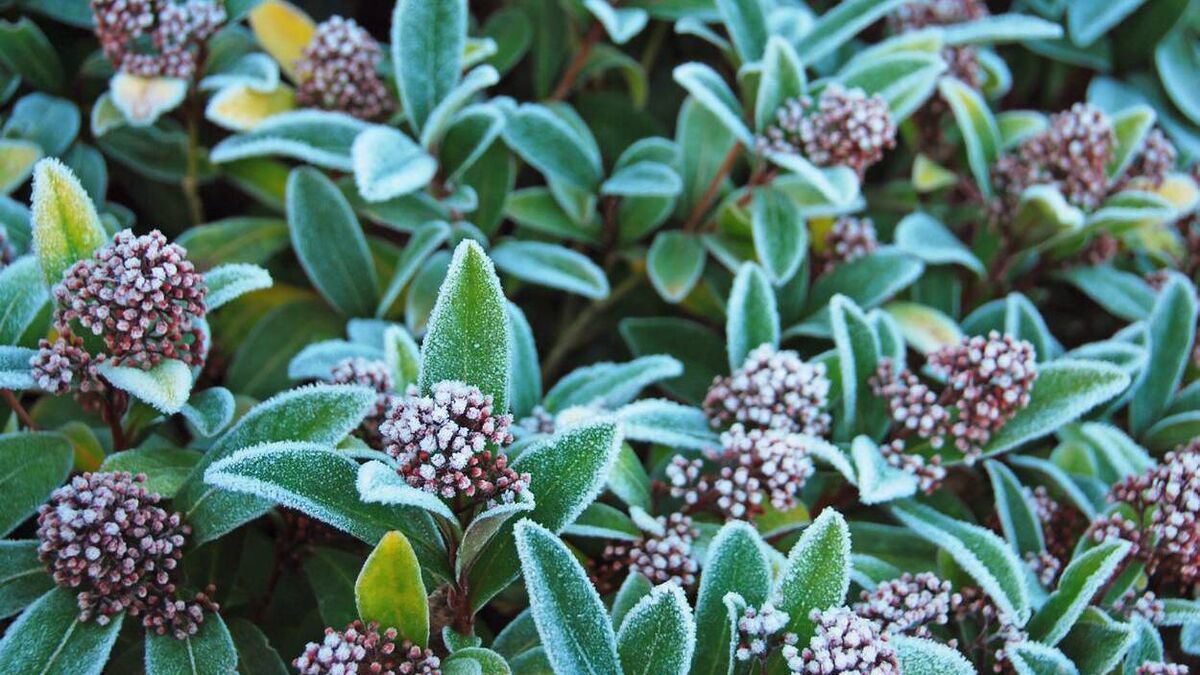
All the winter flowering plants that I mention are hardy and not much affected by harsh wind, rain or frost, including Skimmia, pictured.
Plants that are fragrant did not evolve to please us humans but adapted over time to entice pollinating insects and, as you can imagine, during the winter there are fewer insects so the fragrance from plants has to be that much stronger during that period.
It would be simplistic to assume that our favourite plants have evolved to be cosy in our back gardens as nearly all have come from abroad during the last 200 years and have not had time to change, so the plants that do well here are those that simply tolerate or adapt fast to our variable climate.
Our gardens are becoming smaller and, as we do not spend much time there during the winter months, we need to get the best use of our space so with a careful bit of planning we can achieve the best of both worlds by having a select few choice fragrant winter plants flowering during the duller months.
All the winter flowering plants that I mention are hardy and not much affected by harsh wind, rain or frost and I am including a few that can suffer damage in severe conditions but are able to recover quickly and flower again, such as Viburnum fragrans and autumn or winter flowering cherry Prunus autumnalis and varieties.
It is interesting that some flowers will protect themselves during adverse conditions by curling up into a smaller size, only to expand again once it becomes drier, such as Witchhazel - Hamamelis, snowdrops and some daphne types.
The human ability to detect different levels of scent varies individually, but given a mild and still winter’s day, the strength of scent can be carried over a large area and is quite powerful.
Therefore, in conjunction with the limited area available, it is possible to have a small number of winter-scented plants spaced out in strategic locations in your garden. The sight of anything in flower during the winter months is welcome and adding some scented plants can only be a big bonus.
Place these plants where you can enjoy them as there is no point in placing them where the wind will carry the scent next door!
When writing these notes I am always conscious that most gardens are small to medium and as larger gardens can accommodate a wider variety of designs, features and plants there have less restrictions to take into account. Along this train of thought, we might be inclined to only plant dwarf-growing plants in our smaller gardens, whereas that is not the way to go as it becomes unnecessarily restrictive on a number of highly desirable plants that we would miss out on.
I will restrict the winter-scented shrubs from November until February but there is an overlap at either end with these plants and other suitable ones. Acacia, Camellia x vernalis ‘Yuletide’, Cercidiphyllum, Daphne, Hamamelis, Lonicera fragrantissima, Mahonia, Sarcococca, Skimmia and Viburnum. Larger growing plants can be trained into whatever space you have available by pruning during the flowering period and enjoying the cut pieces indoors as a bonus.
I am not sure if this affects other people but when I see plants growing too close together I just want to move them further apart. This can be done between now and April and it is also an ideal time to plant some spring-flowering bulbs.
If you have any queries or comments you are welcome to share them with me on 051-384273 or orchardstowngardencentre@hotmail.com and if of general interest I will include them in a future article.