Green Fingers: There is a buzz about bees
New EU honey labelling came into force on June 14, 2026, and all honey must now state clearly country of origin.
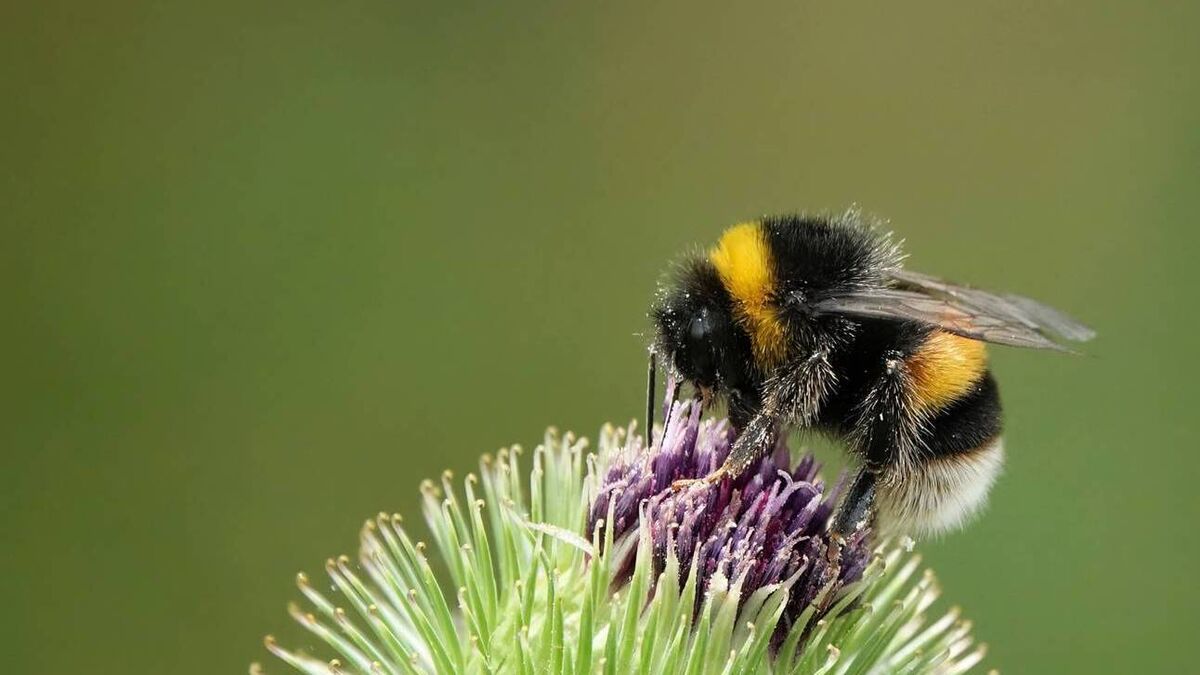
There has been an increasing awareness about the importance of bees in our lives. To be correct, I should say pollinating insects, of which bees are one but an important part, which we have placed at the head of a campaign to ensure we do not destroy our natural treasures any further.
There are some opinions that say if we lose our pollinating insects we will not be able to survive in the world. That is not quite true as around 25% of crops are wind pollinated but it will certainly make our choice of foods much reduced and boring. Even more importantly, it is a wake-up call that we need to reverse some of the destructive things we are doing to this planet, such as habitat loss, climate change, intensive agriculture and pesticides, and, by implication, we are doing this to ourselves!
Because of the huge loss of habitats, it has become more important than ever to provide as many alternative substitutes as possible and one of the best areas for that is in your garden. The purists might then say you should only plant native species but that is unnecessarily restrictive as, quite frankly, we need much more than that and also different species as going only native will leave severe shortages at certain times of the year.
Another myth is that only oaks should be planted as they can support the greatest number of native species, which is true but you have to wait a few hundred years for that to be the case whereas trees such as willows, alder, hazel and birch will provide a huge number in just a few years.
Bees and indeed other insects have evolved over millennia to breed and become active when their food source becomes available and that is from the spring until the autumn.
There have been disturbances to this pattern and, with no food, the insects die and the population goes into decline.
Part of the solution is to have as many suitable plants as possible in your garden at that time. It is not annual flowers that produce the greatest amount of nectar but shrubs are far superior in every way. Begonias and pelargoniums (geraniums) are low in nectar whereas a mature shrub, such as a flowering currant, mahonia or berberis provides as much nectar as 16,000 primroses and so it continues through the months with other shrubs until the autumn.
It is confusing to see Irish-sounding brands on food products that are not Irish at all and that included honey until recently. An EU study showed nearly 50% of imported honey was fake, it being mixed with sugar syrups, colourants, additives and forged traceability data. New EU honey labelling came into force on June 14, 2026, and all honey must now state clearly country of origin among other requirements, which is a huge help for the consumer.
Freshening up some of your flower containers can be achieved by using a number of autumn plants, such as cyclamen, coloured heathers, ornamental cabbage and violas.
For additional interest and a longer-lasting display, first plant deeper some spring flowering dwarf narcissi, tulips and crocus.
If you have any queries or comments you are welcome to share them with me on 051-384273 or orchardstowngardencentre@hotmail.com and if of general interest I will include them in a future article.