Green Fingers: Getting ready for the growing season
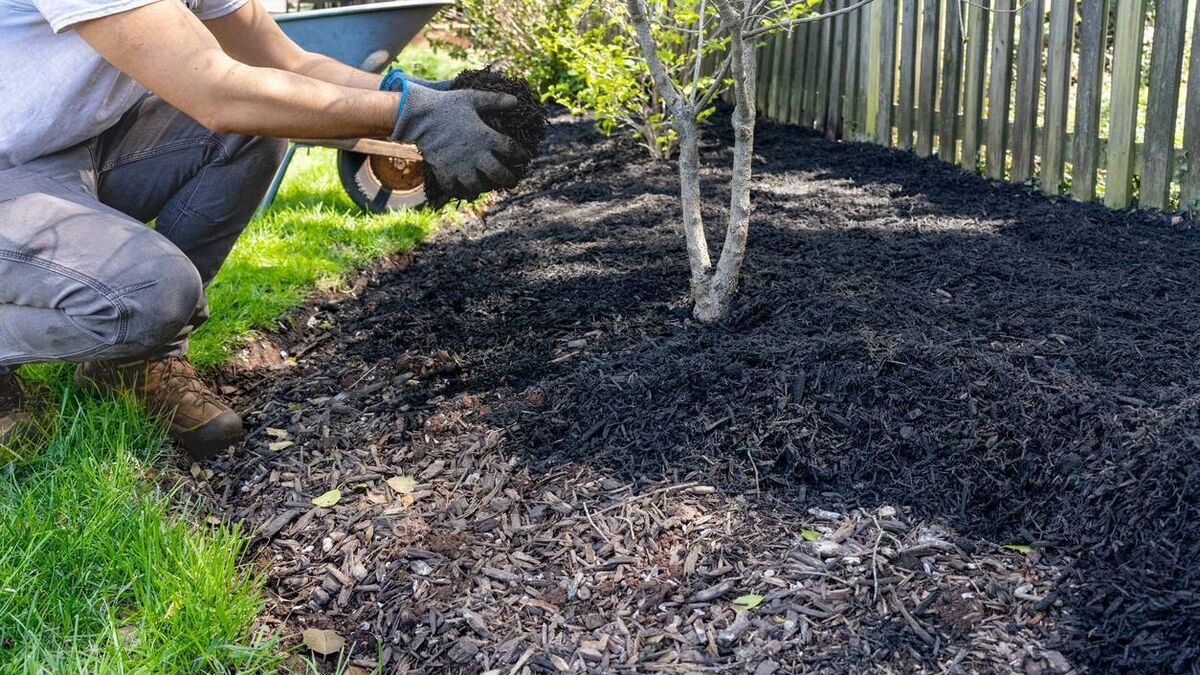
Mulching with compost or farm manure helps suppress weeds.
There is a sign of optimism among anyone who spends some time in the garden and that is due to the gradual increase in daylight hours, temperatures and the fact that we are heading out of winter and into spring.
The ground is generally too wet to sow any flowers and vegetables unless you happen to have a covered growing area, such as a tunnel or glasshouse. We continue to sow small pots of a wide range of flowers and vegetables and after germination they are placed in a cooler but frost free area to harden off and stop them becoming leggy.
In a few weeks we will begin to separate the seedlings and put them into single pots where they will remain until it is time to plant them out.
Gardening is or should be a fun hobby and generally carried out when conditions are good. There is no point in being outside when the weather is miserable unless there is an emergency and that generally does not involve a gardening activity.
Recently, we have had a few super calm sunny days in which to get some outdoor tasks done and those are the days when it is a great pleasure to be out in the garden.
There is some growth starting in herbaceous perennials (e.g. Lupins and delphiniums) and, if some need moving or spacing out, then you can begin to do this from now on.
Some plants may have become large clumps and can be lifted, divided up into smaller pieces 10-15cm (4-6”) and replanted again. This method can also be carried out with snowdrops and winter aconites too, but replant with smaller pieces of around 5cm (2”).
It is often advised to dig up bad weeds, such as couch grass, docks, nettles and bindweed during the winter months and remove the roots but the weeds are dormant and are often hidden under ground so you do not know where they are.
You can, however, dig over and add some compost or farm manure and leave rough any area where you are going to grow vegetables and remove any bad roots that appear.
Plants with coloured stems, such as willows and dogwoods, have been giving a great display all winter but at the end of the month and just when new growth is starting, the stems need to be cut down to about 30-45cm (12-18”). It is from these bases that the new stems will emerge all summer to provide next winter’s bright colours.
Not many gardens will have the space for some of the willows, whereas the dogwoods will suit most gardens. Suitable willows with winter stems (WS) or beautiful catkins (C) include - Salix ‘Britensis’ (WS), 'Irrorata' (WS), ’Basfordiana’ (WS), ‘Aglaia’ (C), 'Hookeriana' (C), ’Mt Aso’ (C) and ‘Melanostachys’ (C). Suitable dogwood with coloured stems include ‘Elegantissima' (red), ‘Kesselringii' (purple), ‘Spaethii’ (Red), ‘Midwinter Fire’ (Orange), and ‘White Gold’ (Yellow).
If you have some space you can grow some onions, which are one of the easiest crops and can be planted as small sets (onions). The nice thing is some can be used during the growing season as scallions or spring onions for salads and sandwiches, leaving others to mature into good-sized onions.
If you have comments or queries you are welcome to share them with me on 051 384273 or orchardstowngardencentre@hotmail.com and if of general interest I will include them in a future article.