Green Fingers: Gardening during the longest day
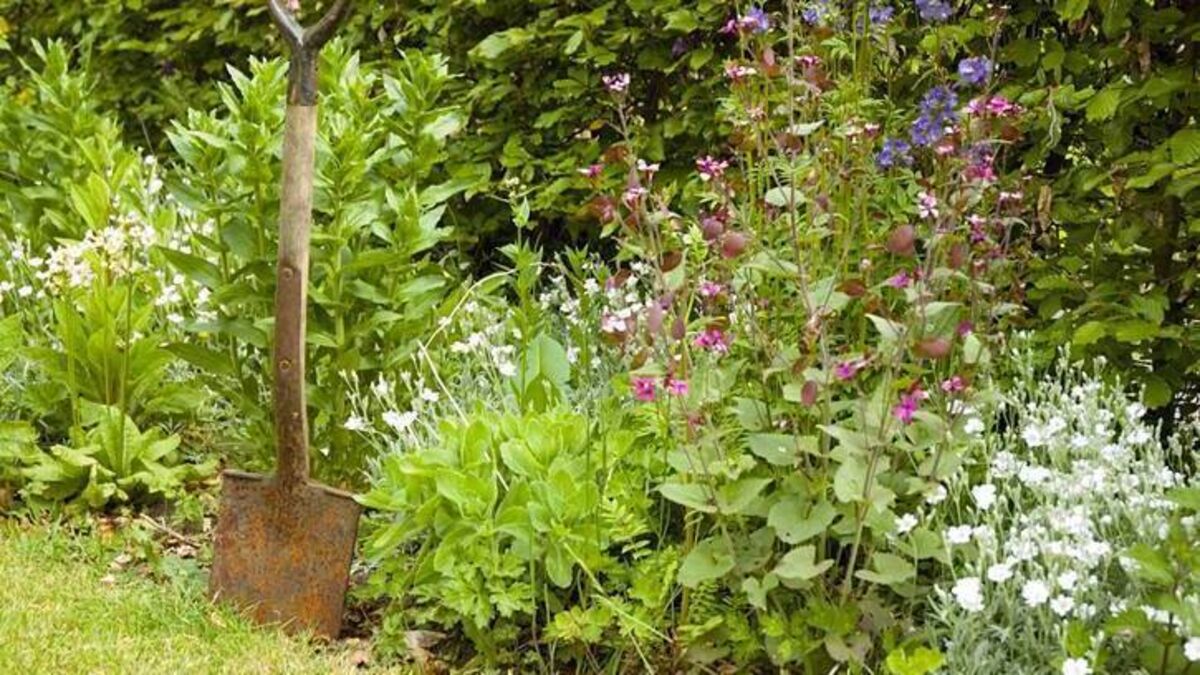
The season is all about vibrant flower and foliar colours and, in the herbaceous perennial range, there are abundant choices.
The longest day occurs when we have the most daylight hours and it falls on June 21, and what it means is that from that date gradually our daylight hours will be reduced until the shortest day, which is on December 21. This is just an annual cycle and nothing to get upset about, but I have always felt that it comes too soon in our gardening calendar.
Gardeners, including farmers, have always known the importance of timing in the preparation, sowing, after care and, finally, harvesting of crops. In Ireland, the preparation can be carried out during the autumn and winter and, depending on the crops, sowing begins around the end of April and continues until the end of June.
That all important germination period is when conditions are usually warm, moist and there is plenty of light and, following this, there is a long enough time for most crops, such as vegetables and flowers, to grow to maturity.
While it is great to see all that growth there is the other side of the coin in that weeds grow just as fast or more so! I do not know why but in most years it takes me by surprise and I have to knuckle down and hand weed before they take over our vegetables and flowers.
On a positive note this is the time of the big growth surge after which things calm down enough for you to enjoy your garden in peace.
The main thing to remember now is that there is still time for sowing some vegetable crops but the list of available types will be reduced as the weeks pass, although it can be extended by planting out young vegetables from trays.
Otherwise, most of the input should be about caring for plants now.
The nice thing about the summer months is that you can see ornamental plants flowering in the garden shops and if you like the colour or variety, you simply can add it to your garden plant collection. Trouble is, I pick up new plants when out and about and do not have a place to plant them, but for ease of caring I leave them near the back door until they are planted into a permanent position.
The season is all about vibrant flower and foliar colours and, in the herbaceous perennial range, there are abundant choices. Three long-flowering blue or lilac shaded plants include Nepeta ‘Persian Blue’, commonly called catmint, and popular as an edging plant with its grey-green aromatic leaves topped with long tapering blue flowering spikes all summer; the second is the widely available Erysimum ‘Bowles Mauve’, a long-lasting wallflower with lilac flowers all summer, which attracts butterflies.
The third is the Verbena bonariensis, which is an elegant light structured plant with tall lilac blue flowers all summer and it also attracts butterflies.
For spectacular foliar elegance go for some Heuchera varieties such as ‘Black Pearl’ or ‘Wildberry’ (dark purple), ‘Silver Scrolls’ (silver), Marmalade (orange) and ‘Boysenberry’ (pink).
For half hardy perennials you can try Pentas, with a range of colours of star-like flowers all summer, making them ideal for patio pots and containers.
Conditions have been good for pollinating fruiting plants and we appear have another potentially good harvest, which is unusual following the bumper crop last year, as plants frequently have a rest year with little or no fruit but it is too early to say which way it will end up.
If you have any queries or comments you are welcome to share them with me on 051-384273 or orchardstowngardencentre@hotmail.com and if of general interest I will include them in a future article.