Government to ‘rebalance’ judicial reviews to fix ‘unwieldy’ processes
By Gráinne Ní Aodha, PA
The Government is to introduce reforms that aim to cut delays and reset the “imbalance” between individuals’ right to object and delivering major public infrastructure.
Thirty measures designed to remove barriers to delivering infrastructure are contained in the Accelerating Infrastructure – report and action plan published on Wednesday.
Among the actions are reforms of the judicial review process, an increase in the exemption thresholds for critical infrastructure and establishing a regulatory simplification unit to lead a review of regulatory structures.
It also includes plans to draft legislation that would enable projects to be designated as critical infrastructure “subject to Dáil resolution” and also give the Government emergency powers to accelerate their delivery.
The Government said the reforms being worked on sought to fix an “imbalance” between the right of the individual to access the courts and the “common good”.
If we get this right - and I believe we will, and we must - we will reduce by months and even years the timeline for delivering key projects earmarked for your area, your community
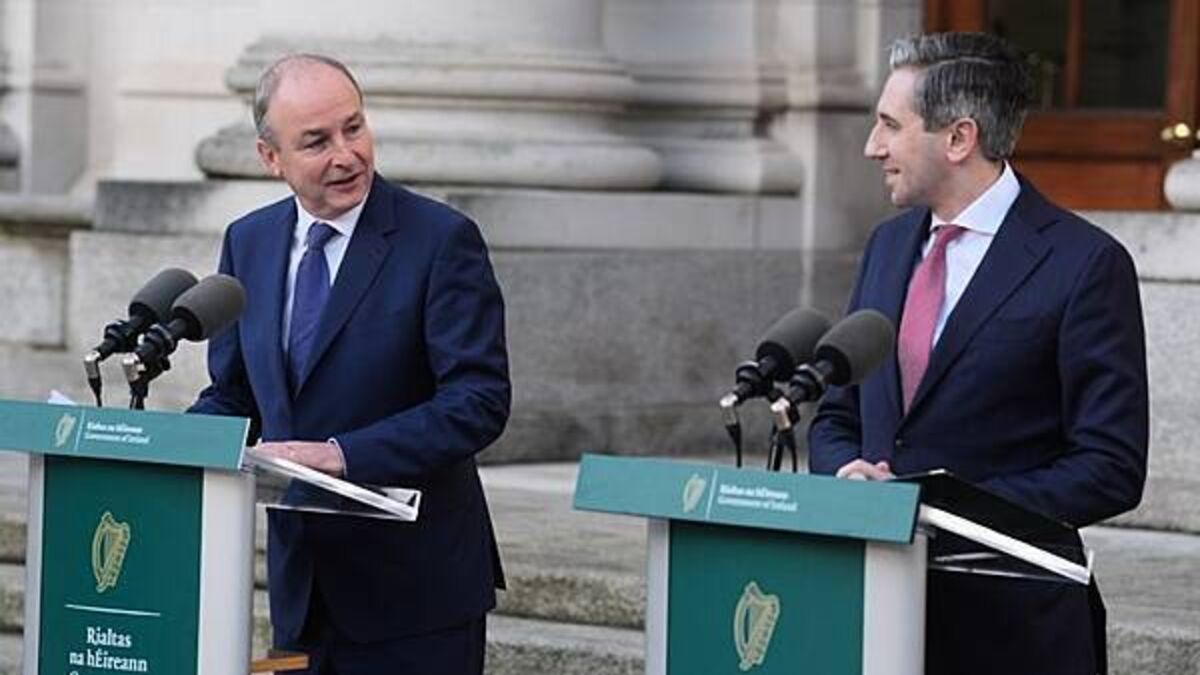
Taoiseach Micheál Martin said Ireland’s planning, legal and regulatory systems, and how they interact, had become “extremely complex and unwieldy”.
He admitted the reforms were likely to face legal challenge but said not all elements of the Bill would “end up in the courts”.
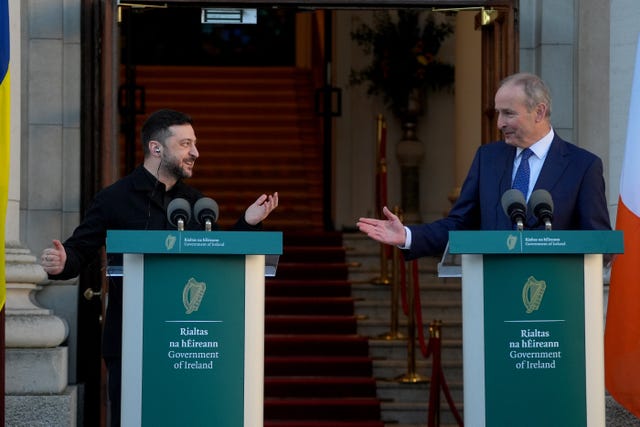
Referencing a visit from Ukrainian president Volodymyr Zelenskiy to Dublin on Tuesday, he said Ireland’s energy supplies needed to become more independent through building renewable energy infrastructure.
“On the overarching interest, offshore wind farms are, without question, in the overall public interest,” he said.
“The most effective thing we could do on climate and addressing climate is dramatically change our fuel, our energy, from imported fossil fuels to renewable wind.
“The LNG facility is a security imperative, absolutely. We’ve discussed Russia, we’ve discussed the visit of President Zelensky yesterday, be under no illusion, we are very exposed and very vulnerable to the connectors, and that’s the bottom line.”
Tánaiste Simon Harris said Ireland’s growth had created more opportunities, but the lack of progress on infrastructure meant there was a threat to social cohesion.
“There’s a small number, a handful of serial objectors in this country who are holding back the country’s progress. It’s as simple as,” he said.
He said Ireland’s delivery system “is too slow” and named “regulatory delays, the planning bottlenecks, the duplication and fragmentation” as the barriers to progress.
He said the Government’s acceleration plan “will result in an ability to build more homes” and will see “faster delivery” of projects.
“If we get this right – and I believe we will, and we must – we will reduce by months and even years the timeline for delivering key projects earmarked for your area, your community, and, crucially, for our country.”
Minister for Public Expenditure and Infrastructure Jack Chambers said there was a “litigation risk” with any draft laws proposed by government.
“We’ll confront any legal challenge head-on in the public interest,” he said.
“But we can’t shrink from doing the right thing because of the risk of litigation.
“We’re going to be as ambitious and as radical as possible to bring a reset and a rebalancing to the rights which are now far too concentrated in narrow, vested interests, where essentially process and procedure delay has become the centre stage of infrastructure delivery.”
He said that he wished to increase the “risk appetite” in departments and state agencies by “cutting some of the layers and procedures” that have become “embedded” in the system, which he said would “shrink timelines”.
Mr Chambers added: “We’re going to make a positive statement and set out a circular on increasing the risk appetite in the delivery life cycle.
“So that could involve, for example, starting enabling works while the planning process is under way, it could involve forward funding or procuring particular equipment or enablers for infrastructure delivery, but, ultimately, it’s about making a decision a lot quicker.
“We’ve become trapped by process at the cost of progress.
“These barriers are structural, not isolated, and they demand urgent action. The cost of inertia is felt by every person in this country.
“It is most visible in housing, but also those stuck in endless traffic congestion, the business owner who can’t expand his offering, or the local community where untreated sewage flows into a nearby river.”
Minister of State Marian Harkin said “this is not deregulation”.
“It is better and more efficient regulation, and we will work within the parameters of EU regulation.”