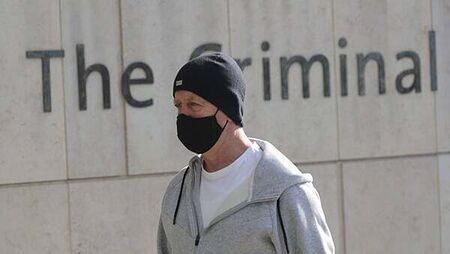
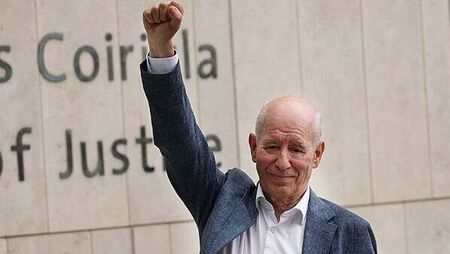
Doctor defends Covid-19 vaccine criticism at Medical Council misconduct hearing
Seán McCárthaigh
A family doctor who was highly critical of Covid-19 vaccines and public health guidelines on social media during the pandemic has claimed the forceful expression of “strong moral disagreement with State policy” does not constitute professional misconduct.
Marcus de Brun told a fitness-to-practice hearing of the Medical Council that there was no evidence that comments he had made on Twitter had translated into “unsafe practice.”
However, he stressed that public health guidelines issued during the pandemic had raised “serious ethical concerns.”
Dr de Brun – a former member of the Medical Council who had operated his own practice in Rush, Co Dublin – is accused of 10 counts of professional misconduct over his criticism of vaccines, lockdowns, facemasks, and various public health guidelines.
Most of the allegations relate to several dozen posts by the GP on Twitter (now X) between May 2020 and October 2021. Others relate to comments he made at a public rally in Dublin in August 2020 when he was also accused of failing to wear a facemask and observe social distancing.
In one tweet, de Brun claimed giving healthy children a genetic-based vaccine was “the greatest crime against humanity that this century has witnessed so far.”
The Medical Council claims de Brun’s comments and actions were inappropriate and undermined public health guidelines as well as running contrary to sections of the Guide to Professional Conduct and Ethics.
Counsel for the regulatory body, Neasa Bird, claimed his actions amounted to professional misconduct on the basis they were both “disgraceful and dishonourable” and failed to meet the standards expected of doctors.
The GP, who legally represented himself at the hearing, has admitted the posts on Twitter were his, as well as confirming he addressed a rally at the Custom House in Dublin on August 22nd, 2020.
However, he rejected the legal argument that they met the threshold to make findings of professional misconduct against him.
In a closing submission on the seventh and final day of the inquiry on Thursday, de Brun warned that the practice of medicine would become “a dangerous place” if a divergence of opinion became grounds for making findings of professional misconduct.
“If criticism of policy is to become misconduct; if disagreement with guidance is to be translated into disgrace, if dissent becomes professional delinquency, then the line between regulation and enforced orthodoxy becomes dangerously thin,” he remarked.
De Brun pointed out that none of the people involved in making complaints about him to the Medical Council had given evidence in the case about the “terrible consequences that my tone may have caused.”
The GP said there was no evidence that any patient had relied on his public commentary instead of medical care or that his clinical judgement had been compromised.
De Brun noted that the Medical Council had relied on the evidence of an expert witness, Colin Bradley, to argue for the “prosecution.”
“Other experts might not adopt the same opinion,” he observed.
The GP said he fully accepted that some of his tweets were made in a “crude town square” fashion but argued that their language and tone was not unusual for Twitter.
He also acknowledged that he had used “flippant or personalised” language occasionally which he accepted was inappropriate.
However, de Brun said they were “expressions of frustration,” although they were never directed at patients or related to clinical decision-making.
He urged the fitness-to-practise committee to recognise that the context of his use of social media was crucial as the tweets were posted in “an unprecedented and rapidly evolving” pandemic.
While many of the allegations were framed as him undermining public health guidelines, de Brun said it was essential to distinguish between guidance and statutory obligations.
“There is no allegation and no evidence that I breached any statutory duty or guidance in my clinical practice of medicine.
“I make no apologies to this committee for being guided by my internal moral compass.”
He claimed it would be “a very dangerous move for the practice of medicine” if a policy of divergence from guidelines was elevated into “a disciplinary code.”
De Brun said he had tried to demonstrate that a doctor with genuine ethical concerns could question policy while also continuing to discharge his clinical obligations.
He stressed there was no evidence that he had refused to comply with regulatory standards during the pandemic or that he had disregarded infection control measures.
The GP said he had adhered to guidelines, with which he fundamentally disagreed, in his medical practice which he said required a degree of effort, self-control and moderation.
De Brun said the seriousness of the allegations against him depended on “the interpretation of speech rather than demonstrable consequences.”
He argued that a finding of professional misconduct required proof of actions demonstrably and seriously below expected standards and could not just rely on an opinion, even of an expert witness, “on tone and standards.”
In her closing submission, Bird said it was clear from the evidence that de Brun had not observed social distancing and had not worn a facemask contrary to public health guidelines on the day he attended the rally.
She noted he had made numerous references to the fact he was a doctor, although he had stated he was not speaking as a GP, while he had admitted his attendance was “a significant and weighty thing.”
“It was clear front and centre that he was a doctor,” she said. “Far from concealing he was a GP, he repeatedly drew attention to it.”
She reminded the committee that the health authorities were dealing with a highly infectious and potentially lethal infection and the GP’s comments lent support to protestors who were defying public health guidelines.
Bird said Prof Bradley had concluded that the various tweets about the National Public Health Emergency Team (NPHET), the vaccination programme facemasks, lockdowns, other doctors and the promotion of alternative treatments for Covid-19 represented an undermining of public health guidelines.
While de Brun claimed he had nowhere else to go apart from social media to voice his concerns, Bird said he had published a longer and much more moderated document about his views as well as being a signatory to a proposal for an alternative Covid-19 strategy.
She noted he could also have contacted various medical and health bodies including NPHET.
She also rejected claims that the Medical Council had engaged in the “cherry-picking and curation” of tweets to portray de Brun in an inaccurate or unfair way.
Bird said the tweets were not “light-hearted banter” as had been suggested by the GP.
She said de Brun’s had the right to criticise the Government’s handling of the Covid-19 pandemic but his right to freedom of expression was not unqualified.
Bird said having to adhere to standards was part of both the privilege and burden of being a member of a regulated profession.
The committee’s legal advisor, Ronan Kennedy, told the hearing that context was a vital consideration in the case but it was not necessary to have adverse consequences to make findings of professional misconduct.
The inquiry’s chairperson, Deirdre Murphy, said the three-person committee would announce its findings on some future date still to be determined.
As part of a pilot project BreakingNews.ie has used AI to suggest headline options for this article. The final headline was chosen and edited by BreakingNews.ie journalists. Find out more