Stephen Power - Sound of Excellence in Waterford
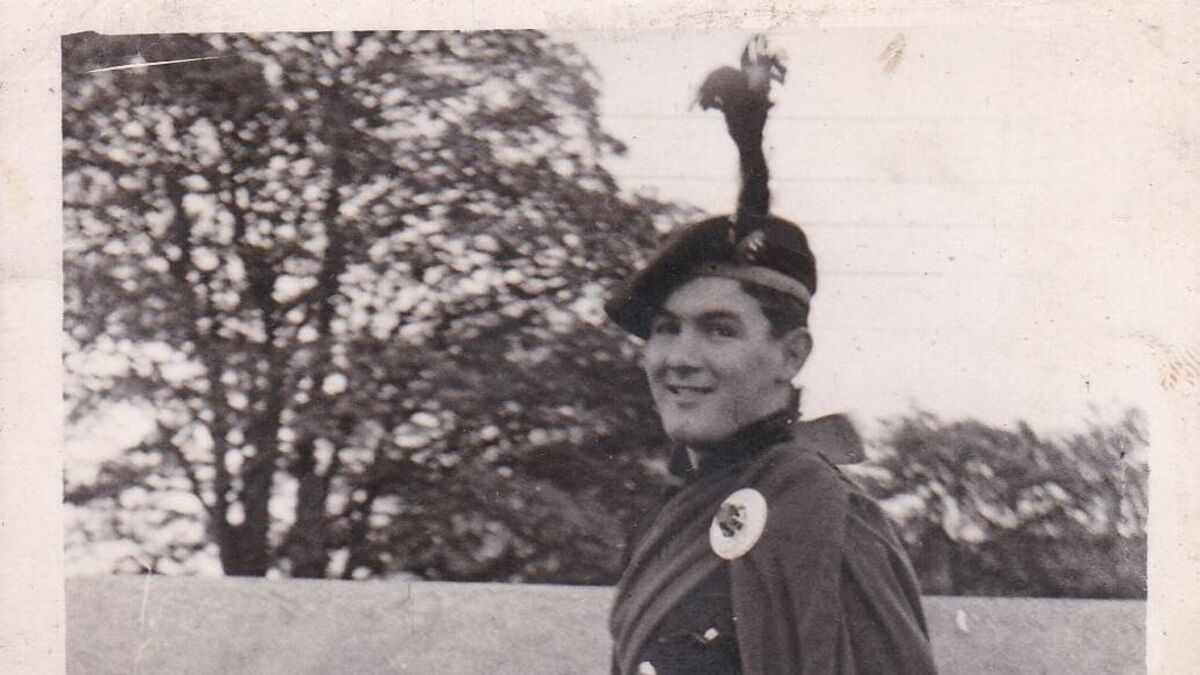
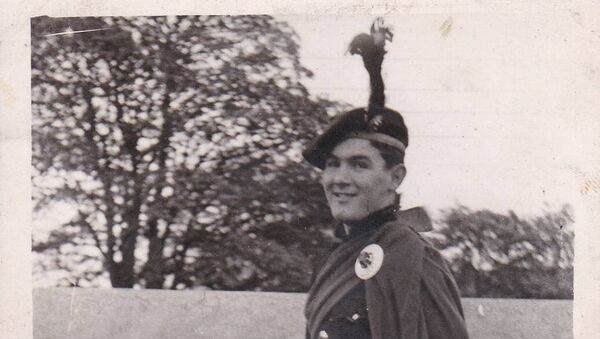
Stephen Power in his late teens.
Some people live in such harmony with music that, long after they are gone, their presence can still be heard - in the echo of a note, the lift of a march, the hum of a drone. Stephen Power was one of those people. A Waterford man, his life’s melody was written in the proud, stirring sound of the pipes - but also in a love of all music, of creation itself. He often said that when you made music, “you made magic”.
Born in Emmett Place, Waterford City, in 1934, Stephen grew up within earshot of the barracks. It’s easy to imagine him as a boy, hearing the pipes rise in the morning air – a sound that would one day define him. At 14 he joined the Old Fianna Pipe Band, part of the Fianna Éireann Boy Scouts, and by the early 1950s he had already become Pipe Major. Discipline, teamwork, and a quiet pride in his craft marked him even then.
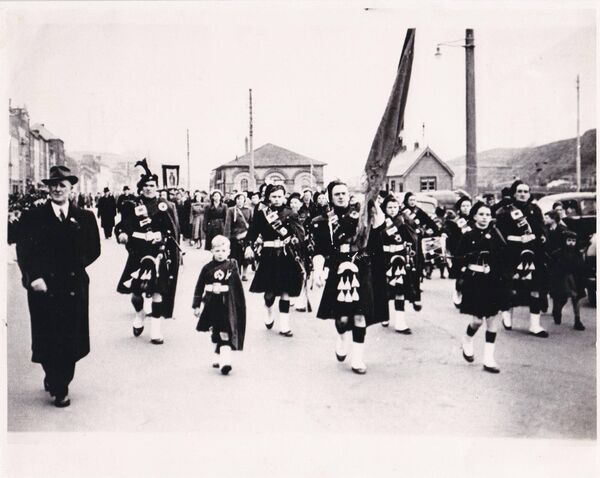
The Ireland of the 1950s was a hard place for young people with ambition. In 1955 Stephen joined the wave of emigrants who left for post-war Britain. London was alive with Irish labour – a city rebuilding itself, and among its bricks and dust, an Irishman with a set of pipes found his destiny.
One evening, as the story goes, Stephen met a man in a pipe band uniform – a chance encounter that changed everything. The man was Pipe Major George McCrae of the Royal Scots Dragoon Guards and Stephen began lessons soon after. He also learned ‘piobaireachd’, the classical art of the Highland pipes.
Later, Stephen continued his training under the great Pipe Major J.B. Robertson, who had retired to London after a distinguished career with the Scots Guards. These London years formed the backbone of Stephen’s technique. He played with the London Pipe Band, a lively mix of Irish, Scots, and English players united by their love of the bagpipes.
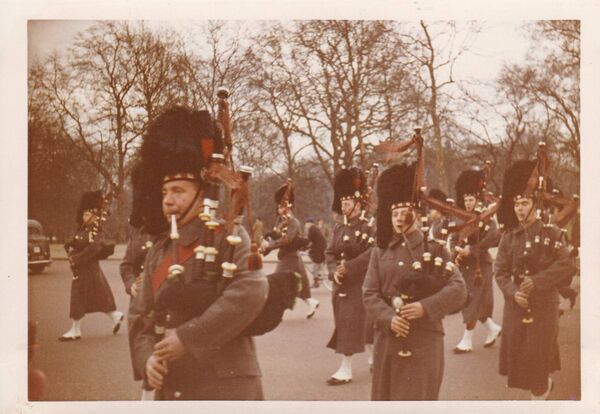
In 1957 he returned briefly to Waterford, but the pull of the pipes – and with Robertson’s encouragement – he enlisted in the Scots Guards and was posted to the 1st Battalion, spending a period of time in Düsseldorf, Germany. Within the Guards, piping was held in high regard where Stephen was the only Irishman. There he trained and performed under Pipe Major John Roe, alongside Angus MacDonald, then a Lance Sergeant.
When his three years in the Guards came to an end, Stephen returned to Ireland in 1962, bringing home not just skill but a philosophy: that music was both craft and calling. Soon after, he was invited to join Alfie Kennedy’s Carrigaline Pipe Band in Cork – one of the finest bands outside Dublin at the time. Under Stephen’s influence, Carrigaline grew stronger still, and he remained with them through the 1980s. Over the years, he also lent his talent to other bands – Cullen in Cork, New Ross and District, and Waterford City Pipe Band, as well as the De La Salle Pipe Band.
Yet Stephen’s greatest legacy lies in those he taught. Among his pupils were those who went on to become world champions: John Reville, a piper of renown and one of Ireland’s leading adjudicators at home and abroad; Ronan Maguire, Pipe Sergeant with St. Laurence O’Toole Pipe Band; and Margaret Houlihan, who taught at the College of Piping in Glasgow, and has returned in recent years to play with the Cullen Pipe Band.
Stephen was deeply proud of their achievements but prouder still of their willingness to pass on what they had learned – as he had done for them. He believed that piping was never about prestige but about community – about sharing a craft freely, with patience and generosity.
Stephen also championed women pipers. He often said that talent knew no gender, and he gave as much encouragement to a young girl picking up her first chanter as he did to an ambitious boy dreaming of competition medals. He travelled long distances to give lessons, never counting the miles or the hours. What mattered was the music, and the people who carried it forward.
Today, the echoes of Stephen Power’s teaching can be heard across Ireland and beyond. Ronan Maguire continues to inspire the next generation. John Reville’s steady hand as adjudicator ensures that high standards and fair judgement prevail in competitions. Margaret Houlihan’s return to Cullen keeps alive a line of excellence stretching back decades.
In Waterford, that tradition endures with quiet pride. James and Elaine Stone, both members of the Waterford City Pipe Band, have achieved distinction on both sides of the Atlantic, with Elaine now based in Canada. And among the new generation, Tigerlily Keoghan, a piper and academic, has been awarded a PhD scholarship at University College Cork to study Irish pipe bands – proof that what once passed from hand to hand and heart to heart is now earning its place in academic history.
Through all these people, Stephen’s spirit plays on. The Irish Pipe Band Association recognised his lifelong contribution with a Certificate of Merit, but his truest honour lies in every young piper lifting their instrument for the first time – the continuation of an unbroken line of learning and dedication.
Stephen Power’s life was music – not only the pipes, but the idea of music as something greater, something that binds us. He believed that when you make music, you make magic. And indeed, the sound of the pipes in Ireland today – proud, stirring, and alive – is its own kind of enchantment.
Listen closely, and in the drone of a band tuning up, you might still hear him — Stephen Power, the Waterford piper who gave his country not only music, but magic.