Court reserves judgment on student’s challenge over how UCD dealt with her studies after alleged rape
High Court reporters
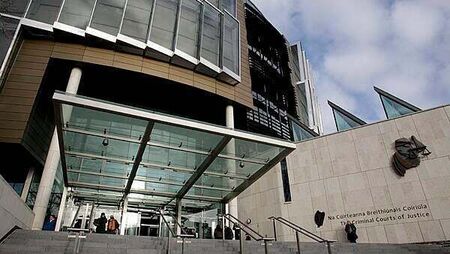
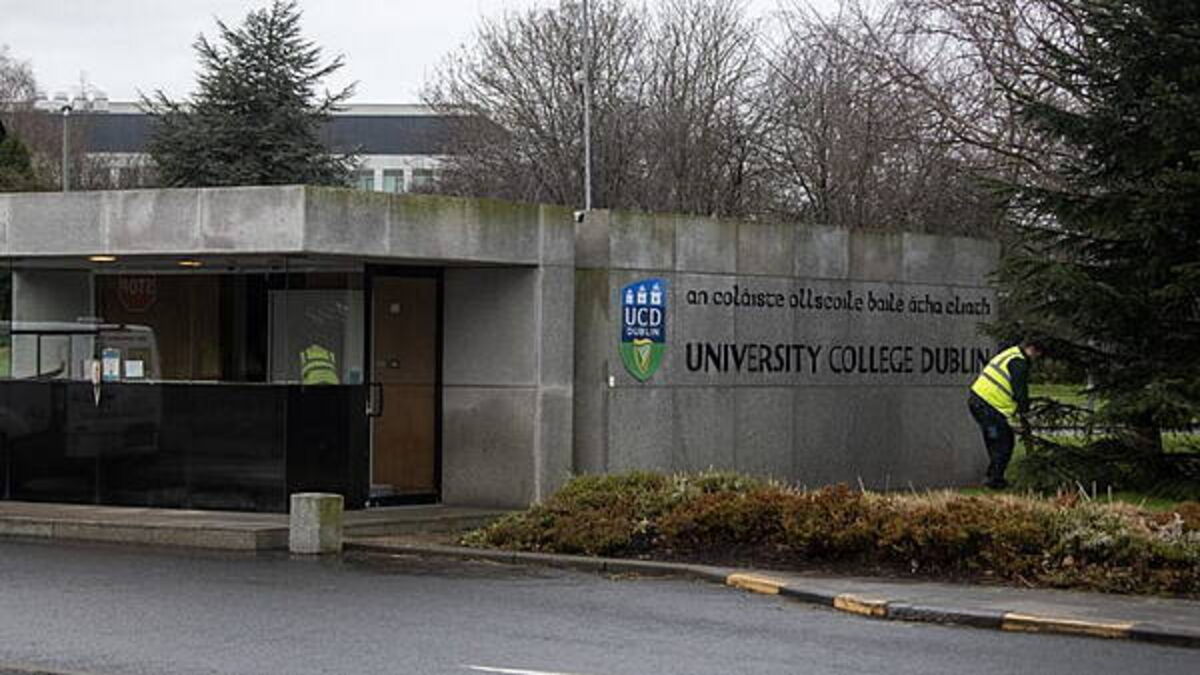
The Court of Appeal has reserved judgment in a challenge by a medical student against the High Court’s rejection of her claim that University College Dublin failed to make adequate allowances for her studies after she alleged she was raped by a fellow student.
The student’s story gained significant publicity after a report in UCD’s University Observer was raised in the Dáil in February by Solidarity TD Ruth Coppinger.
Coppinger’s statements and the report highlighted incidents where the woman’s “nude, bruised and unconscious” image, taken without her consent following an alleged rape, was shared with hundreds of college staff and students.
As a result of issues arising from the alleged assault and other difficulties, the student did not pass six of her second year modules. The student sued UCD when she took issue with how the university required her to remediate the six incomplete modules.
In a judgment in February, Judge Marguerite Bolger sided with UCD on all grounds, finding the solutions offered by UCD to help the woman complete the failed modules were “entirely lawful and proper”.
The student’s appeal centres on the contention that the university did not correctly apply provisions of the university’s academic regulations relating to limits on module credits and workload in imposing its remediation plan.
At the Court of Appeal on Tuesday, Ciaran Craven, counsel for the student, said the question on appeal was whether the High Court correctly interpreted the relevant provisions of the regulations. Counsel argued there was a “fundamental conflict” the regulations were interpreted in the lower court.
In October 2023, the university agreed, under its policy for accommodating students in extenuating circumstances, to grant the student special grades in respect of the six incomplete modules.
The university required the student to remediate the six incomplete modules, and imposed an academic plan to that end.
Academic reuglations
Under UCD’s academic regulations, students are limited to taking modules worth in total 40 credits per trimester. The court heard that typically, modules are worth 5 credits.
However, Ciaran Craven SC appearing with Michael Davitt, instructed by Stokes & Co, submitted that modules to be remediated following the granting of a special grade are not subject to this limit.
The university, with reference to another regulation relating to student workload, determined that it was “not sustainable” for the appellant student to remediate the six incomplete modules while embarking on her third year studies.
The regulation provides that if the university believes “a student’s workload is unsustainable, it may, following appropriate consultation with the student, require that the student’s workload be reduced to sustainable levels”.
Noting that modules where special grades are awarded do not count towards credit limits, counsel submitted that the six uncompleted modules should not have been considered part of the workload assessed by the university in considering the remediation plan.
Counsel also submitted that, as required by the regulations, there was no consultation with the student in respect of the workload question.
He submitted that the student should have been allowed to progress to her third year.
Feichín McDonagh, appearing with Barra Faughnan instructed by Mason, Hayes & Curran, for the university, submitted that the award of a special grade in extenuating circumstances “does not speak” to the question of workload the student must undertake to remediate the relevant module.
Counsel said the student’s side has not engaged with this argument.
'Place holder grade'
A special grade is a “place holder grade”, McDonagh said, and can be granted for a “huge variety” of reasons.
Counsel said that depending on the workload required to remediate modules where special grades are awarded, the relevant university faculty must consider if the student can carry that workload.
He noted that two of the uncompleted modules required the student to attend module classes, as opposed to sitting an exam.
Counsel said the appeal should fail.
Judge Donald Binchy, Judge Teresa Pilkington and Judge Emily Egan reserved their judgment.
If you have been affected by any of the issues raised in this article, you can call the national 24-hour Rape Crisis Helpline at 1800-77 8888, access text service and webchat options at drcc.ie/services/helpline/ or visit Rape Crisis Help. In the case of an emergency, always dial 999/112.