What is Australia's social media ban and could Ireland follow suit?
Ottoline Spearman
Following the world's first social media ban for under-16s in Australia, Ireland is considering implementing a similar ban. There are many considerations - digital rights, data protection, privacy rights, protecting users from harm - as well as practical considerations, including how it would feasibly work and whether it could be possible under EU regulations.
So what is the ban in Australia, what are the arguments for and against, and will Ireland follow suit?
What is Australia's social media ban?
On Wednesday, December 10th, Australia will become the first country to implement a state-wide ban on social media for under-16s.
The Australian government is hoping to protect young people from the negative aspects of social media, after a study found that 96 per cent of Australian children used social media, with 70 per cent having been exposed to harmful content at one point.
Following the passing of the Online Safety Amendment (Social Media Minimum Age) Bill 2024 on November 28th, last year, social media companies must take "reasonable steps" to ban users under 16.
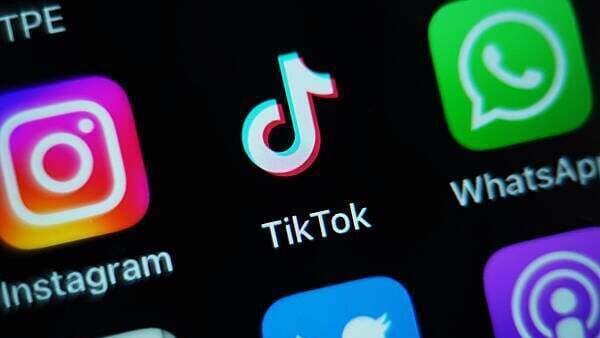
From December 10th onwards, anyone under 16 in Australia will not be able to keep or make accounts on social media apps, including TikTok, Instagram, YouTube, Snapchat, X, Facebook, Reddit and more. The list of social media apps included in the ban may also be updated at any time.
The burden is on social media companies, which must prevent under-16s from creating accounts or risk fines of up to €28.5 million ($50 million).
The Australian government has stipulated that the age verification by the platforms must involve more than simply requesting IDs.
The Guardian has reported that Meta has chosen not to disclose how it will verify people's ages, as this will likely alert users on how to avoid the ban. Snapchat, on the other hand, will use account behavioural signals and the birth date that users input when they sign up.
On December 10th, social media platforms will employ differing strategies regarding current users' accounts who are under 16.
The Guardian said that Facebook and Instagram accounts will allow users to download their photos and videos, and put their accounts on hold until they turn 16. They are also given the option of deleting their account completely.
Users who are mistakenly taken to be under 16 when they are actually of age will need to go through an appeals process, the Australian government has said.
What are the arguments for and against?
The negative impacts of social media are well-documented. A study by ExpressVPN last year found that 45 per cent of Gen Z users are already reducing screen time to improve their mental wellbeing.
Possible benefits of a social media ban for young people include helping children overcome an unhealthy dependency on their phones, reducing exposure to online harm and inappropriate content, and encouraging children to pursue other activities.
It may also protect children from grooming and catfishing, decrease childrens' exposure to filtered images displaying perfection, and help parents through taking away their childrens' FOMO (fear of missing out).
But human rights charities such as Amnesty International have expressed concern about the ban. Amnesty said on its website that "removing access to platforms that enable social connection for young people does not address the core issue that social media companies profit from harmful content, addictive algorithms, and surveillance."
When it comes to privacy rights, the charity was concerned about the use of age verification technologies which are still relatively new.
They said on their website: "Relying on companies with a history of abusing people’s right to privacy to use these untested technologies risks the abuse of people’s right to privacy."
The charity also underscored the importance of social media for young people, including social connection and belonging, which can improve people's mental health.
Could Ireland follow suit?
Ireland is currently considering whether to restrict young people’s access to social media platforms - and there is a strong view within the Government that children below 16 should not have access to social media.
In Ireland, the digital age of consent follows EU regulation and is set at 16 - and Ireland is one of nine EU countries to keep its digital age of consent at this age.
However, more than half of member states have lowered their age of consent for personal data processing to 15, 14 and even 13 years of age under EU data privacy regulations, as reported by the Irish Times.
The Irish Times also said that an online health taskforce within the Department of Health is currently considering whether the digital age of consent should be lowered to 13.
The Department for Communications is also reportedly considering whether an EU-wide approach would be more preferable than Ireland taking action alone.
Tánaiste Simon Harris is one proponent for lowering the age of consent.
Speaking on Friday, Mr Harris said: "The Government has obligations when it comes to child protection, and there are real concerns from parents in Ireland – and not just in Ireland – about child safety on the internet.
"I’m very supportive of the idea of social media being restricted to people above a certain age. I think that would be a significant support to parents.
Mr Harris added that it is key for companies' business models to provide "certainty", "clarity" and "stability".
Mr Harris said that an update on whether such a ban is possible is expected in Cabinet next week.
What could a ban look like?
The practical implications of such a ban would require a robust method of age verification, which the Government does not think should be tasked to social networks themselves.
Minister for Media Patrick O’Donovan has said that relying on children to self-declare their ages is “pointless”.
Instead, linking accounts to verified data, such as a Government ID, is the only effective way to prove someone’s age online, according to Mr O'Donovan.
Mr O’Donovan, together with Minister for Public Expenditure Jack Chambers and Minister for Social Protection Dara Calleary, are therefore working to design a digital wallet linked to MyGovID - the existing online identity that people use to access social welfare payments.
Meta did not comment on the Irish Times' request for comment on the Government’s plan to use a MyGovID wallet to age-verify users.
The use of MyGovID for age verification is likely to be contentious - not just for social media giants, but also for privacy rights and data protection proponents, who may argue that such a use is intrusive.