Vast majority of those who contacted Council wanted tri-colour flags removed
Ottoline Spearman
The vast majority of public correspondence to Dublin City Council last year called for tricolour flags to be removed.
Records released under a Freedom of Information request show that between August and December last year, 262 emails were sent to the council about the flags.
Of these, 95 per cent requested that the flags be removed.
The reasons for objection included the national flag being weaponised and misappropriated, with the public also citing intimidation, exclusion and territory marking.
Racism, illegality, and lack of community consent were also mentioned in correspondence.
Shane O'Curry, director of Irish Network against Racism said: "When flags are put up by fascists and the far right, especially in the context of hateful rhetoric, intimidation and violence, their intention is to make people from minoritised backgrounds feel less safe.
"We can not allow them to use our national symbol in this way.
"We need to contest and reject the divisive and exclusionary meaning they are trying to impose on the tricolour."
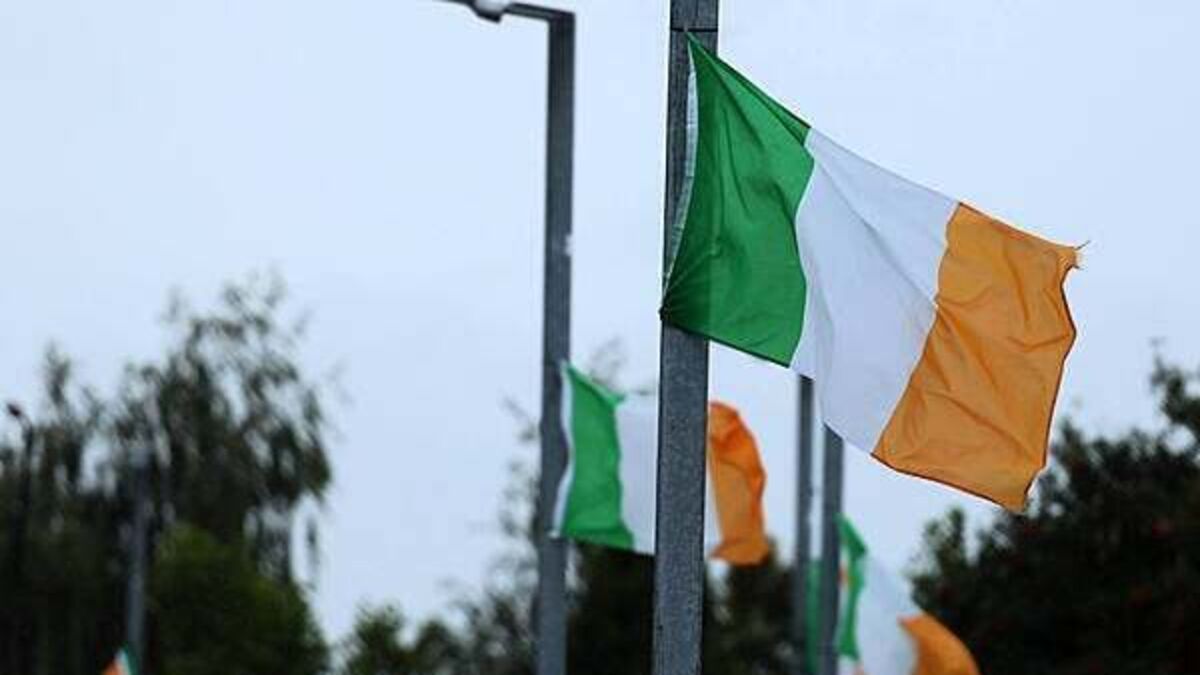
Tricolour flags started appearing in droves around mid-August last year, starting in Dublin and soon spreading across the country, stoking fierce debate.
Proponents claim that the flags represent patriotism and pride. Opponents say that they are designed to intimidate, discriminate, and exclude.
The Irish Times reported that the trend seems to be emulating the Raise The Colours campaign, spearheaded by far-right figure Tommy Robinson (Stephen Yaxley-Lennon), where the Union Jack and the St George's Cross flags were flown on lampposts across England.
Mr O'Curry said: "It’s clear that the use of our national flag in this way is an attempt to hijack the meaning of it in furtherance of the fascist agenda being promoted via far right networks across Britain, the US, and funded by billionaires who want to see division in Irish communities.
"Their strategy is to provoke local authorities, and anyone opposing their divisive ideas, into taking them down. In this way they can present themselves as “defenders” of the flag which in reality they have no claim to."
Mr O'Curry explained the colours of the flag, where green represents the catholic nationalist tradition, orange the protestant tradition and white meaning "the peace in between".
He said that the flag "is a statement of a desire to live in a Republic that is multicultural and tolerant, one that seeks to cherish all of the children of the nation equally".
"The Irish Republican ideal, and the tricolour that represents it, explicitly reject sectarian and racial divisions, which are tools of empire and division.
"When hate groups attempt to use the tricolor to foster hatred and division, they are copying a British fascist and loyalist paramilitary playbook which uses British nationalist symbolism to create an atmosphere of fear and intimidation."
In November, Dublin City Council announced that it would not remove the flags, fearing it would provoke an angry response and exacerbate tensions. Instead, the council said it would look to address the root causes by developing initiatives to promote a deeper understanding of the Irish flag.
Malachy Steenson, Independent Dublin City councillor, welcomed this decision. He told Gript that the council's decision was "sensible", and that if they were removed, they would be replaced in greater numbers.
"This push largely comes from people who despise the Irish nation,” he said. “Whereas those who are erecting the Tricolour are expressing their pride and belief in Ireland.” Mr Steenson did not respond to a request for comment from BreakingNews.ie.
When asked about the council's initiatives to promote understanding of the flag, Mr Curry said: "I am aware of some individuals and groups making some efforts to claim it as a symbol of unity, equality and multiculturalism, but I have not so far seen any local authorities doing this, or making any attempts to hold cultural events or other events which would allow the public to explore the deeper meaning they refer to.
"I would like to see much more of this, and more resources invested in promoting unity and understanding in our communities, because it would benefit all of us who live here, making our communities safe for all."
In October last year, the Taoiseach said of the flags that people who use the tricolour to suggest they “alone represent Irishness” “dishonour our national flag”.
He said those who “try and claim that there is a fixed national identity” do not understand Irish history or “that our identity has survived because we have been willing to evolve and be more inclusive”.
In the correspondence seen by BreakingNews.ie, some communications also cited littering as a reason they should be removed, referring to the Litter Pollution Act 1997 (Section 19) and the council's policy stating that no equipment may be mounted on public lighting poles without written permission.
The council also said that it received correspondence reporting instances of flags wrapping around electrical wires or being insecurely fastened, posing fire and safety hazards during storms.
Dublin City Council did not respond to a request for comment.