Waterford fishing industry braces for downturn in EU quota
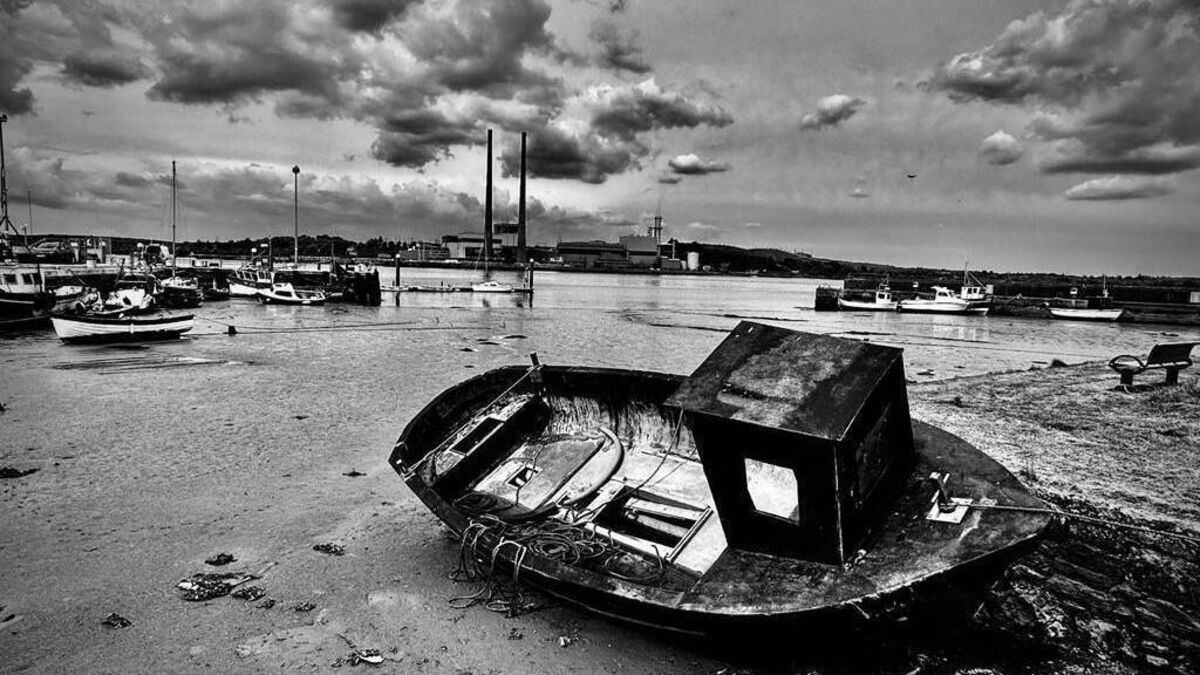
Cheekpoint Harbour. Photo: Joe Evans.
Waterford’s fishing industry is set to face a tumultuous 2026 following a European Union agreement on fishing quotas that will see Ireland’s Total Allowable Catch (TAC) plummet.
The proposals, which will be effective from January, will see a drop in the TACs for mackerel (70% for the six months of 2026), blue whiting (41%) and boarfish (22%).
Seafood Ireland Alliance said the new quota means 57,000 tonnes of fish will be lost, with around 2,300 jobs and €200 million at stake across the wider industry.
Irish South and East Fish Producers Organisation Chief Executive John Lynch told Waterford News & Star: “Job losses can be expected on both sides, on the sea and fishing side and on the shore side and the processing.
“The impact in Waterford is that we have very little fish to catch next year, so vessels won’t be able to spend as much time at sea.”
According to the Irish Fleet Register, there were 70 trawlers registered across Waterford, as of December 2025.
Waterford will be expected to escape relatively unscathed from sharp decreases in the mackerel quota. Stagnating quotas for Whitefish like sole will likely act as the true flashpoint.
Waterford Sinn Féin TD Conor McGuinness decried the disparity in sole quotas between other EU member states while speaking at the Oireachtas Committee on Fisheries and Maritime Affairs.
“Belgium secured 450 tonnes of sole while the entire Irish fleet was left with just 28 tonnes. Belgium has less than half the coastline of Waterford alone,” Deputy McGuinness said.
“Overfishing by EU and non-EU operators has devastated Atlantic stocks. There is insufficient fish to sustain current EU-wide fishing effort.
“However, there is enough to sustain the Irish fleet while meeting conservation objectives. This is not a conservation crisis. It is a sovereignty and fair access crisis.”
Jimmy Byrne worked as a skipper on trawlers for 36 years across Dunmore East and Kilmore Quay, having left school early to begin working at sea as a 15-year-old.
Mr Byrne retired from the fishing industry last year, citing fluctuating quotas that now make the industry unviable for many small operators. He is now studying for a diploma in water management.
“The drama that comes with fishing now, it really makes you depressed. It gets to you mentally. It's a physical job, but now you're mentally tired of it,” Mr Byrne told Waterford News & Star.
“The lads on the [trawler] deck have children going to school, the pressures they're under, it’s expensive. You're trying to do the best you can, but you're not allowed to. According to the EU, you have no quota…that's heartbreaking."
Mr Byrne previously had run-ins against the Sea Fisheries Protection Authority while protesting EU fishing quotas.
In 2012, Mr Byrne handed out roughly €10,000 of over-quota monkfish for free in Kilmore Harbour, rather than releasing them back into the sea as EU regulation demands.
One element of the deal that has raised particular controversy has been the role, or lack thereof, of the Hague Preference.
The Hague Preference is an insurance policy that can be invoked by Ireland when quotas have suffered a drastic downturn.
The condition would allow Ireland to take back control of certain stock when the TAC falls below a certain threshold.
Ireland’s ability to invoke the Hague Preference for 2026 was blocked by France, the Netherlands, Belgium, Germany, Poland, Denmark and Latvia.
The majority of the take from the Irish Exclusive Economic Zone is comprised of British, Norwegian, Dutch, Spanish and French fishers.
The preference’s blockage, along with other policies viewed as excessively bureaucratic, has led to a Eurosceptic sentiment among Ireland’s fishing industry.
“I think we should be out of the EU” said Sean Doherty, an inland fisher based in Cheekpoint.
Mr Doherty (61) has worked as an inland fisher for all of his adult life. His family has been involved in the trade for five generations.
Mr Doherty said in the face of reduced quotas, the profession has begun to fizzle out.
“The small-scale fisheries that were the essence of these villages…that's all been taken away with bureaucracy.
“The bottom line is, there's a sense of hopelessness there. No fisherman, say full-time, would advise their son or daughter to go into the job.
“If they can't pass down their traditions, they're going to die off.”