The true story of Waterford’s 'second civil war’ of 1922-23
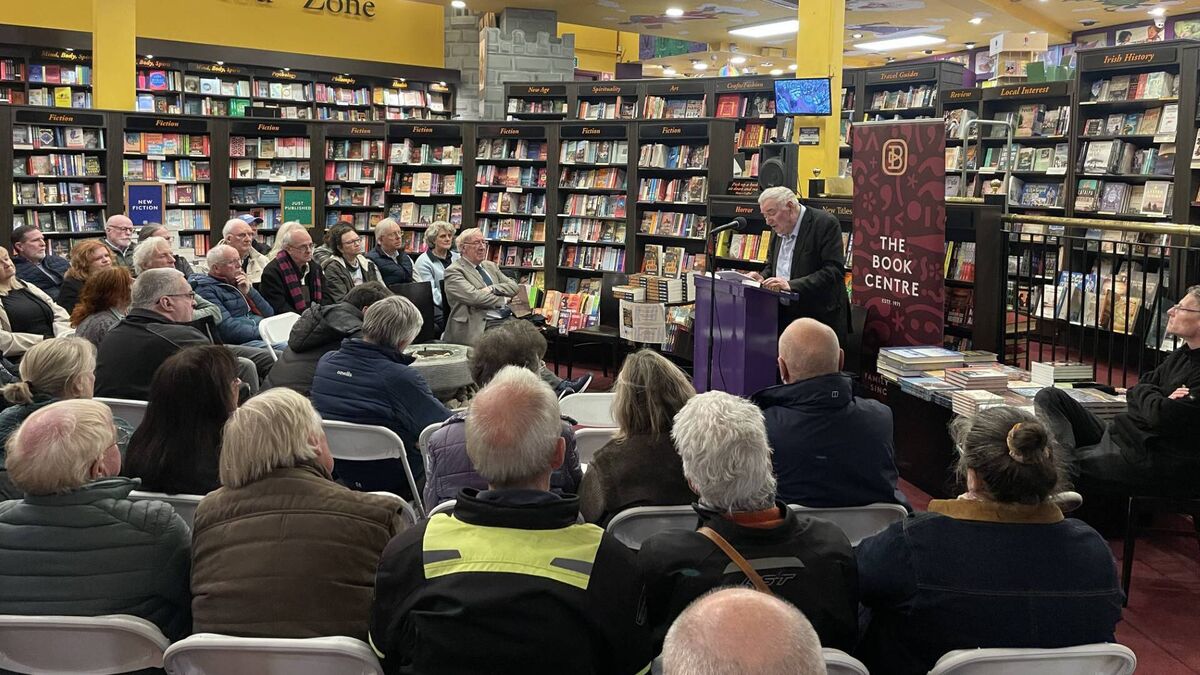
Author Emmet O'Connor at the launch in The Book Centre.
On Monday night (November 2) dozens of people came out to The Book Centre for the launch of the new book ‘War to the Death!: The Waterford Farm Strikes of 1922 and 1923'.
The book was written by labour historian Emmet O’Connor and details the explosive Waterford farm strikes in 1922 to 1923.
In the early 1920's, Waterford farm labourers fought fearlessly against efforts to slash their wages during an economic slump. The resistance unleashed a brutal struggle between the 'Red Guards' and 'White Guards', replete with sabotage, intimidation, harassment and even martial law.
At the height of the conflict, the nascent Irish Government sent troops into Waterford so that the Waterford Farmers' Association could "hold the ring".
The conflict forever changed the standing of the Labour Party in Waterford and the union-busting displayed in Waterford became a model for the rest of the country.
Emmet wrote the book on this overlooked part of Waterford history, which was described by one witness as "Waterford's second civil war".
President of Waterford Council of Trade Unions, Dean McGrath gave a brief word at the start of the evening, reflecting on how the story of the strikes has a resonance to the present day.
He said: “I do think it’s particularly poignant for us standing here today; while we're speaking about farm strikes, we're on the verge with 300,000 workers that will be going to the picket line on November 12. So, I do appreciate the solidarity and I think it is very poignant that we're here today."
Fellow author and historian Pat McCarthy delivered a fiery introduction to the book, referencing the account of a man who lived through the tumultuous times, who said: "There was a second civil war in Waterford. In the summer of 1923 there was an agrarian outbreak."
Pat spoke about an official report from a county inspector in 1918 that read: "The farmers in Waterford are enjoying their newfound prosperity, but they are very reluctant to share it with their labourers."
According to Pat, by 1920 the labourers had achieved a living wage of 38 shillings a week for a 45-hour week. Alas, the achievement was short-lived. Pat said: "I think Labour at every level expected to have made progress. Now in an independent state, there will be even more progress. But we were badly mistaken."
Emmet told the audience that he had always wondered why the Labour party had a historically weak presence in Waterford. In the late 1970's he asked Labour stalwart Brian O'Shea why.
Emmet said: "Brian said there was a big conflict involving Labour, between the truce and the Treaty, and he correctly assumed that the breakdown of law and order was something to do with it."
The revelation sent Emmet down a path of discovery. He said: "I was astonished at what I found about the level of unrest and radicalism.
"That was Labour history at the time, we had Connolly and Larkin at the GPO. Now we have a much more rounded view. There's much more recognition of Labour history."
Emmet hoped that with the launch of the book, the events of the strike would become a bigger part of the "public memory".
"Hopefully, we now remember events like the Fenor Melee and the clash in Kilmac, they become stitched into our public memory. Agricultural labour is now few and far between. It's easy to forget how significant they once were and how important they were as a section of the working class," he said.