The Night Shift: The people patrolling the Suir every Saturday
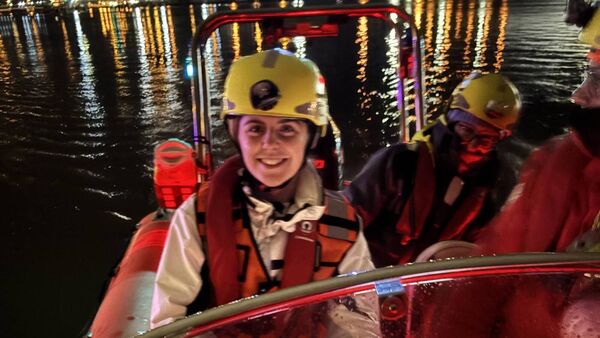
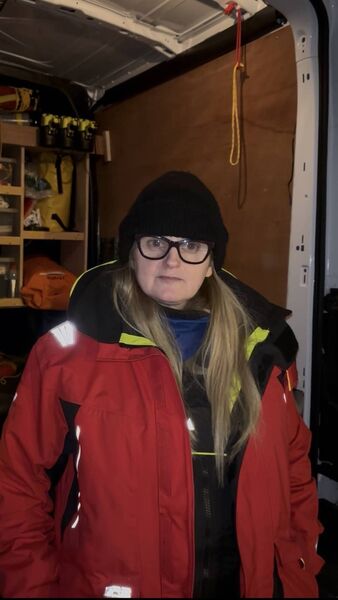
Waterford News & Star reporter Libby Marchant on board the Waterford Marine Search and Rescue powerboat. Photo: Waterford Marine Search and Rescue
Waterford Marine Search and Rescue was founded in 2010 as a rescue and recovery service for Waterford City and County. Since then, they have expanded into a training centre, a conference organiser and a suicide prevention advocacy group. Entirely volunteer-run, reporter Libby Marchant did a Saturday night patrol to meet the men and women behind this important Waterford group.
I am directed up the stairs to a conference room where people in various states of bundled up are hanging out on the swivel chairs.
I am given a swivel chair of my own, and when I tentatively broach the idea of a couple of people doing a video interview, the slagging begins.
"Have you remembered your makeup Decky?" one young man teases. Declan (‘Decky’) Barry, founder of Waterford Marine Search and Rescue, tries to duck out of the room.
He’s almost managed to get away scot-free when Mary Condon, secretary, and widely considered "the real boss" of the organisation, tells me that Declan would be delighted to do an interview.
Declan reluctantly nods his head and motions me to follow him.
He shows me the small resting room. There are two bunkbeds and the bright duvet covers make the room oddly pleasant. He apologises for the mess, but to me, the slight crumple in the duvet, the stack of boxes in the corner make the room feel homely.
Declan tells me that the room is mainly used by volunteers who live far away from the city. They can get a couple of hours of rest, especially when they have to do a rescue and their shift doesn’t end until the early hours of the morning.
The room is also occasionally occupied by family members of people who have passed away in the river.
“Family members come down to retrieve the body of their loved one, and they have nowhere to stay. They can stay here,” Declan tells me.
Next, he shows me the training room. As well as doing nighttime patrols, Waterford Marine Search and Rescue is also an educational centre. They are a nationally recognised powerboat training centre and also organise conferences on marine rescue for the South East.
Finally, I am brought into a room with two comfortable couches and artwork on the walls. This is where families are brought if their loved one has attempted suicide. It is a calm space.
We sit down on the couch and I ask Declan why he started Waterford Marine Search and Rescue.
“I founded it back in 2010 basically to provide a search, rescue and recovery service to the people of Waterford city and county. Very shortly after starting this group we started to look at why people were entering the River Suir and we realised it was to end their lives by suicide.
"That was when we decided to set up a suicide prevention patrol."
As well as having people patrolling the quays by foot, they also have a boat on the river, “so that if someone does enter the river, they can be saved within a matter of seconds.”
Since 2010, the group has saved over 180 lives.
“The initiatives that we started in Waterford, have spread to Limerick, Cork and elsewhere.”
When I get back to the conference room, the group are having a team meeting. I manage to convince Vlatka Stanafr to go on camera for me. Originally from Croatia, she has been volunteering with the group for four years.
She joined because, “I had just moved to Waterford, I didn’t really know anyone, and I wanted to give back to the community.
“I wanted to find something where I would like, (where) I belonged and that definitely happened here. This group is like a family to me now.
“We’ve all faced something challenging but we support each other a lot. Whenever there is an incident, we don’t go home until we’re sure everyone is okay to be on their own. We really are taken care of.”
I am brought into the shed downstairs where the van is parked. I’m fitted out with a life jacket, high-vis vest and a waterproof jumpsuit.
Decky, Aidan and I hop into the van and begin driving towards Edmund Rice Bridge.
Aidan, a bin operative, is one of the longest-serving volunteers. He is interested in the technology aspect of the job – how drones can be used for good to help locate missing bodies in the river.
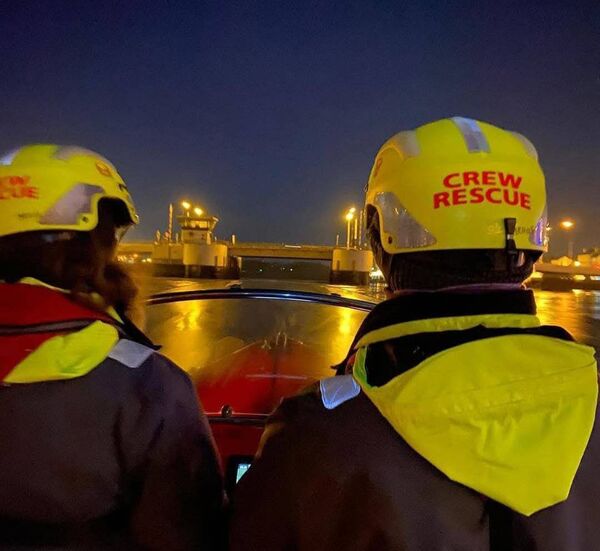
On the drive, we start talking about how much the city centre has changed over the past 10 years, how much quieter it is now. The conversation veers in the same way most conversations about Waterford do these days – towards the housing crisis.
Declan says: “A lot of people have a perception that all people who end their lives by suicide by drowning are drunk or on drugs. That does happen. But most of the time, what we see are people coming down to the river's edge with everyday problems. Problems like they have lost their jobs, and they can’t pay the bills, they can’t pay their mortgage, they’ve lost their house, they’ve become homeless.
"Some people who come down do have addictions. But what we’re after finding over the last number of years is that it’s the everyday problems that people are going through. With the way the world is, everyday life is really hard. Some people can get through life without struggling in this way but other people can’t. And what we’re finding is that more people are struggling with things like not being able to pay the bills, the breakup of marriage, not being able to see the kids: they’re heartbreaking things to happen. It's reality. It’s the truth.”
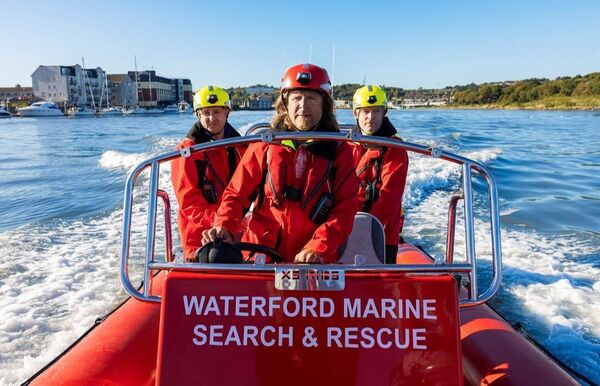
I’ve been in the van for about 45 minutes when three volunteers show up to say hello.
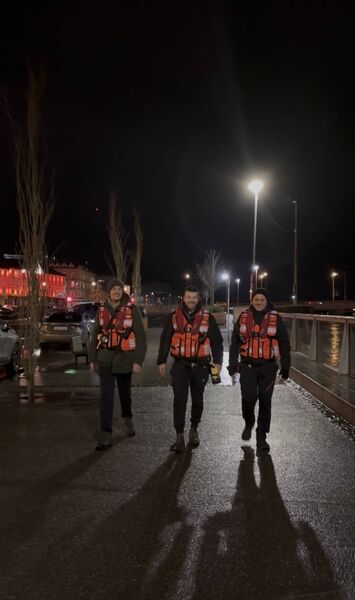
These are the ‘foxtrotters’, they walk the length of the quay and across Edmund Rice bridge over and over again for two hours before swapping with another group.
Harry, Mark and Andre keep my spirits up despite the cold weather.
Harry Phelan, a mechanic, told me, “There have been a few friends of mine who’ve sadly committed suicide, and it would make you want to give back and have people’s backs when they need it most.
“You have friends for life. We’re all there to have a bit of craic as well – we’re on the ball but we also all really enjoy the training because we’re able to joke and have a laugh.”
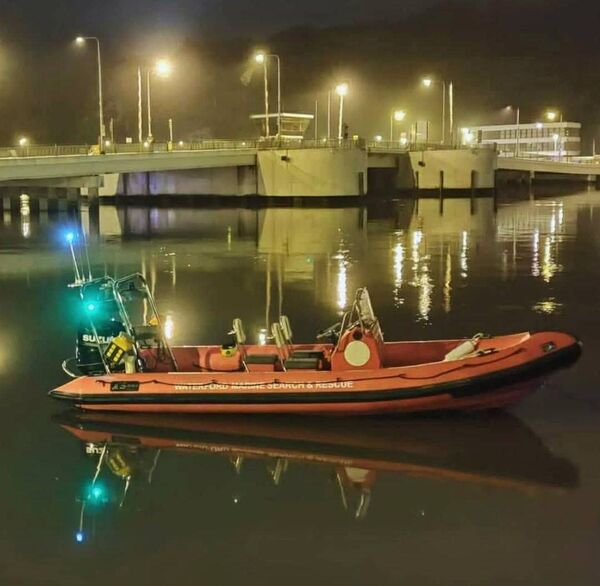
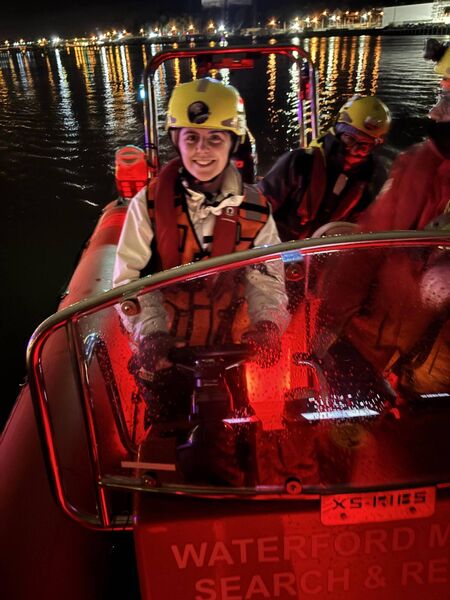
Waterford Marine Search and Rescue has more women volunteers than men, so I find myself climbing aboard the rib with Mary, Vlatka and Liz to see what things are like from the perspective of actually being on the water.
It’s a clear night, and I’m amazed at how, despite having lived here nearly all my life, I’m seeing the town from a completely new perspective. Highlights include getting to go under the new pedestrian bridge and also the 20 seconds where we convinced Mary to let us go at full speed.
The fun stops, however, when Declan radios the boat to say a man is unsteady on his feet on Rice Bridge. Liz, on the helm, maintains a respectful distance, but the man surely knows we are watching him. It occurs to me that just the presence of the group makes the river safer; the group is a deterrent to dangerous behaviour.
Once he crosses the bridge, the man stops for a moment and watches us. For a moment, I think he might wave at us. He does not.
Mary is the one who knows about where the best place to stop the boat is, whether or not the fenders need to be taken out and how fast the boat should be going, so I am amazed to hear that, before joining Waterford Marine Search and Rescue, she’d never stepped foot on a boat.
Mary joined the group, "to get out of the house". But this work is also personal for Mary, as five of her family members have died by suicide.
Mary said that volunteering with the group has “turned my life around completely. I have a whole new side to my life. From being a housewife at home to getting out on the water.
“Sometimes you find people at the worst time in their life and just that moment, that opportunity, to take a second breath, have a little think, get it off their chest, and that might be all they need.
“Sometimes you wonder after how they got on. And then sometimes, someone else will say to us, ‘Thanks, guys for all you’re doing. That was me four years ago, and you spoke to me on that bridge and saved me that night.’
"It makes you realise you’re actually doing something.”
For Mary, one of the hardest parts of the job is recovering bodies of people who passed away.
“You have to say to yourself, you’re bringing a loved one home.”
Declan and Aidan drive down the quay to meet us with the ‘welfare box’ when we get off the cold water. The welfare box is a box of chocolate, homemade scones, sandwiches, hot water, teabags, milk and soup sachets. Liz is delighted to discover that tonight’s flavour is chicken, whereas Vlatka is delighted to see Mary’s homemade scones, practically emitting a holy glow in the back of the van.
I am kindly offered a lift back to my apartment, and as I snuggle into bed, I think of the lads, who will be out in the cold for another hour and a half, having the craic and keeping people safe.
Fair play.