The last Christmas at Melleray in Waterford marked end of an era
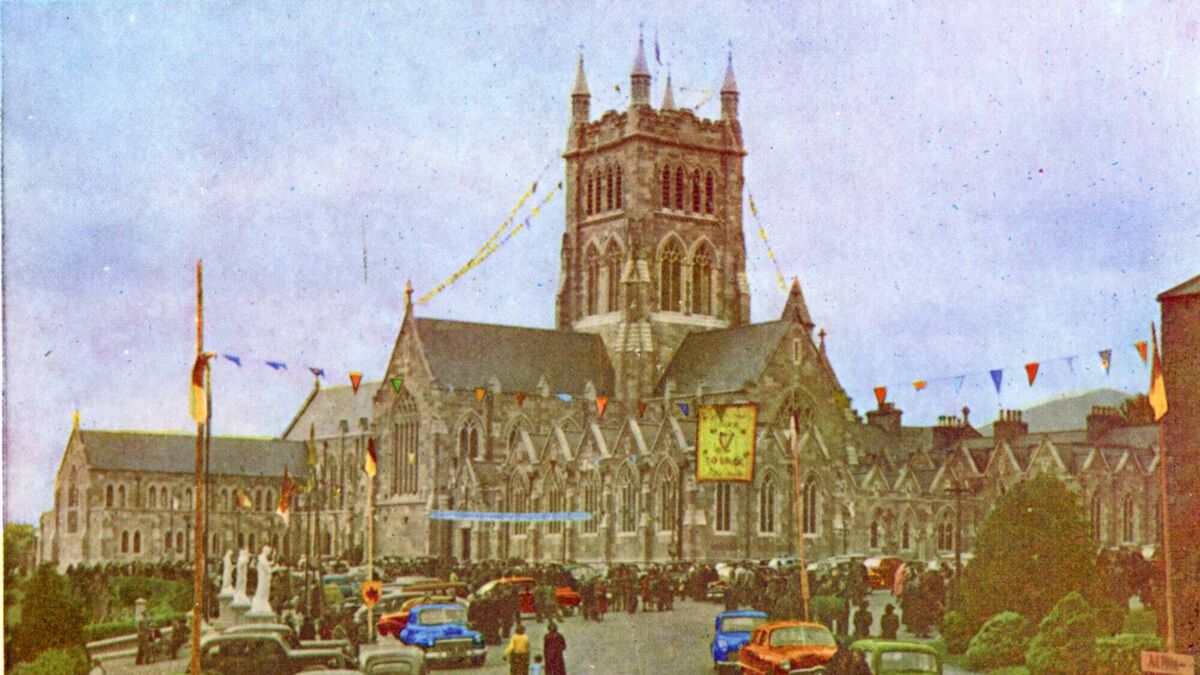
The consecration of Mount Melleray Church in 1952.
Christmas gone was the first one for many years where the walls of Mount Melleray Abbey were not be filled with the festive celebrations of monks.
The former Cistercian monks of the abbey vacated in January 2025, to their newly formed community in Roscrea.
Talks are progressing over whose hands the abbey will fall into, and Superior Ad Nutum of Abbey of Our Lady of Silence, Dom Rufus Pound, said recently that “many people and groups have come forward offering to assume responsibility for the Abbey or to make use of it, or to find new ways for it to serve”.
In celebration of the Abbey’s decades of service to Waterford, we look back on its vast and accomplished history.
During the Christmas season of 2024, the number of people attending confession at Mount Melleray increased, with some sessions lasting multiple hours.
The community came looking for reassurance; clarity over the beloved abbey’s future.
A stack of pages sat close by during the sacrament, which people could take home with them if they wished.
The pages read: “After much reflection and soul searching, we as an Order have had to make some very difficult decisions with the aim of ensuring a future for Cistercian life in Ireland.
“We have been confronted with these difficult decisions as we address the reality of falling numbers and ageing communities; issues which other similar communities are also addressing at this time.
“We have decided that, with effect from 26th January 2025, three of our communities, namely, Mount Melleray, Mellifont and Mount St Joseph, which since 3rd November, the Feast of St Malachy, have already merged as one new single community, will be based, for an interim period, at Roscrea.
“This new community has been given the name of ‘The Abbey of Our Lady of Silence’.”
Clergy members and staff at Melleray, who were understandably confused and saddened by the move, had been working diligently in the months prior to assure the public that although great changes would be taking place, it was being done to consolidate the future of Cisterian life for all.
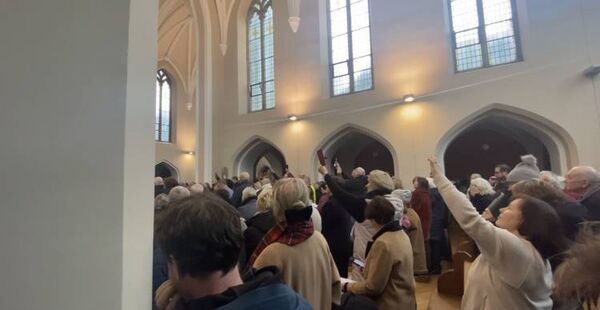
During that time, the order had three novices, with others expressing an interest in joining.
The community remained strong, confident that amongst the difficulties the daunting move away from Waterford posed, the Cistercian way would continue to be of service to the community long into the future, albeit in a different way, or at a different location.
This point may have done little to console the people of Waterford, who were devastated at the news that Melleray would be vacated.
The mutterings amongst congregants were about what would happen next for them, for the beloved monks, the abbey itself, the shop, the café, the graveyard.
Reassurance came from the abbey’s priests, who had been offering such reassurance to the community from the slopes of Cappoquin since 1832.
In the 193 years since its foundation, Mount Melleray has been a beacon of hope for the people of Waterford through times of famine, civil war and financial crises.
The monastery's vast and ever-expanding story began in 1831, when 64 Irish monks, refugees evicted from the monastery of Melleray in France after the French Revolution, took up temporary residence at Rathmore in Co. Kerry.
After a short time it became evident that the place was unsuitable for the erection of a regular monastery, and so the weary search from one end of Ireland to the other continued.
After six months of travelling, the Cistercians obtained possession of Mount Melleray from landlord Sir Richard Keane.
A cross was planted on the barren Waterford mountainside, soon to be followed by a small cottage with two rooms and a kitchen, a stable where monks slept and a small wooden chapel in which rain and snow could quite easily penetrate.
It was from day one, and would remain to this day, a symbiotic relationship between the monks and the Waterford community.
It was written in 1890 by novelist and poet Rosa Mulholland, that "every Irishman who could shoulder a pickaxe or shovel" toiled on the land to uproot the Melleray we know today from the once barren mountainside in the west of the county.
One story from the time surrounds that of Lord Richard Keane, who granted the monks the scrubland on the mountain.
Lord Keane apparently proposed the condition that the monks could have the land, “from today until tomorrow”, or in other words, that he could reclaim the land from them as he pleased.
‘The Liberator’, Daniel O’Connell, who was political leader of Ireland's Roman Catholic majority in the first half of the 19th century, would on occasion pass through Melleray’s gates, and was approached by the monks to help secure their future at the site.
O’Connell conjured up an ingenious method of countering Lord Keane’s “from today until tomorrow” provision, and was able to prove into law that the land could remain in the hands of the monks, because “tomorrow never comes”.
A well-known feature of the Melleray is the ‘Miracle bin’, a long wooden container, which remains there today.
During the famine, the Lord Abbot of Melleray travelled to deliver sermons around the country in order to raise funds. He told the remaining monks at Melleray that nobody be turned away hungry from the monastery whilst he was away.
Miraculously, the monks at Melleray managed to keep the wooden bin full with Indian meal during the entirety of the Abbot’s absence, despite it requiring to feed around 100 monks and countless locals from the area on a daily basis.
The Lord Abbot at the time, Dom Vincent, said: "A poor and numerous community of religious men, located on the side of a barren mountain, improvided with funds, resources, or human means necessary to support existence, labouring incessantly in the arduous and painful enterprise of reclaiming its stubborn and neglected soil, depending on the casual charity of humane friends, are thus enabled, I will presume to say miraculously, not only to maintain their own existence, but to feed and preserve the lives of nearly five thousand of their fellow creatures during a period of no ordinary calamity and distress."
The monastic tradition of hospitality dates back to the earliest monks, with monasteries acting as the hostels of early medieval Europe.
Mount Melleray is no different, and has welcomed guests since its inception.
Throughout the history of Melleray, weary travellers and pilgrims would journey from all over the country on private retreats to pray with the monks.
The abbey was on the track from Youghal, which was once a major port, and so Melleray was a hub of activity, just as it remains so today with the St. Declan’s Way route attracting a large amount of footfall to the site daily.
During the height of the troubles, a large number of people living amidst the chaos in the North sought refuge at Mellerary.
Coming from violent areas, they moved into the school at the abbey’s front entrance, offering them both safety and escape from the conflict.
In 1977, the Catholic Boy Scouts of Ireland held an International Jamboree at Mount Melleray, which was attended by 20,000 scouts from around the world. They enjoyed some of the best weather Ireland had seen for many years.
Melleray has always been a focal point for education, and throughout its history has had an agri-college, a secondary school and primary school.
Rosa Mulholland wrote in 1890, that as children learn to write and spell at Melleray, "the birds that live in the schoolroom hop about their feet or fly from cage or porch to alight on St. Bernard’s shoulder”.
The site also has a long tradition of helping people with addiction.
On November 3, 2024, the monks of Mt Melleray Abbey, Mount St Joseph Abbey (Roscrea) and Mellifont Abbey (Louth) voted to form a union.
The monks of these three communities came together to form a new community called the 'Abbey of Our Lady of Silence'.
On January 26, 2025, the feast day of the Cistercian Founders, the monks moved to Roscrea, on an interim basis, for at least a year, to begin the life of the new community.