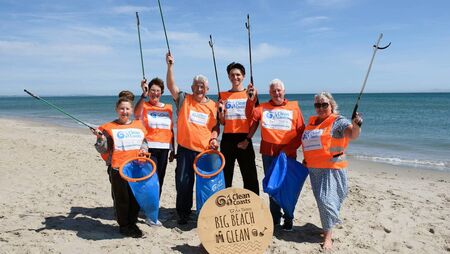
The best parts of Waterford are found when wandering
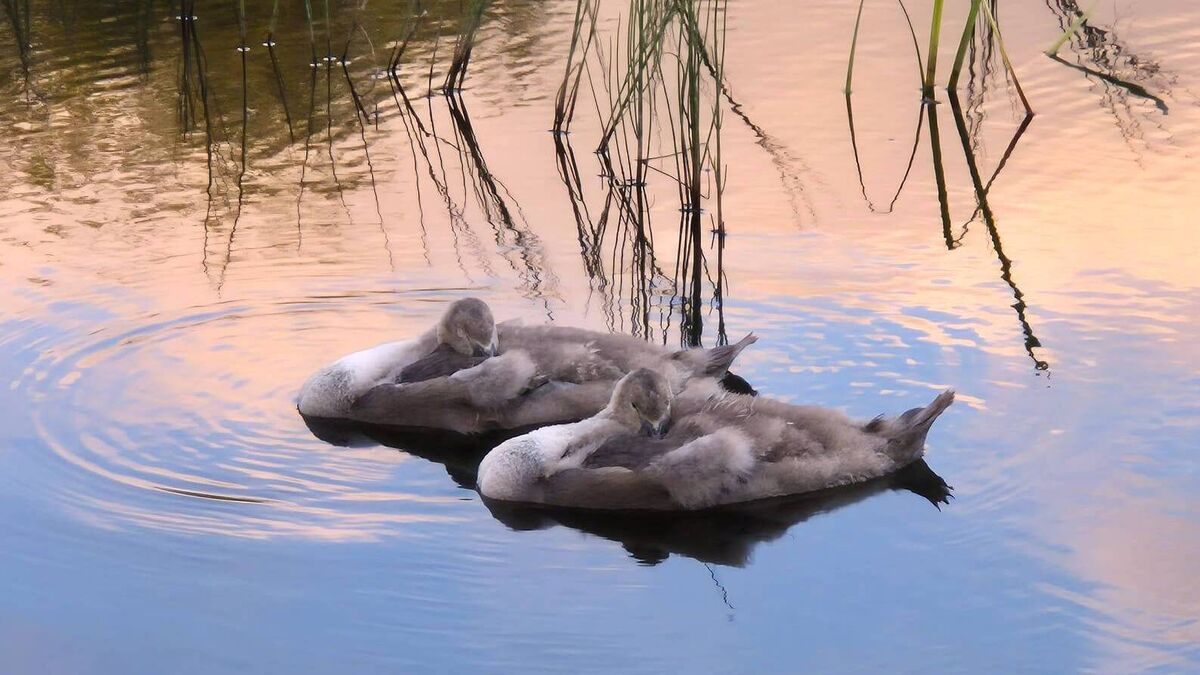
Signets at Anne Valley. Pictures by Shannon Sweeney
When I moved to Waterford in 2024, I was in my tourist era.
I visited the museums, went hiking and took a photo of every mural in the city.
Then life took over. I got into my new job at the Waterford News and Star, which luckily takes me all around the county.
Now two years on, I play host to visiting family and friends. I no longer feel like a tourist, having made the Deise my home.
I love the colour and the balance of metropolitan and rural.
I am in awe of just how many festivals there are au- at least one every month between March and December, and I adore the charm in every corner.
Not everything has to be big or have a Viking stuck to it and the best parts of the county are often found in wandering.
It’s a cliché to call them hidden gems, but here are three that I think you need to visit before summer’s end.
Gaulstown Portal Tomb
I remember as a child seeing dolmens in my school history book. They were always beautiful to me; big and strange, and it’s a wonder no intrepid teacher ever took us to see one. Perhaps they are just more accessible now.
In any case, my visit to the Gaulstown Portal Tomb put that wrong right. Located just outside Tramore, this beautiful example of stone age building consists of six upright stones which form a chamber with a five metre capstone atop. The dolmen is in an enclosed area of the forest, down a lane which is in turn behind two big iron gates. Fear not, it is well signposted.
It is huge, and although I know it was built by man, it looks like it was part of the landscape. The moss and greenery that have made the stones their home make the whole thing look like the structure is just part of the forest.
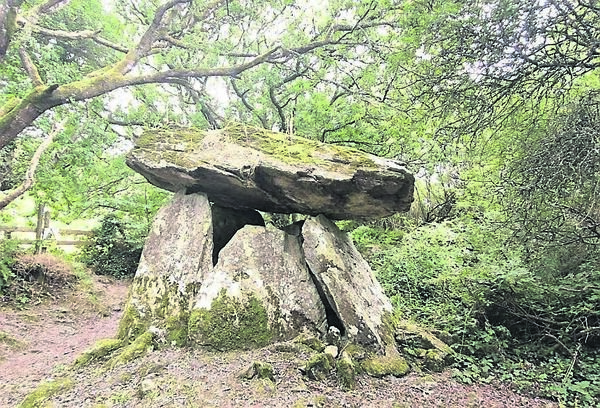
Looking online afterwards, I know that not that long ago, it was overgrown and not accessible. Maybe the forest just liked what men left behind, protected it and kept it for itself, before its current custodians returned to claim it.
Whatever the reason, we clearly share it now.
Dolmens were built between 3,000 BC and 2,000 BC and nobody knows exactly why. Historians and archaeologists believe they were tombs but perhaps also ritual sites. The Gaulstown Portal Tomb shows evidence that the site is still used ritualistically.
Coins, little fairy statues and candles were left as offerings. The dolmen today is not only used but clearly loved.
I visited it with my family and my parents told me they had visited another similar tomb that had been defaced with someone carving their name into it. If you visit the one in Tramore, leave it as you find it. There are much better ways to make your mark on history and know that this one has lived a long time and is now as much part of the land as the trees.
Anne Valley
I’m sure the locals of Dunhill will be outraged to hear me call the Anne Valley walk a hidden gem. It is very well used, and I can certainly see why. But before anyone emails me to set me straight, if you are unfamiliar with County Waterford, I don’t believe you will necessarily know it’s there. But everybody should because it is one of the most beautiful walks in the country.
The 5km walk is located between Dunhill and Annestown.
There are three ways onto the trail. The first is in Dunhill with a summer coffee dock, the second is overlooked by the imposing Dunhill Castle and the third is in the beautiful Annestown.
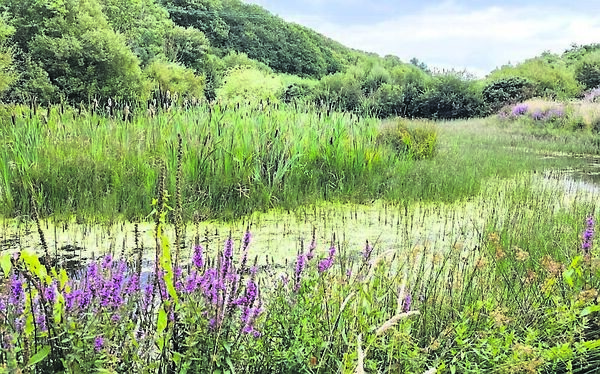
The walk was developed by local landowners and community. It is built on a wetland and was used to treat run off and contaminated water before it reached the coast, but then the wildlife moved in.
Dogs are allowed on the trail but must always be kept on a lead. The path is linear and accessible for prams and wheelchairs. The trail has regularly placed benches if you need a break and takes around an hour to complete.
Note that if you visit in December, the trail is closed on the third Thursday of the month.
We started the walk on the end with the Happy Grind coffee hut, which was unfortunately closed, but we had chosen evening time in the hopes of seeing more wildlife.
Almost immediately we spotted a family of swans. Mom, dad and five signets.
They were big and looked strong. A fellow walker would later tell us that he watches the family every year and was amazed that they had been rearing so many this year.
They were beautiful and did not care one bit that we were there.
They just continued their floating nap.
Swans were not the only birds we saw and indeed Anne Valley is home to many a mammal and bird alike. We were watching moorhens on the water when a heron popped up from a tree. On our way through, we spotted three buzzards, young, practicing their flying skills.
We did not catch even a glimpse of the kingfisher this time, but we did on a previous trip.
There were of course, the common sightings of swifts and wood pigeons, although we less saw the later and more heard them tumble from their trees. They are the clumsiest bird on earth.
We heard robins calling mournfully and even spotted a wee dormouse on the trail. There were more bees than you would see anywhere and although I haven’t seen one up close since I was a child, a caterpillar graced us with a peek before hiding himself away in the greenery.
The walk is spotted with information boards with details of the wildlife in the area. So we know that we only saw a fraction of the local residents.
Anne Valley is home to Dunnocks, Chaffinch, Goldfinch, Blackbirds, Coal Tits, Green Finch and Great Tits.
Although we may not have spotted them, we could also have seen kestrels, stonechat, chough and wrens.
Otters and deer are also said to be around, but we didn’t spot them on our trip.
Plants in the area include foxglove, cuckoo flower, gorse, yellow iris and crab apple as well as redshank, thistle, soft rush and marsh woundwort. The effect is a cacophony of colour only complemented by the iconic red rock that makes the Copper Coast so famous.
The walk is accessible by bus from Waterford City and Dungarvan using the Local Link 667, starting at UHW in the city and Davitt’s Quay in Dungarvan. The bus runs four times a day, Monday to Sunday. The Local Link 367 runs between Tramore and Dungarvan, starting at the railway in Tramore and Davitt’s Quay in Dungarvan.
Waterford Suir Valley Railway
The last stop on our hidden gems tour took me to the Waterford Suir Valley Railway at Kilmeaden Station.
And I can confirm it is utterly and completely adorable.
The ticket office is a converted train carriage, and yes, it still has the seating.
On checking in, you will meet the lovely staff who will show you the route and if you are not from the area, they might give you a tip or two. If you are travelling with children, there is even a treasure hunt available from the ticket office.
The train runs along 10km of the abandoned Waterford to Dungarvan Line and what is now the Greenway.
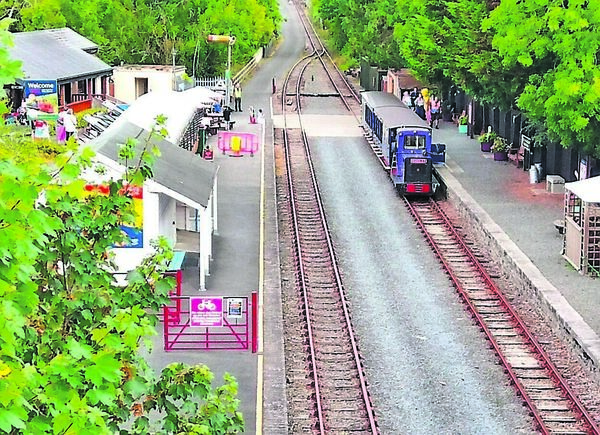
Volunteer crew got everyone settled and made sure the adults could operate the rain covers in the partially open compartments.
Although the weather was not on our side at first, it soon brightened up. As we set off from the station, parents on board built up their children’s anticipation of the all-important train horn.
Not gonna lie, that was one of my favourite parts.
As we chugged along, the area around us came to life. The train moves at a leisurely 16km/hr pace, so you won’t miss a thing, but the best seats are to the left of the train.
We passed Kilmeaden Castle, Mount Congreve Gardens and into the Magic Wood. The trees had an array of fairy houses and all the children on board waved to the wood and silhouette.
The enchanting ride took us through the lime kilns, Carriganore and through the Dan Donovan Tunnel.
We even got a glimpse of the Thomas Francis Meagher Bridge from the Gracedieu Junction and then we went the same way back.
The journey is certainly one for the kiddos, but I think the adults onboard got a kick out of it too.
I certainly did.
But I am a journalist and so I cannot depart this piece without saying a little about the history of the railway.
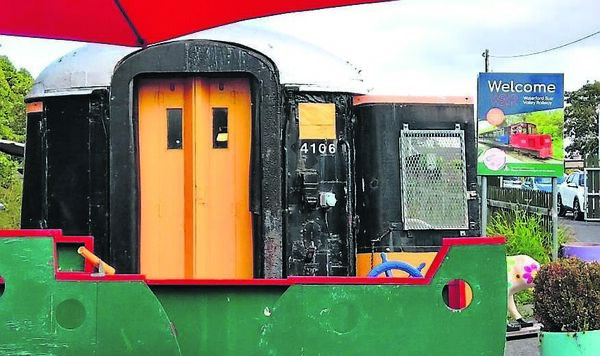
The line opened in 1878, but closed. It was reopened in 1970 to service the factory in Ballinacourty outside Dungarvan, but closed again along with the factory in 1982.
In 1996 the idea was floated of turning it into a tourist attraction and a community heritage project, and in 2003 the station began taking passengers.
The station was fully restored and when in 2017 the greenway opened, this brought more people to the railway and a café, the Whistlestop Café, was opened.
The Waterford Suir Valley Railway has a website with the fully story, which is well worth checking out.
The train is suitable for all ages and is wheelchair accessible. It has 10 compartments, two fully enclosed and the rest partially open. You can certainly reach the railway by car, but if you want to get into the spirit and use public transport, the Bus Eireann Route 354, Carrick-On-Suir to Dunmore East via Waterford will drop you just outside. Cycling along the greenway is also an option.
Combine it with a stroll around Mount Congreve and a walk along the greenway and you have yourself a fine day out.