SETU Vice-President leads focus on standards for perinatal care for women and children in prison

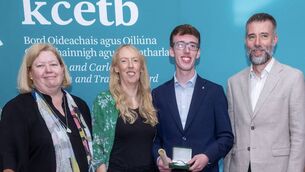
Pictured is Professor Marie Claire Van Holt SETU (South East Technological University). Photograph: Patrick Browne
A global consensus study led by Prof Marie Claire Van Hout, Vice President for Research, Innovation and Impact at South East Technological University (SETU), has been published in The Lancet Public Health, one of the world’s leading medical journals.
The publication, 'Essential standards for perinatal care of women and children living in prison', sets out 42 evidence-informed global standards aimed at improving the health, wellbeing and human rights of pregnant women, new mothers, and their children who are incarcerated.
Women in prison represent a clinically high-risk obstetric group, yet prisons worldwide frequently fail to meet basic international human rights and healthcare standards of mother and child.
A spokesperson for SETU said the Viewpoint highlights how deficits in perinatal care in prisons contribute to preventable maternal and infant morbidity and mortality, as well as significant long-term and intergenerational health and social consequences linked to mother–child imprisonment and separation.
She said the paper, led by Prof Van Hout, was developed by a multidisciplinary international team of experts in public health, medicine, psychology, and human rights law, and in collaboration with leading global NGOs, Children of Incarcerated Caregivers and the Global Prison Nursery Network, Health through Walls, and the International Corrections and Prisons Association.
The spokesperson said the paper emphasises that alternatives to imprisonment during pregnancy and the postnatal period should be prioritised wherever possible.
"Where custodial sentences are imposed, the authors call for prisons to be fully integrated into national maternal health strategies, with appropriate resourcing, specialist staffing, continuity of care, and clear release planning," she said.
Speaking about the paper, Prof Marie Claire Van Hout said: “Pregnancy and early motherhood in prison settings remain largely invisible within global health systems. These standards provide a clear, rights-based framework to support safer, more humane care, while reinforcing the need to prioritise alternatives to imprisonment that protect the best interests of the child and their mother.”
The standards are aligned with international human rights obligations including the UN Convention on the Rights of the Child and the UN Rules for the Treatment of Women Prisoners. The paper also recommends independent inspections, clinical audits, and integrated public and prison health monitoring systems to ensure accountability and consistent quality of perinatal care across different jurisdictions.
The papers' authors argue that improving perinatal care for women in contact with the criminal legal system is not only a healthcare priority, but also a matter of social justice.
They say it requires greater investment in community-based alternatives, trauma-informed care, and policy reform grounded in evidence and lived experience.