Recalling the classic 'Jaws' released 51 years ago this month
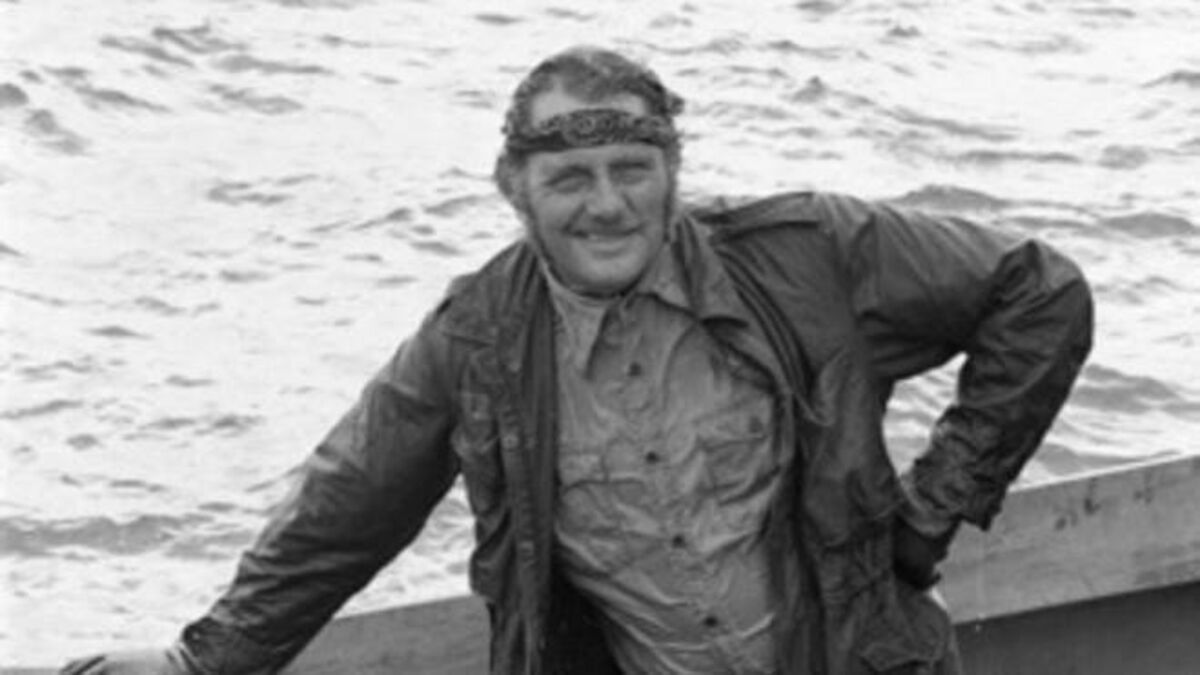
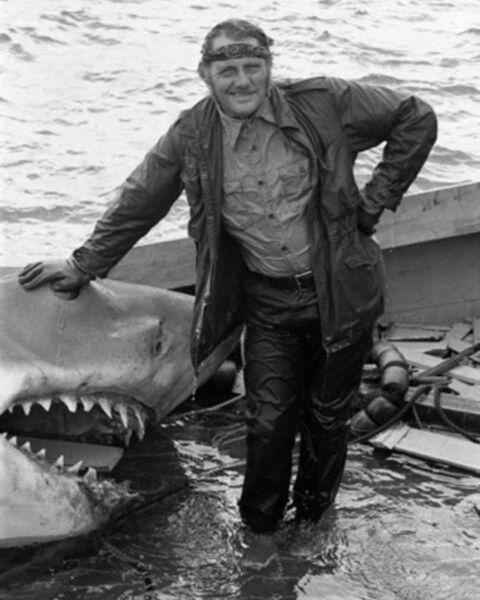
Robert Shaw who played shark hunter Quint.
I saw it again the other day on television and while it works best on the big cinema screen, ‘Jaws’ remains as fresh and suspenseful as ever and could have been made a month ago instead of 50 years ago.
The film was based on a best-selling book by Peter Benchley, a former White House speech adviser for President Lyndon Johnson, telling the story of a great white shark terrorising an American seaside resort and the efforts to kill it by a policeman, a marine biologist and a shark hunter.
Early titles for the book included ‘A Silence in the Deep’, ‘Leviathan Rising’ and ‘The Jaws of Death’ before the publishers settled for ‘Jaws’.
Hollywood producers David Brown and Richard Zanuck, who had a big success with ‘The Sting’, bought the film rights and assigned the project to Steven Spielberg, a 27-year-old director whose first two films ‘Duel’ and ‘Sugarland Express’ had been minor hits.
With a budget of $4 million at his disposal, Spielberg set about assembling his cast and crew. Lee Marvin was offered the role of grizzled shark hunter Quint, but didn’t want to cut short his real fishing break to do a make-believe fishing film.
Next choice was Sterling Hayden, the mad general from 'Dr Strangelove'.
He owed millions in taxes and his salary from the film would have gone directly to paying the Internal Revenue Service. He regarded the film as working for the government, so decided not to do it.
The role finally went to Robert Shaw, a British actor fast making a name for himself in Hollywood following his portrayal of a gangster in ‘The Sting’.
Charlton Heston lobbied hard for the part of police chief Martin Brody, but Spielberg felt that cinema audiences would assume that the shark could not have stood a chance against the man who played Ben Hur and Moses.
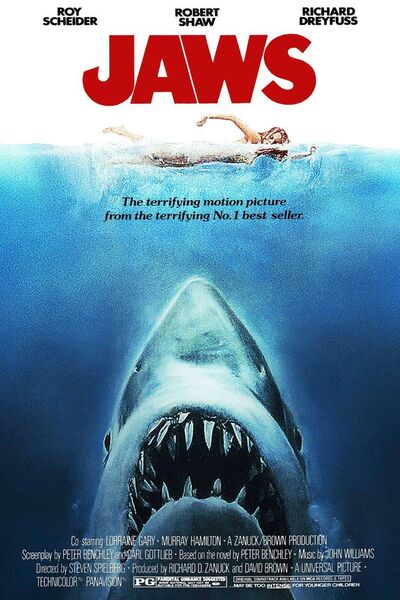
Instead, the role went to Roy Scheider, a former boxer and stage actor, whose previous films ‘Klute’ and ‘The French Connection’ were huge hits.
On the recommendation of his friend George Lucas, Spielberg cast newcomer Richard Dreyfuss as marine biologist Matt Hooper after Jon Voigt, Jeff Bridges and Timothy Bottoms turned the part down.
Supporting players included Lorraine Gary as Brody’s wife and versatile television actor Murray Hamilton as the town’s mayor.
Veteran special effects director Bob Mattey, who created the giant squid for ‘20,000 Leagues Under the Sea’ decades earlier, was lured out of retirement to create the mechanical shark.
The filming of ‘Jaws’ began in May 1974 in Martha’s Vineyard, an island off the coast of Massachusetts encompassing harbour towns and lighthouses, sandy beaches and farmlands. With the harbour town of Chilmark standing in for the fictional one of Amity, the story unfolds.
When a young woman is killed by a shark, police chief Martin Brody wants to close the beaches but the mayor overrules him, fearing that the loss of tourist revenue will cripple the town.
A marine biologist and a grizzled sea captain offer to help Brody capture the beast and the trio set out to sea in a small boat, the Orea, to engage in an epic battle of man versus nature.
‘Jaws’ was the first major motion picture to be shot on the ocean and from the outset cast and crew encountered problems ranging from seasickness to unwanted sailboats drifting into frame, the camera got soaked and on one occasion the Orea began to sink with the cast onboard.
But the biggest problem was the malfunctioning of the mechanical shark.
Ironically, this was an advantage as the shark was not seen until the final third of the film but his presence was suggested throughout by yellow bobbing barrels, point of view shots and John Williams’ throbbing iconic score.
The original budget spiralled from four million dollars to nine, and the shooting schedule stretched from 55 days to 159 days. Some disgruntled members of the crew nicknamed the production ‘Flaws’.
Eventually, with enough footage in the can, Spielberg returned to dry land and began the process of editing his film.
Universal Studios opened ‘Jaws’ in 400 cinemas.
It opened with a $7 million weekend and recouped its costs in two weeks. One year later it was still playing in some of them.
At its peak the film was playing in 40 countries, in 17 languages and it was re-released in 1978 to add even more money to Universal’s coffers.
The film was one of the first to pass the hundred million dollar mark at the box office and paved the way for the summer blockbuster.
‘Jaws’ won three Academy Awards, including one for best score by John Williams.
It marked the beginning of a collaboration between director and composer, which carries on to this day.
For the last seven years of his life Robert Shaw lived with his wife and large family in Tourmakeady, County Mayo, where he was very popular with the locals. Sadly, Shaw, who was also a very talented author and playwright, suffered a heart attack and died there in 1978. He was only 51.
Roy Scheider reprised his role as Brody in ‘Jaws 2’. It was not a patch on the original movie but was a huge hit.
He continued to make movies, including ‘Blue Thunder’ and ‘Marathon Man’ until his death from cancer in 2008 aged 75.
His line ‘You’re Gonna need a bigger boat’ is one of the most famous in movie history.
In 1978 Richard Dreyfuss scored a Best Oscar for ‘The Goodbye Girl’ before achieving more accolades in the 1980s and 1990s.
Now 83, he continues to work steadily.
After ‘Jaws’ Steven Spielberg became one of the most sought-after directors in the film industry, turning out hit after hit in almost every genre from science fiction to war.
Strangely, he has never made a western but I am sure that if he does, it will be a classic.