Questions over employment rights linger as Bristow takes control of Waterford Coast Guard
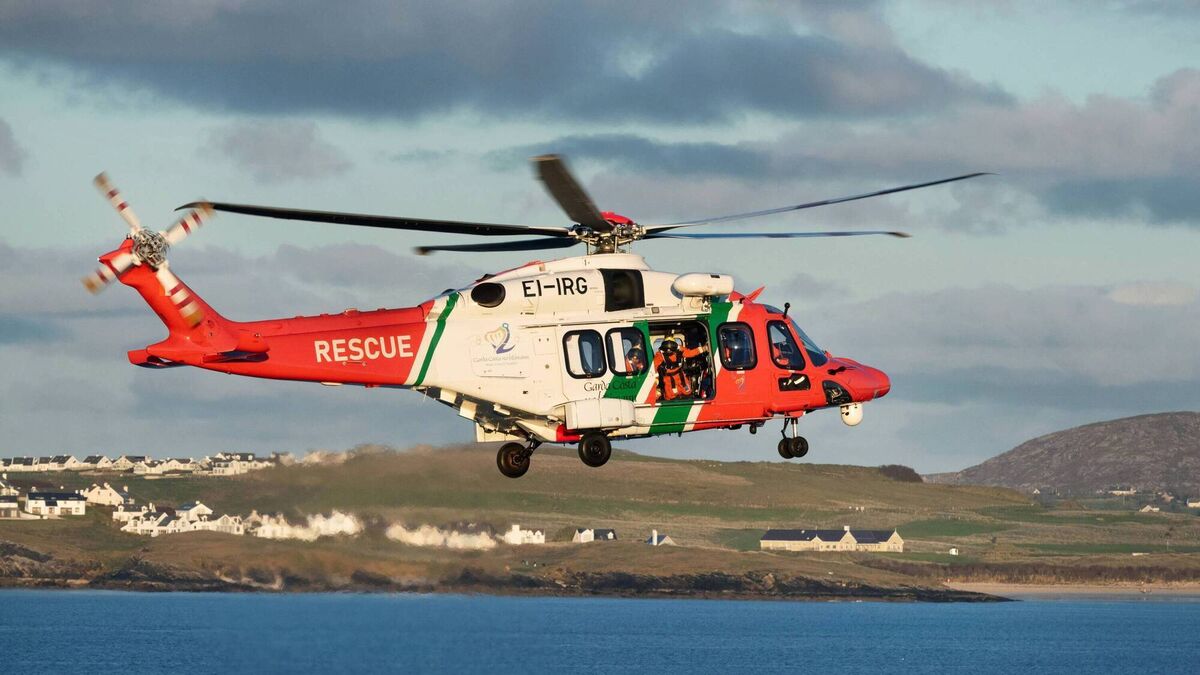
The new AW189 helicopter that will deliver search and rescue operations from Waterford Airport.
Aviation company Bristow completed its takeover of the Irish Coast Guard helicopter base in Waterford Airport on Monday, February 1.
The transition has been welcomed by Minister of State Sean Canney, following years of anxiety-stricken debate over the future of Waterford’s Search and Rescue operations.
But some members of the Oireachtas have still cited a lack of assurance regarding Bristow’s controversial track record on labour rights.
CHC Ireland operated a 24/7 Sikorsky S92 and S61 helicopter fleet (Rescue 117) from Waterford Airport and Ireland’s three other coast guard bases (Shannon, Sligo and Dublin) from 2014.
In 2022, a contract for a new €800 million Coast Guard operator was tendered by the Government.
The tender stated that there would be a ‘minimum requirement’ to provide three helicopters - prompting fears that Search and Rescue operations would evaporate from Waterford Airport.
Petitions, protests in Dáil chambers and Oireachtas hearings were held to ensure the service stayed in Waterford and the South East.
Concerns were officially allayed in May 2023 when a Search and Rescue contract was secured for Waterford.
Bristow will operate AW189 helicopters from Ireland’s four Airport bases alongside a new Fixed Wing service also located at Shannon.
CHC Ireland brought a High Court challenge in 2023, labelling the Government's tender process as flawed, but ultimately failing to overturn the awarding of the contract to Bristow.
Bristow confirmed to the that operations in Waterford will be 24/7.
Bristow’s use of a “factoring” system has functioned as a point of contention during Oireachtas hearings.
Under the system, crews working 24-hour shifts can have their recorded hours of work reduced to 16.5 hours. The reduction comes as Bristow accounts for hours spent in the crew rest facility between 10pm and 8am.
During the period, crew are at an extended 45-minute readiness to launch for taskings as opposed to their 15-minute readiness in the daytime.
If there is no call-out during these hours, then 16.5 hours are logged for the shift. If a call-out is received, then the full 24 hours are logged.
Bristow has previously described the issue as common practice and in line with Irish regulation.
Trade union Fórsa warned the Dáil that the practices were “unfair and unsafe”. The practice has courted criticism from both sides of the political aisle.
Fianna Fáil TD Cathal Crowe has questioned the legality of the practice.
Waterford Sinn Féin TD Conor McGuinness said crew safety was being put at risk in the name of Bristow’s finances.
“This is about safety. This is about combating exhaustion. This is about ensuring that crew are able to do their work without being overtired, without being fatigued, that they are at their best when they get that call out,” Deputy McGuinness said to the
“I think it contravenes the Working Time Directive. I think it contravenes labour law.
“What the Irish aviation authority and Bristow are relying on are criteria and guidelines relating to commercial aviation, so they are recording standby as in what that means for a commercial airline pilot with standby for emergency search and rescue air crew, and they’re two totally different things.”
A spokesperson for Bristow's global communications team said: "Bristow Ireland will continue to operate factoring, which is well established in Irish helicopter SAR operations and is in full accordance with our established Union agreements."