Mayor of Waterford honours the Sisters of Mercy
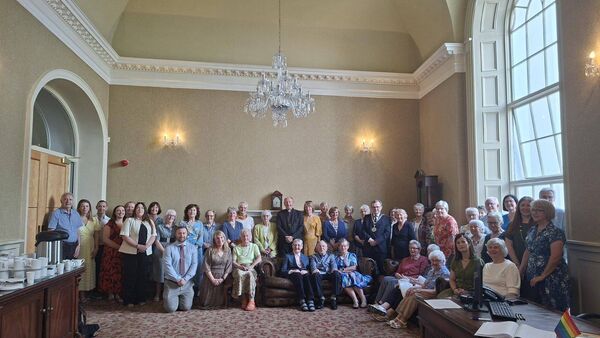
Attendees gathered in the Mayor's Parlour.
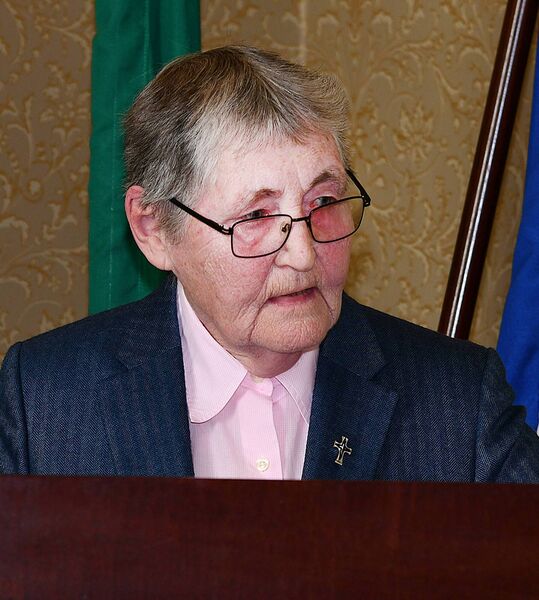
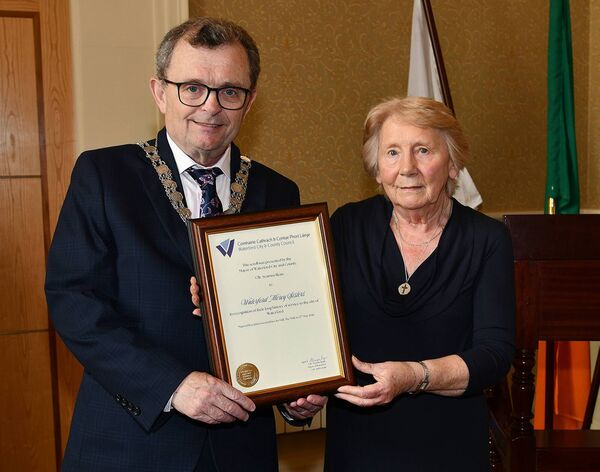
The Sisters of Mercy were honoured at the Mayor's Parlour for their immeasurable contribution to Waterford.
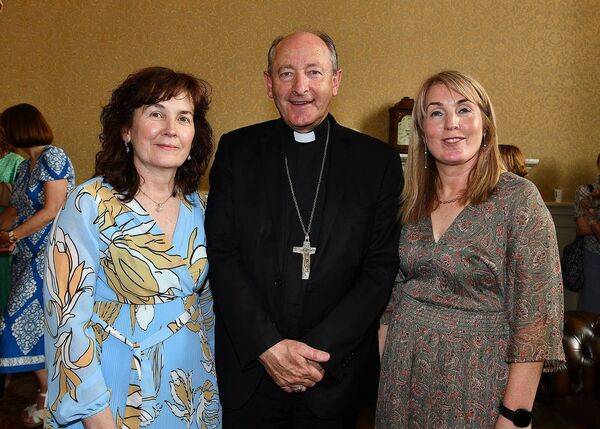
Mayor of Waterford City and County Council Seamus Ryan welcomed the sisters to City Hall on Thursday afternoon, May 27.
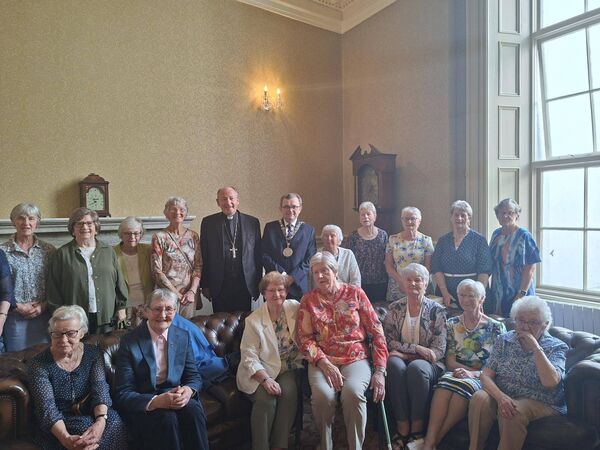
Noting that the reception may be his last one as Mayor, he said: "I have to say this is the largest crowd I've had. I've learned one thing and that is invite the nuns and you get everyone!"
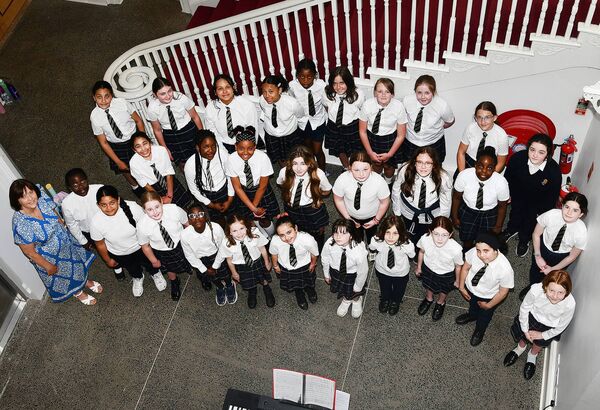
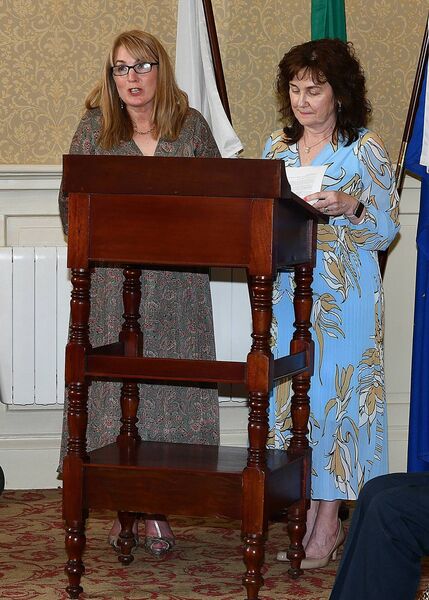
Principal Michelle Briggs of the Holy Family Junior School and Principal Mairéad Cummins of Our Lady of Mercy Senior School shared warm words about the Sisters and how the Mercy's ethos of education has impacted the schools: "We do acknowledge the closure of the building of the convent on Military Road, and we express gratitude for the generations who have educated in our schools, for the sisters who founded and sustained it.
"We appreciate all the educators who brought the Mercy schools to life, and for the students whose laughter and learning and memories have filled and continue to fill the corridors. The building may close, but its legacy continues."
The Sisters of Mercy first came to Waterford in 1875 to work in the infirmary in the City's Workhouse on John's Hill. In 1883, they took over an idle hotel in Dunmore East and developed it into a convent and school.
In 1900, St. Otteran's School was established under the guidance of Superioress Mother De Sales, with the Sisters living in the workhouse on John's Hill.
After the Irish Free State was established in 1921, the workhouse was redeveloped and renamed St. Patrick's Hospital.
Historian Eugene Broderick gave a great history lesson of life at that time in Waterford: "The Sisters went about their vocation in the city plagued by social problems. Unemployment was rife, housing conditions for many of the city's inhabitants were truly appalling, resulting in widespread health issues.
"The Mercy Sisters did all they could to remedy this bleak situation, and were determined that the young pupils of St. Otteran's School received the best education that was available."
In 1926, poet W.B. Yeats visited the school in his role as a Senator in the Irish Free State. According to Dr. Broderick, he was so inspired by the visit that the school is featured in his poem 'Among School Children':
Dr Broderick went on: "The present Mercy schools continue to serve a long tradition which has endured over 100 years. All these schools seem to foster the holistic development of all pupils by responding to their many and varied religious, physical, emotional, intellectual, social needs, as the two principles are clearly outlined, cherishing them in a Christian environment of love and care."
Sr Pat O'Donovan shared words of thanks as Gaeilge before giving a history of native Catholic congregations in Ireland during the horrific Penal Laws. Sr Pat said: "The native religious congregations aimed at alleviating the suffering and impoverishment caused by the Penal Laws by providing essential social services, basic human rights of which people had been deprived from the outset.
"Social care, healthcare, and education were the main services offered by the Sisters of Mercy. Our work was and continues to be faith-based.
"It is inspired and empowered by a profound belief in the innate dignity and the eternal destiny of all human persons created in God's image and likeness."
Mayor Ryan said of the Sisters: "They came at a time when poverty, illness, and hardship were still deeply felt in post-famine Ireland. Guided by the vision and compassion of their founder, Catherine McAuley, the sisters dedicated themselves to serving those most in need, bringing dignity, care, and hope to some of the most vulnerable members of our society."
In his speech, Mayor Ryan paid a special mention to Councillor Joe Kelly for his contribution to the day. He said: "Joe was one of the members who helped propose this event this morning, along with myself, and I think one or two others sent the names for the sisters to be acknowledged in some way.
"We felt as a council that this was possibly the best way to do it, because we don't give mere receptions to everybody naturally, but we felt that what the nuns have done in Waterford has been exceptional, and I want to thank you all for that."