Mary Butler maintains seat at Government following failed High Court challenge
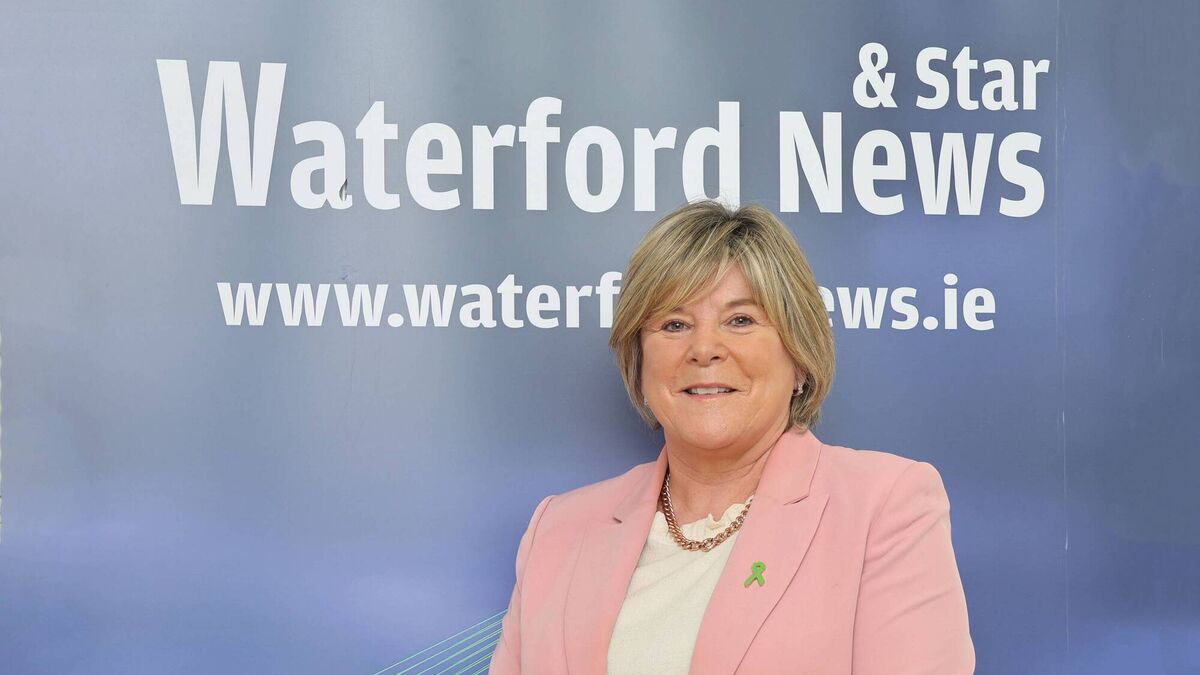
Waterford Fianna Fáil TD Mary Butler has sat at Cabinet since the 35th Government of Ireland was formed on January 23.
Waterford Fianna Fáil TD and Minister for Mental Health Mary Butler will continue to sit at Cabinet following a failed High Court case that threatened to remove Butler and other ‘super-junior’ ministers from Government.
Sinn Féin’s Pa Daly and People Before Profit’s Paul Murphy had both put forward adjacent challenges to the High Court, arguing Article 28 of Bunreacht na hÉireann limits Government Cabinet to 15 members and makes no provision for the presence of super-junior ministers.
Along with 15 senior Government ministers, Butler is one of four super-junior ministers that sits at Cabinet. While Butler cannot vote in Cabinet, the super-junior role gives her closer proximity to key Government decision-making.
Current ‘super-junior’ ministers also include Fine Gael’s Emer Higgins and Independents Noel Grealish and Seán Canney.
The cases put forward by Deputies Daly and Murphy failed to pass the three-judge High Court comprised of court president Mr Justice David Barniville, Ms Justice Siobhán Phelan and Mr Justice Conleth Bradley.
The court held that the attendance and participation of the super-junior ministers at Cabinet meetings fails to violate any provision of the Constitution.
The judgment outlined that because the Government’s 15 senior ministers were appointed by the President and approved by the Dáil, there was a “fundamental difference” in comparison to super-junior ministers.
Super-junior ministers, who are appointed by Government on the nomination of the Taoiseach and don’t require Dáil approval, are not classified as members of the Government, hence failing to violate Article 28 of the Constitution that limits Government to 15 members.
The judges said there was no clear line that limits the attendance of Cabinet to Government’s 15 members. Because super-junior ministers cannot vote at cabinet, they do not “undermine” the decisions taken by members of the constitutionally approved Government.
Butler is also the Government Chief Whip. Historically, the Chief Whip has been able to sit in Cabinet meetings before the advent of super-junior ministers in the 1990s. If super-junior ministers were to be deemed unconstitutional, Butler may have been able to maintain her seat at Cabinet because of her position as Chief Whip.
Speaking on WLR’s Déise Today before the High Court decision, Butler labelled the challenge “a political stroke.”
“I’m really annoyed in relation to Sinn Féin doing this, I’m really annoyed in relation to People Before Profit doing this…I contribute very much so to Cabinet,” she said.
“For the first time ever, mental health has a stand-alone voice at Cabinet, and disability has a stand-alone voice at Cabinet. Nowhere else in Europe has this been seen, and this court case is trying to take us out of that.”