Inquests held at Waterford Coroner's Court
It was a day of sombre reflection and unanswered questions.
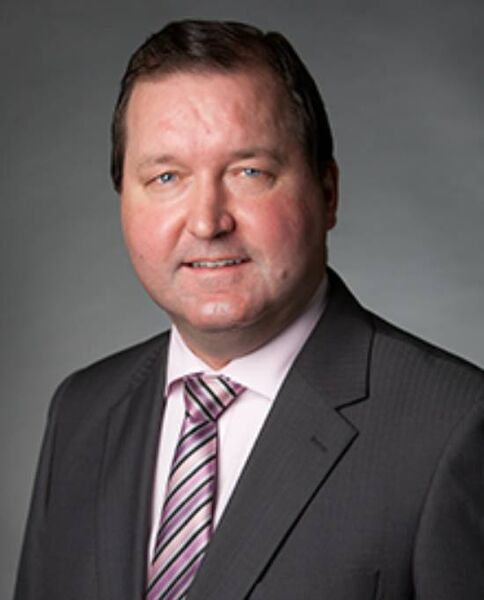
In Court 6 of Waterford Courthouse, County Coroner John P. Goff presided over the cases of six recently departed souls. All of them left this world in 2023, in different parts of Waterford.
The hearing concerned their official cause of death, to provide some clarity and, if possible, some closure for their loved ones.
A young man, barely in his 20s, was the youngest person detailed at the hearing. He died in his sleeping bag, and was found by the emergency services on a street. His body was brought to University Hospital Waterford (UHW), where he was formally identified by his mother. His grieving family attended his hearing.
Consultant pathologist Dr Nigam Shah outlined his findings and that the young man had died from opioid toxicity. Mr Goff shared kind words to the family and lamented the scourge of substances.
He said: “This is a very tragic case. [With drugs] you don’t know what’s going to happen, or where it's coming from or how you’ll react but you have my sincerest sympathies.”
Garda Inspector Niall Daly expressed his sympathies on behalf of An Garda Síochána.
A young man in his early 30s passed away from the injuries he sustained after falling from a balcony. The man was attempting to climb from the balcony but tragically fell to his death.
Dr Shah told the court that the report showed that he had suffered multiple fractures. The toxicology report revealed that there was an amount of alcohol and illicit substances in his system. A family member asked Dr Shah if her loved one died instantaneously. He answered: “Yes, he would not have suffered.”
Questions abound when a loved one dies suddenly. This was the case of a woman in her 70s, who died at UHW, after being admitted into hospital with kidney stones. At some point it became clear that she had contracted a urinary tract infection (UTI) and sepsis. It was unclear whether the sepsis was contracted during her hospital stay; Dr Shah emphasised that he could not come to that conclusion "beyond a reasonable doubt". He said: “As a pathologist I can answer the ‘how’, not the ‘why’.”
The woman had been suffering from kidney issues in the time leading up to her death. Due to the complexity of the case, the matter was adjourned to another date, and a doctor's report has been requested.
This case concerned the death of a woman in her home. A friend became worried about her whereabouts when she failed to reply to a text message. Gardaí were called to do a welfare check on her house when they discovered her body.
According to consultant pathologist at UHW Dr Sri Kalimuthu, the autopsy report revealed that the woman had cirrhosis of the liver. The woman’s daughter was present in court and confirmed the deposition she had made to Gardaí.
A woman suffering from hypertension and chronic kidney disease was pronounced dead at UHW. She had been scheduled to undergo a procedure related to her diabetes when her health took a further turn for the worst. Dr Kalimuthu noted in his report that the woman had ischemic heart disease. Small food particles were detected in her lung, likely from food irregularly going down her windpipe. The combination of factors led to a verdict of cardiorespiratory depression.
Another woman in her early 70s died from a cardiac arrest at UHW. Dr Kalimuthu reported the presence of fibrosis on her heart and dilated vessels. A family asked if a recent angiogram may have had any bearing. The doctor replied that “one was not causative of the other”.
At the end of the hearing, Mr Goff, along with Insp. Daly, gave their deepest condolences to the families of the deceased.